I’m on Fire

Cooking is not something that I—what’s the word?—ah, yes: “Do.”

One does not live to be 47 without finding some food here and there, so I have eaten a thing or two most of the days I have spent here, and I must have even prepared a meal or a few in order to have made it this far. And I was not left to forage in the woods behind our house when I was growing up; my mom is an excellent and health-conscious cook. Thanks to her early adoption of a low- and sometimes no-salt kitchen, my heart will probably continue beating long after the rest of me has permanently allowed all my subscriptions to lapse.

This is not to say that I do not remember eating or cooking; oh, I do. My cooking is not memorable, though, in either direction: tasty treat or sublime sludge. I almost envy the good writers who are bad cooks (not as much as I envy the non-writers who are good cooks), because at least something interesting comes from their culinary assaults on taste and decency.
Read More

Lindsey Webster at Opus 40

Lindsay Webster is a young jazz singer who is inspiring music writers to stretch for metaphors (“If Carole King and Sade had a kid, she would be Lindsey Webster“) and earned some major awards: in February, she joined Sade as the only performer to land a vocal-driven song atop Billboard magazine’s Smooth Jazz Songs chart. (Most tracks on that chart are instrumentals.)

The song. Fool Me Once,” is indeed terrific; even more terrific is the fact that the singer, who is from Woodstock, NY, shot portions of her music video for it at Opus 40, one of my favorite places on this planet.

Even better, she is performing at Opus 40 tomorrow, Saturday, July 2, at 5:00 p.m. Here are the ticket details: Lindsey Webster at Opus 40.
Read More

Do You See What I See? Pareidolia

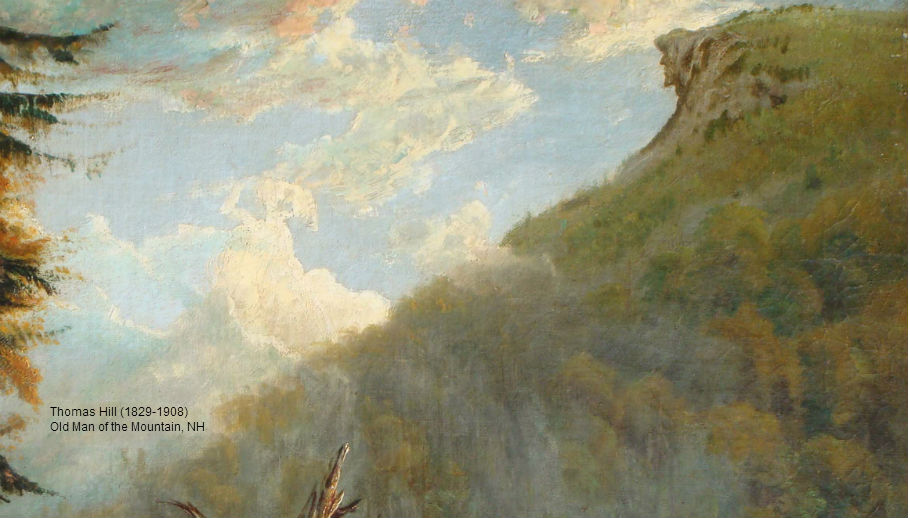
We love our pareidolia moments. The human brain is continuously at work interpreting the world around us, judging incoming information and stimuli on a range of choices and a spectrum of notions, ranging from food or not-food? to friend or foe? to Do I know you? Look at those clouds. Do you see what I see?

Artists have taken advantage of this for centuries. Were I to draw a circle, put two dots toward the top side, a short vertical line under these, and a horizontal half-circle under that, most people would say that I had sketched a smiley human face, even though hardly any human being that any of us knows looks like that. Some neuroscientists say that our brains are hard-wired to look for faces and to quickly identify friend or foe, even with only a part of a face visible. Those ancient humans who survived because of this skill survived to pass that skill on, genetically. Those with superior facial recognition skills today have their ancient ancestors to thank.
Read More