Opus 40

There are a handful of places and objects on the planet that photography under serves. Opus 40, in Saugerties, New York, is one of them. Built in an abandoned bluestone quarry in upstate New York by one man, Harvey Fite, Opus 40 is a contemporary American version of Stonehenge or the collection of Easter Island moai. It is one of my favorite places.

Photo by Tom Bookhout

An aerial view. Photo by Tom Bookhout

Fite was a sculptor and fine arts professor at nearby Bard College when he purchased the bluestone quarry. If you have ever walked on a sidewalk in Manhattan, you have walked on bluestone from this or a nearby location. Using the rubble that had not become NYC sidewalks, Fite filled one six-and-one-half-acre section with hand-laid circles of bluestone paths and ramps, leading nowhere and everywhere, from fifteen feet below the ground level up to the magnificent centerpiece, the obelisk, a nine-ton, three-story-tall single stone, which from different perspectives seems to point at the nearby Catskill Mountains, join with the range, or appear to be the reason the Catskills are there. And Fite did it all alone, using ancient techniques. At first intended to be a showcase for his sculpture, over the next 37 years the site itself became Fite’s life work. He died in 1976.

Hurricane Irene in 2011 and Hurricane Sandy the following year delivered a one-two punch to the sculpture park; Irene saturated the ground beneath the ramps and walls and Sandy’s damage included a collapse of a very tall support wall. Fite’s stepson and his family have engaged the efforts of master stonewallers and stonemasons, who are using those stones that fell and can still be fitted together and finding others from local quarries to repair the damage and rebuild the broken sections. Where possible, they will employ Fite’s own tools and techniques to complete the repairs.

An estimated $30,000 is needed to fund the first stage of the work, and here, non-ancient techniques are being employed: an Indiegogo campaign is currently underway to raise the funds. Almost two months remain in the campaign, and over $6000 of the $30,000 has been raised as of today. The website has details of the perks sponsors will receive in return for their financial help.

If I had not been a student at Marist College, where Harvey Fite’s stepson was teaching, I quite possibly would still not know of Opus 40’s existence, even though I live in the same county. My teacher-friend grew up at Opus 40 and still resides there. In the early ’90s, I attended a friend’s wedding at Opus and in the summer of 1998, I volunteered there, helping direct parking for that year’s music acts. The quarry is a natural amphitheater and the obelisk is an eye-grabbing stage set; the concerts that summer included a blues festival, Orleans, and Pat Metheny.

Here is a brief video of Orleans performing at Opus 40 from around that time period:

The video below, made for the fundraising campaign, documents some of the landmark’s artistic significance and its cultural importance—with clips of Sonny Rollins performing there and Steve Earle, Chevy Chase, and Bela Fleck speaking about Opus 40—and details the amazing work the stonemasons have already contributed to the restoration project.

And this video features my friend explaining in greater detail the history of the quarry, his step-father, and how Opus 40 came to be.

About My About.me Page, Online Friends, and A New Award

On March 3, I went viral. My “About.me” page was featured on that website’s “popular” list, and my page, which usually receives about 150 views per day, was seen by 3051 other About.me users, 2000 within the first hour of being listed. Another 1300 visited the next day.

It was like being famous, minus the fame or anything fame-like.

According to its own publicity, About.me profiles are viewed 150 million times per month, which sounds an awful lot like publicity. The online identity service has about five million official, registered users, most of whom, like me, use it for free. In 2010, AOL purchased the site, and in 2012, its founders purchased it back from AOL, when AOL discovered (faster than it usually does) that it was not going to become bigger than Facebook, Twitter, and LinkedIn combined just by adding free subscribers.

Even the founders of About.me (the link is to the company’s WordPress blog) do not seem to harbor ambitions for it to be all of those websites rolled into one; instead, it is intended to be an online identity website. It’s a virtual business card service. As you can see from my personal page, it is the only location where one can find a connection to all of my pages (Facebook, Twitter, and LinkedIn), and—in several places, at the top of the page, at the bottom of the page, and twice in between—to my blog. The blog you are reading. It has a nice spooky photo that I took at Olana last year and a selfie I took with the laptop I am using right now.

Now, as far as I can see, there is no reason for anyone who is already reading this website right here—my chief means of expression in the whole, wide world—to visit my About.me virtual business card, and I am not advertising for the company here. But what happened on March 3, when I went viral, told me a lot about social media and online expectations. Since I launched this website in January, the number of direct visits from About.me to this blog is 22. Total. This includes that momentous day when thousands viewed my page and saw my links and (mostly) ignored my hints to check out “The Gad About Town.”

There is a show business saying that if a performer is a great enough talent, “you could put him (or her) behind a brick wall and he will still find a way to entertain.” While I believe this to be true in idealistic theory, I also think that not putting him behind a brick wall would be very very helpful. If a website is going to be worth a visit, publicity is going to help get that visit.

When an About.me user visits one’s page, their page appears on yours. I started to see a few users re-appear and then three-appear on mine. About.me added features such as a “Like Your Photo” button, and some of these individuals became correspondents. A few dozen correspondents became Twitter acquaintances. And a handful now communicate with me via “The Gad About Town” and their own blogs. So those 22 visits out of 49,000 views (my total so far since November) are very valuable, as they resulted in real readers who are becoming that rarest of thing: real, online friends.

One of these real, online friends, Tazein Mirza Saad, lives in Singapore and maintains a very energetic, inspiration-filled website with about 3000 followers. She awarded me the fireworks trophy seen at the top of this post, the “Wonderful Team Membership Award,” a name that is a mouthful. But I still accept it.

2014 WordPress Awards Season

As with all of these WordPress awards, there are rules, which include: “1. The Nominee shall display the logo on their post/page/sidebar. 2. The Nominee shall nominate several best team members. 3. The Nominee shall make these rules, or amend rules keeping to the spirit of the Wonderful Team Member Readership Award. 4. The Nominee must finish this sentence and post: ‘A great reader is …'”

Among the readers whom I met first via About.me, then Twitter, and with whom I now communicate via our blogs, I am grateful to have “met” Tazein; Terry Irving, who gave me a big boost on his great website about writing and journalism within a couple weeks of my WordPress debut, and whose first novel “Courier” is due out in April; and Catherine Townsend-Lyon, who has created two huge and hugely helpful websites dedicated to helping people in recovery (“Recovery Ramblings” and “Just a Recovery Author Learning to Be a Better Writer“), and who has shared encouragement with me several times. All three are “great readers,” active readers who generously give other writers encouragement. My thanking them here does not require them to do anything. How’s that for an award?

There are several other writers with whom I communicate via our WordPress blogs, and I only hope both lists continue to grow. We aren’t behind any brick walls here.

A Thought on David Brenner

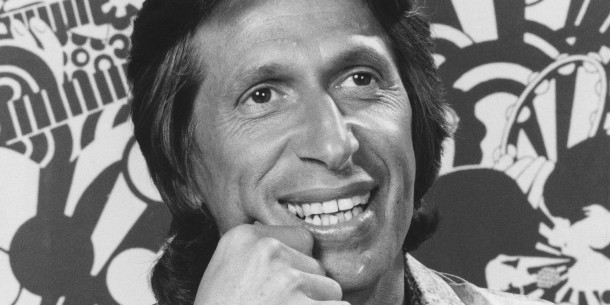
For a ten-year-old who was starting to notice two things: 1. the grown-up world had a lot of gaps in its “logic” and 2. laughter felt better than confusion, David Brenner and his droll commonsense stand-up act turned out to be a revelation. He was one of the first stand-ups I unofficially studied; I remember listening to his albums over and over, searching for the moment, the word, that would make the recorded audience laugh. That makes me pretty sure he resides in my perspective on the world. As Johnny Carson introduces him in the clip below, it was a “somewhat warped” perspective.

The news that David Brenner died today at age 78 reminded me that I had not thought about Mr. Brenner for a long time, much like most things I liked when I was 10. A love for the New York Yankees, strawberries, and comedy in general are about the only things I have in common with my ten-year-old self.

In my teen years I ignored or even rejected anything I had liked when younger, and of course, like every teenager worth the term, I also rejected anything my parents liked. So, with prejudices like these, David Brenner stood no chance in my world. He was not “edgy,” not “interesting,” not a lot of things. He was not absurd like Steve Martin and not dry like Steven Wright and not inflamed like Sam Kinison or angry like Bill Hicks. He was in my comedy DNA, but he was one of my mom’s favorite stand-ups, so he was old.

But I also liked, even loved, “old” comedians. The old vaudevillians, all of them, I adore. When YouTube started to become popular, one of the first things I looked up was Ed Sullivan clips—I wanted to see if my recollection of certain comics was right or not. I like to think I was the first person to enter “Myron Cohen” as a search term on YouTube. My parent’s generation of performers? Not old enough, I guess.

One of the first Tweets I saw today about Brenner’s death asked, “Why is it so hard to believe he was 78?” Almost every photo of him in his obituaries today is from the 1970s, with a helmet of hair and Johnny Carson nearby. He remains ever 40. Even though he was still a working stand-up at his death, he was not a television presence and had not been one for almost 20 years, when he briefly had a show on MSNBC. (Who hasn’t “briefly” had a show on MSNBC by now?) He had a couple hit books in the ’90s, but so did every comic.

Something did not happen for David Brenner that happened for a lot of comics when the next generation came along: They did not bring him on their shows very often. When Johnny moved on and Jay and Dave took up permanent residence at 11:35 p.m. and yet more talk shows proliferated, Brenner was an only occasional presence, even with the larger number of late-night stand-up slots available. Brenner was dubbed “the father of observational humor,” but only after “observational humor” became a term, after Jerry Seinfeld and Paul Reiser and others were making millions talking about how interesting it could be to find mundane the things that … actually were mundane.

Among Brenner’s generation, George Carlin started out doing fairly conventional characters before he became an unconventional character himself, one who noticed absolutely everything and filtered it through a jazz poet’s brain. Robert Klein was the cool history professor. Bill Cosby told shaggy-dog stories that made the familiar comfortable. Richard Pryor was a force of nature—the reason “Pryoresque” is not a term is because he was uniquely himself and made the unfamiliar uncomfortable. None were “observational comics,” none were professional noticers of the lack of logic in our everyday lives like David Brenner. He was one of the first.

Brenner did not yield details about his current life, but he reminisced about growing up in West Philadelphia with a novelist’s eye for detail; he did not do impressions, but he easily tossed out one-liners from cabbies he encountered and the like (they all sounded like him). He did not bring audiences into a tortured psyche like Richard Lewis; he was ever cheerful, and ever 1970s. When Johnny Carson started making his schedule easier and bringing in “guest hosts,” Brenner filled in 75 times, but all in the late ’70s and early ’80s. By the time Carson was retiring, the battle to replace him was between Letterman and Jay Leno and there were no other names.

David Brenner never found himself on the outside looking in and was thus never the subject of a “where are they now”-style re-discovery, but he also never got bigger than he was in the 1970s, when he appeared on almost every talk and game show and in every nightclub and medium size theater. For a time, he seemed as ubiquitous as a public utility, and then, for showrooms on the Vegas strip, he was a public utility: cheerfully reliable and pleasantly maintenance-free.

There are worse things to be said about a career. So even though I did not think often in recent years about the late David Brenner, I was aware he was still out there, still making people laugh. I have come to respect the people who are public utilities in our lives, and I only wish I had randomly written this appreciation yesterday instead of today, before an occasion brought it.

* * * *

The story that Steve Martin tells in “Born Standing Up,” his “autobio”: “I called the comedian David Brenner for advice. David was successfully guest-hosting The Tonight Show and filling theaters and clubs. Our paths had crossed, and we had exchanged phone numbers. I explained that I was getting jobs, but the travel costs were killing me. If I got five hundred dollars for an appearance, it would cost me three hundred just to get to it. He told me the deal he always proposed to club owners. He would take the door, and they would take the bar. He said he would hire someone to stand at the entrance with a mechanical counter to make sure he wasn’t being cheated.”—”Born Standing Up,” 146-7.