Radio, Radio
“You should be on the radio,” was what was said. What was heard by my 16-year-old ego was, “You shouldn’t be on TV.”
Read More
“You should be on the radio,” was what was said. What was heard by my 16-year-old ego was, “You shouldn’t be on TV.”
Read More
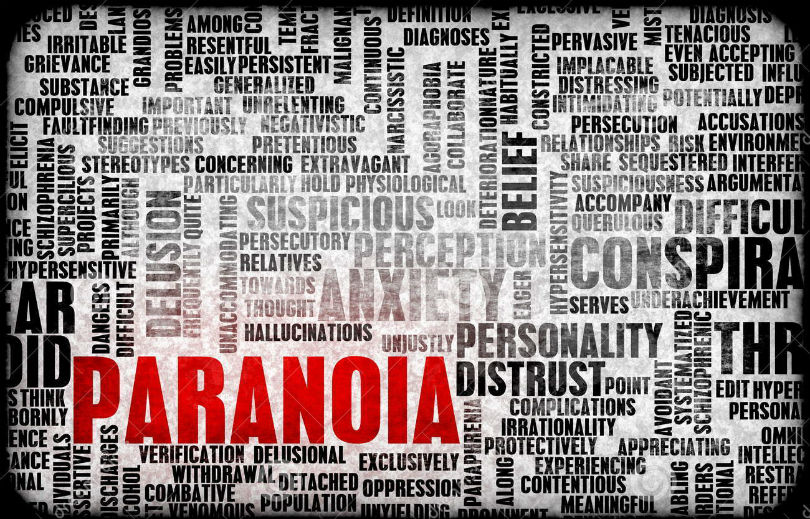
[He] sees the fate of conspiracy in apocalyptic terms—he traffics in the birth and death of whole worlds, whole political orders, whole systems of human values. He is always manning the barricades of civilization. He constantly lives at a turning point. Like religious millennialists he expresses the anxiety of those who are living through the last days and he is sometimes disposed to set a date for the apocalypse. … As a member of the avant-garde who is capable of perceiving the conspiracy before it is fully obvious to an as yet unaroused public, [he] is a militant leader. He does not see social conflict as something to be mediated and compromised, in the manner of the working politician. Since what is at stake is always a conflict between absolute good and absolute evil, what is necessary is not compromise but the will to fight things out to a finish.—Richard Hofstadter, Harper’s Magazine
The above passage was not written recently. It does not describe anyone in the news right now. It was written in 1964 and published the month of the Presidential election that year. Its title is “The Paranoid Style in American Politics.” Hofstadter was an historian who found himself concerned with the angry political rhetoric that was emerging that year and re-discovered that there was little new to it, that in fact a “style” of rhetoric could be identified that regularly emerged and re-emerged in our history.
The “paranoid style” is back this year in America.
Read More

Was it always to be thus, or might I have chosen otherwise?
At one point in “The Quest,” his modernist version of a quest romance told in 20 brief sections, the poet W.H. Auden derides occult fascinations as “an architecture for the odd.” Astrology, tarot, et cetera. Earlier, he writes of the future, “We pile our all against it when afraid/And beat upon its panels when we die.”
The particular sonnet, which in some editions is titled “The Tower,” but in Auden’s official Collected Poems is simply called number “IX,” concludes with a warning from magicians caught in their own tower:
Yet many come to wish their tower a well;
For those who dread to drown, of thirst may die,
Those who see all become invisible:
Here great magicians, caught in their own spell,
Long for a natural climate as they sigh
“Beware of Magic” to the passer-by.
Celebrate Silent Film
stories, anecdotes, poetry, essays, and general magic
The blogging challenge keep you motivated and start the new year on the "write" track!
The Dangerous Blog of Mamie Van Doren
Daddy issues are for beta bitches
Poetry and the rumblings of my synaptic snap.
Poetry BLOG By Edge of Humanity Magazine
-- A Modern SuperWoman Life
Shortness of Breadth
because the story must be told
Award-winning historical murder mysteries inspired by classic 19th-century novels
My thoughts, sentiments, and scribbles on womanhood
Perfectly Imperfect Human
Discovering the joy of art
open your mind to a growth mindset and new perspectives
Truth of life
 The Gad About Town