
‘In Praise of Limestone’
[…] In so far as we have to look forward
To death as a fact, no doubt we are right: But if
Sins can be forgiven, if bodies rise from the dead,
These modifications of matter into
Innocent athletes and gesticulating fountains,
Made solely for pleasure, make a further point:
The blessed will not care what angle they are regarded from,
Having nothing to hide.
Either, but when I try to imagine a faultless love
Or the life to come, what I hear is the murmur
Of underground streams, what I see is a limestone landscape.—W. H. Auden, “In Praise of Limestone”
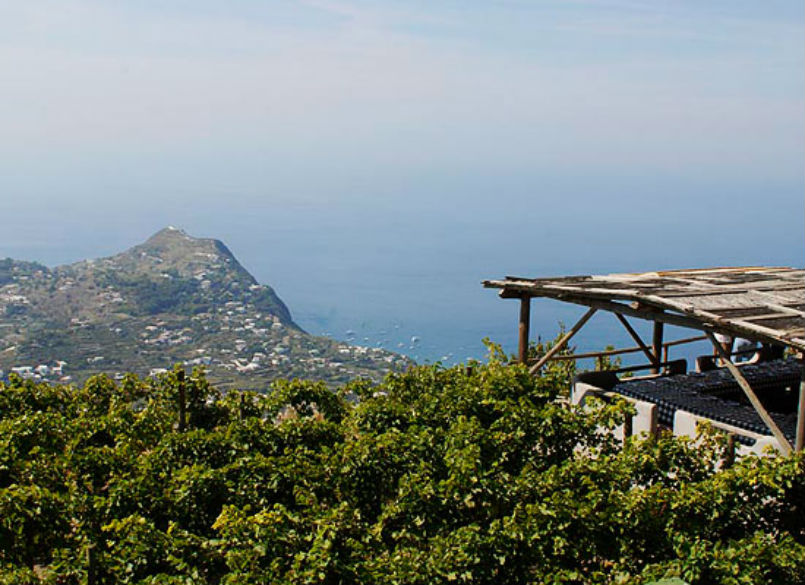
In his 66 years, W.H. Auden lived in many locations in Europe and America: he was born and raised in York, educated at Oxford, and lived long-term in Berlin, New York City, Michigan, Italy, Austria. In 1948, he started spending his summers on the island of Ischia, in the Tyrrhenian Sea. (Seen above.) That island’s landscape, covered as it is with rocky volcanic outcroppings, so different from any he had known, came to represent difference itself in his mind.
Read More
Today in History: August 5
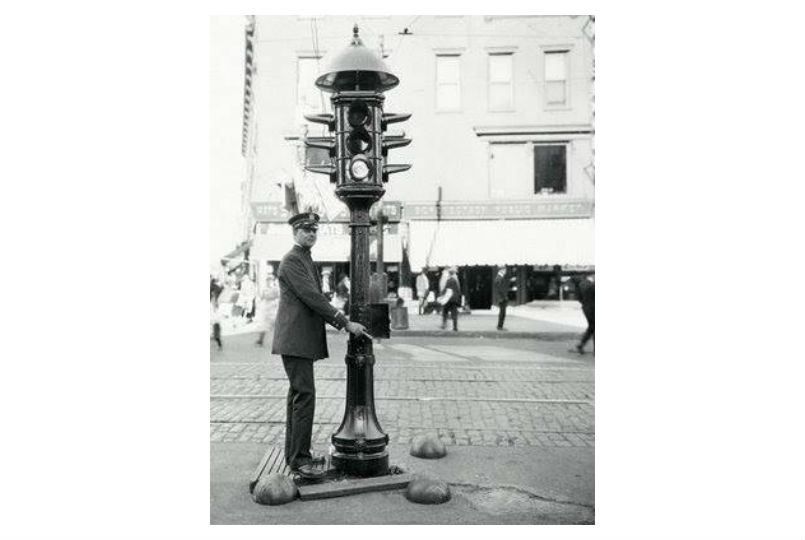
The first traffic light was installed in London in December 1868 outside Parliament. It used wooden arms to indicate stop and go during the day and gas lights (red and green) for nighttime use. It was manually operated, and it only lasted a month as the rig exploded in January 1869 and killed the police officer who was operating it that day.
A police officer in Salt Lake City, Utah, is credited with inventing the electric traffic light in 1912, but no traffic control system—no electric traffic control system—was installed until August 5, 1914, one hundred and two years ago today, at the busy intersection of East 105th Street and Euclid Avenue in Cleveland, Ohio.
Read More
 The Gad About Town