Today in History: August 9

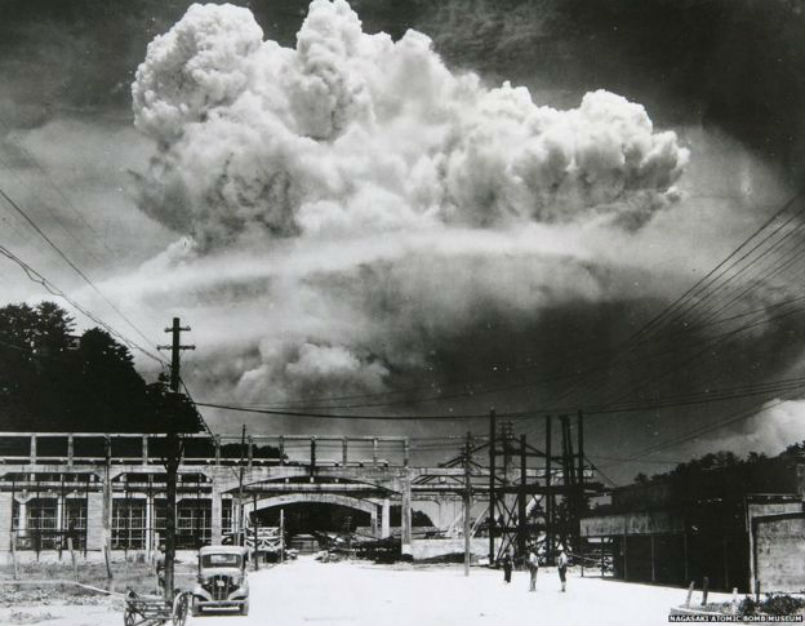
The United States Of America became the first nation to drop a second nuclear weapon on an enemy nation in wartime on this date in 1945. The city of Nagasaki, Japan, had a population of about 263,000 people at the time. About 50,000 were killed instantly after the bomb, nicknamed “Fat Man,” detonated. About 30% of the city was obliterated in seconds.

Nagasaki was the second-level target for the bombing run; the city of Kokura had been the primary, intended, target, but smoke from the previous day’s firebombing of the nearby city of Yamata denied the team visual sighting. Upon arriving at Nagasaki, the flight team discovered it was under a cloud cover, but the plane was running low on fuel, so radar contact was established. At the last second, clouds over Nagasaki parted, and visual sighting led to the bomb being dropped between Mitsubishi’s two major factories.
Read More


Today in History: Philip Larkin

Philip Larkin, born on this date in 1922, was a librarian at the University of Hull in the north of England. He was also a major poet; thirty years after his death, he is consistently ranked among the top ten post-war English writers. Born in Coventry, he studied at Oxford University and became best friends with Kingsley Amis; he contributed to and helped edit Amis’ first novel, Lucky Jim, which launched Amis on his own legendary career in literature.

He accepted the position at Hull, far away from the London literary scene, in 1955 and he never left. He rarely saw London or Oxford, even more rarely spent time abroad, never set foot in Canada or America. In 1964, a television program profiled Larkin, who by then had published two novels and three volumes of poetry and was being ranked among the best writers of his generation. Asked about his affiliation with Hull, he replied, “I never thought about Hull until I was here. Having got here, it suits me in many ways. It is a little on the edge of things, I think even its natives would say that. I rather like being on the edge of things. One doesn’t really go anywhere by design, you know, you put in for jobs and move about, you know, I’ve lived in other places.”
Read More

Is Dawit Isaak Still Alive?

In a rare interview in June with France’s RFI (Radio France Internationale), Eritrea’s Foreign Minister, Osman Saleh, spoke with RFI’s Anthony Lattier about Eritrea’s “political prisoners,” and he specifically revealed that one who has been in prison since 2001, the journalist Dawit Isaak, is still alive.

It was the first official Eritrean acknowledgement of Isaak’s existence since 2009, when the nation’s president, Isaias Afwerki, ominously told a Swedish journalist that Eritrea “knows what to do with” Isaak. Osman Saleh told Lattier that Isaak “is alive, he’s alive” and that all of the nation’s “political prisoners” are alive and well. He rebuffed any suggestion that any independent agency verify this as a fact, however.
Read More