Today in History: #NPS100

The National Park Service Organic Act was signed into law by President Woodrow Wilson on this date 100 years ago.

It created the National Park Service and established its jurisdiction in the Department of the Interior. The NPS was mandated “to conserve the scenery and the natural and historic objects and wildlife therein, and to provide for the enjoyment of the same in such manner and by such means as will leave them unimpaired for the enjoyment of future generations.” In the 1930s, historic sites such as the battlefield at Gettysburg and presidential homes were added to its mandate.
Read More
Today in History: August 24

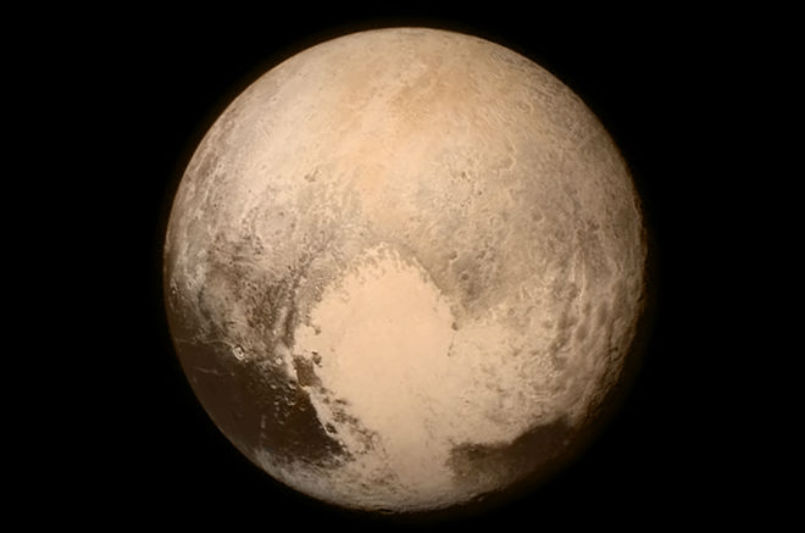
The International Astronomical Union published an article, “Definition of a Planet in the Solar System: Resolutions 5 and 6,” ten years ago today. (The link is to a PDF file.)

In popular culture, what the IAU did ten years ago today was demote Pluto (seen above) from one of the classic nine planets of the solar system, the nine whose names we all grew up memorizing and reciting, to one of several or many or thousands of “dwarf planets,” leaving us with eight planets. Schoolchildren everywhere possibly find it odd that this elicited as much controversy as it did.

The article employed in an official way a term that had been around since the early 1990s: dwarf planet. A dwarf planet is an object that is massive enough to be a ball (in scientific terms, it is a spheroid that is in hydrostatic equilibrium) and orbits the Sun, but it is not massive enough to have cleared its lane through space.
Read More

Today in History: August 23

The execution of the Scottish independence fighter Sir William Wallace (above) was considered so important that even though it took place more than seven centuries ago, we know that it took place on precisely this date in 1305.

Wallace’s main argument in his own defense was that he needed no defense against the charge of treason because he had not committed treason—”I could not be a traitor to [King] Edward, for I was never his subject”—which was considered treasonous in itself. The manner of his execution was brutal and has not been performed in almost two centuries in Great Britain (which means that it was performed for almost five more centuries). Post-execution, Wallace’s body parts were displayed for decades after.
Read More