Today in History: September 7

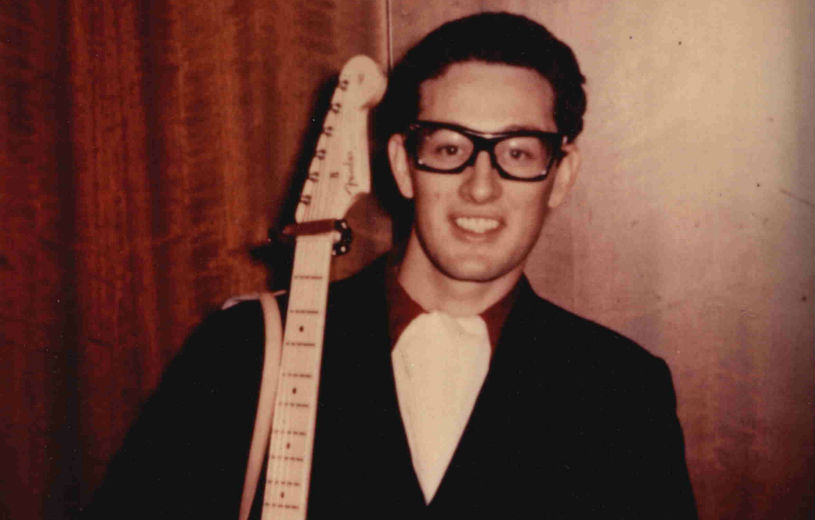
Charles Hardin Holley was born 80 years ago today in Lubbock, Texas.

His family nicknamed him Buddy. The Holley family was a music-loving one, and Buddy was participating in talent shows and contests before he was in high school. Within a year of graduating from high school, he was signed to his first recording contract, with Decca. His name was misspelled by Decca’s agent on the paperwork: Buddy Holly.

That first contract yielded very little for either Buddy Holly or Decca: he did not like having a producer oversee operations, even though that producer was one, Owen Bradley, whose eventual reputation was made molding singer-songwriters, and no hits resulted. Decca fired him within months, but it enforced the terms of his contract: he could not re-record his songs with any other label for the next five years.

Thus, his subsequent recordings, one of them a re-recording of a song Decca rejected titled “That’ll Be the Day,” were released under the name of his new band, the Crickets. But they were all written or co-written by Buddy Holly. By 1957, he was a star.
Read More

Shawkan’s Endless Nightmare

When a trial involves more than 700 co-defendants, a person learns quickly that one’s previous understanding of terms like “due process” (as it applies to any nation’s justice system) must be modified or redefined altogether. In a court hearing in Cairo, Egypt, earlier today,the trial of the photojournalist Mahmoud Abu Zeid (“Shawkan”) and the 738 other defendants in the “Rabaa dispersal” case was delayed yet again, this time until October 8.

One of Shawkan’s lawyers reported that the reason cited for the new adjournment was the length of time it is taking the court to examine all the evidence so that it can proceed.

The photo above, of Shawkan in court, is from today. Anyone can see that the waiting is wearying. The trial is trial enough for Shawkan, who is a photojournalist who was arrested in a general roundup of a protest in August 2013. He was a credentialed reporter covering the story of the protest and the crackdown and was arrested in the general chaos of the roundup. He should have been released by the Egyptian authorities within days when they realized what they had done, and his name should not be leading the litany of names of reporters who were arrested for doing their job in recent years.

But more than three years later, Shawkan sits in prison, sometimes in solitary confinement, and he awaits each new, now monthly, delay in the delivery of any news, any change in status, any justice.
Read More

Today in History: September 6

“If Clarence Saunders lives long enough, Memphis will become the most beautiful city in the world just with the things Saunders built and lost.”—Ernie Pyle

Perhaps someone else would have dreamed up and built the ideas that Clarence Saunders built, but Saunders built them. If you will be shopping for tonight’s dinner at a grocery store today, you have Clarence Saunders to thank for several things you possibly take for granted: shopping for yourself at a grocery store, for one.

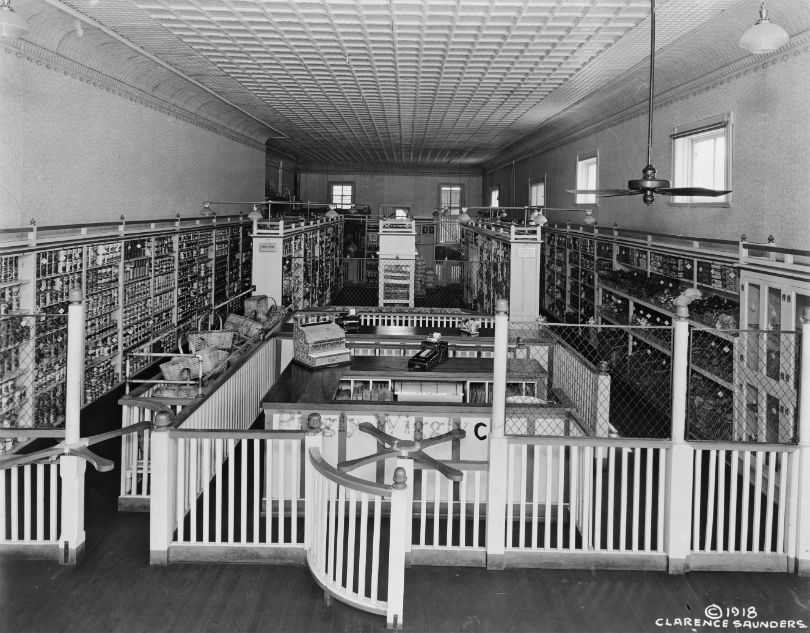
Today is the 100th anniversary of the opening of Saunders’ greatest achievement, the first ever self-service grocery store, a Piggly Wiggly (the name was his coinage and he never explained it), which is a grocery store chain that is still in business throughout the American South. The first store (a photo from inside it is above) was located at 79 Jefferson Street in Memphis, Tennessee, and a historical marker sits there to this day.
Read More