Can’t Dance. Ask Me

“The less expensive the formal wear, the greater the chances the word will be spelled ‘elegante’, be italicized, and be serifed out of legibility.”

* * * *
W. B. Yeats asks at the end of his poem, “Among School Children” this famous question: “How can we know the dancer from the dance?”

Well, if I’m your dancer, you can. My high school prom story:

* * * *
“Tails.” I spoke the word out loud with my indoors voice. I ordered white tails to wear at my high school prom.

For many American high school students, senior year means at least two things: Graduation and Senior Prom Night (and the morning after). With no research, I can tell you that “prom” is short for “promenade,” which is long for “prom.” For naive bookworm me, the prom, far more than graduation or even thecontinuousthinkingofthoughtsabouttheentirerestofmylife, was the source of many anxieties.

(There is an ancient cliché about how native peoples who live in the Arctic have 1000 words for snow because they know snow so intimately that they have 1000 words to describe 1000 unique realities. Replace the word “snow” with “anxiety,” and you have me. A thousand different anxieties.)
Read More

Today in History: September 8

“The Man Trap,” the first episode of a new television series on NBC, debuted 50 years ago tonight. Star Trek is a half-century old today.

* * * *
Michelangelo unveiled his masterpiece, the 17-foot-tall statue of David, on this date in 1504. (Close-up photo above.)
Read More

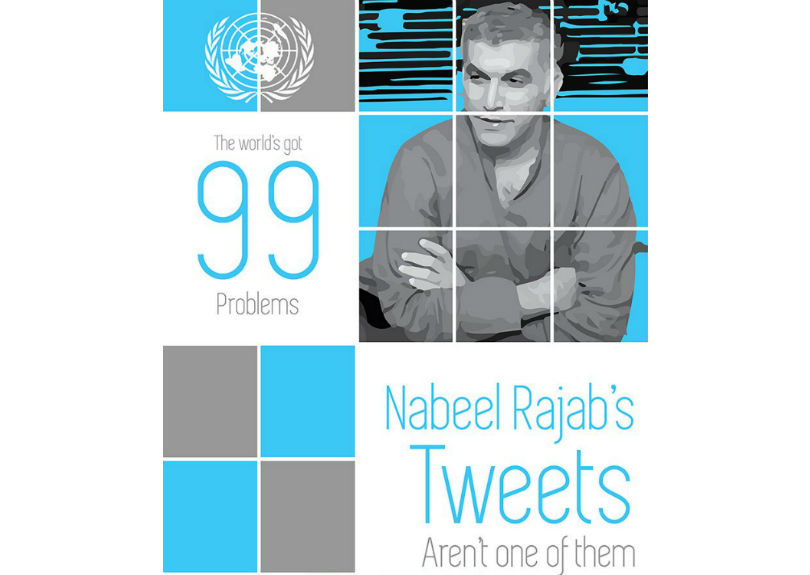
In Prison for Tweets: The Case of Nabeel Rajab

“I would like to ask Mr. John Kerry now: Is this the kind of ally America wants? The kind that punishes its people for thinking, that prevents its citizens from exercising their basic rights?”—Nabeel Rajab, “Letter From a Bahraini Jail,” New York Times, September 4, 2016

* * * *
From the day he was arrested on June 13, Nabeel Rajab, the president of the Bahrain Center for Human Rights, has been kept in solitary detention in conditions so squalid that outside observers have verified the “toilet and shower are unclean, unhygienic, and filled with potentially disease-carrying sludge.”

Because he is a prominent human rights activist who has met with the U.S. Secretary of State, John Kerry, Rajab’s imprisonment—and the vaguely vaporous charges that are being employed to hold him prisoner—has attracted that rare diplomatic act: a public statement from the U.S. State Department about the repression and imprisonment of an individual in an ally’s justice system. (Witness the four-plus years of silence in regards the case of one Raif Badawi, the Saudi writer who remains languishing in prison for his written thoughts, not even his activism.)

State Department spokesman Mark Toner said yesterday: “We’re obviously concerned about Nabeel Rajab’s detention and the charges filed against him, and we call on the government of Bahrain to release him. We have concerns about the state of human rights, in general, in Bahrain, and we’re engaging with the government of Bahrain on all of these issues.” The video (after the jump):
Read More