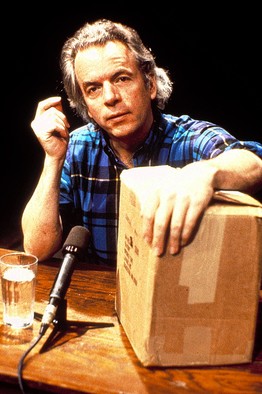
Matt Coleman, Some Memories

I wish you could have known Matt Coleman. Many did, but not enough. There was not enough time. “Matt’s heart was so big, it surrounded him,” one colleague wrote.

I am grateful that I think this about so many people that I have met, those clauses like “You ought to know,” or “You should have met,” but frustrated that I have not said it out loud often enough.

A person’s end should not be what the world knows of them, and three years ago today, August 11, 2011, my friend Matt Coleman was murdered. If you type “Matt Coleman Mendocino,” or variations that include the names of the small towns in that beautiful county in California, you will see some of the eye-catching news headlines from the time. This is because the murder was a national news story for a month, not because of my friend’s prominence, but because his dead-eyed killer shot and killed one other man, and the manhunt that followed in the redwood forest stretched on for 36 days, ending with the shooting death of the murderer. Three families lost loved ones that terrible month: the family and friends of Matt, the family and friends of Jere Melo, and the family of the murderer. The killer suffered from untreated schizophrenia, as it turned out, but this gun-filled story took one more gun to conclude it.

At least one book has been published about the sad tale, told from the point of view of law enforcement. In it, Sheriff Tom Allman of Mendocino County recounts Matt’s memorial service, and it sounds like the memorial was a fitting tribute to the Coleman I knew: “Boats of flowers were floated down Big River and many positive things were said about the deceased. It struck me as very odd that nobody was angry. … I was so struck by the community’s love for Matt Coleman. He had no enemies. As I left, somebody asked me if I thought the killer was at the funeral. ‘I doubt it,’ was my reply.” (From “Out There In The Woods.”) I am certain that the sheriff learned that day something that I believe: That Matt Coleman’s last conscious thought was an offering of love and empathy.

There was sadness at the memorial, I am sure. Despair or anger, no. Matt was a generous spirit and the most generous gift he offered was that all who met him became more generous, too. I believe I have met that quality only once and I realize now how lucky I am for that one moment in time.

Matt was a land steward, a passionate environmentalist who worked for the last six years of his life as coordinator of volunteers for the Mendocino Land Trust, which meant that he knew the forest, knew the ocean, and knew the land between. There are many stories about his 24-hour-a-day dedication to the land and waters, about him stopping whatever he was doing when he would spot an invasive plant species and remove it.

Invasive species or not, Matt was always at his best as a student, learning what brought the species of plant or fish into the part of the world that he was a part of, understanding the natural history, teaching others about humbly understanding. Look at him in this video, shot by Aron Campisano a few years ago as part of a film he is making about invasive species:

Matt loved to teach, he loved to coach, he loved to do; he loved being.

Before Mendocino, there was New Paltz. In my 1990s in New Paltz, New York, Matt Coleman and others (John, Sean, Mat, others like Gerry and Dan) were the big brothers I never had and taught me a lot about being a writer, an actor, and about being a man.

Matt grin

Coleman, mid-grin. This is the look I saw when he threw me over his shoulder.

One day, a few of us were walking as a group up Main Street in New Paltz, and Matt, a bear of a man, slowed his stride—he always walked very quickly and purposefully—and I slowed with him, probably to continue belaboring whatever point I was belaboring. He grabbed me and tossed me over his shoulder like a duffel bag, a bag of me, and took off running. To our eternal comedy credit, we did not break off whatever conversation we were engaged in. The others followed, laughing. I was the one out of breath when he let me down at the top of the hill that is Main Street in New Paltz.

Matt had an extensive collection of books but not in his possession. Upon finishing a book, he gave it away or left it somewhere. More correctly, Matt had an extensive collection of books in his memory banks and he could grab a quote at will. His reading was extensive, legendary among friends, and he never showed it off. He was a journalist and loved great writers like John McPhee, Edward Abbey. If he was a fan of someone, his enthusiasm was total, unembarrassed, and loud. I am certain Elvis Costello heard Matt from inside the Beacon Theater one night while we were waiting to be let in.

He had one of the greatest screams I have ever heard.

coleman roar

Coleman, mid-roar.

While preparing this post, I returned to Gifford Pinchot’s “Eleven Maxims to Guide Foresters.” Pinchot was the first head of the U.S. Forest Service and a two-time governor of Pennsylvania, and his mansion, Grey Towers in Milford, Pennsylvania, is now a historic site. Matt and I visited it once because I lived near it at the time and yet, strange to Matt, had not been to it. I enjoyed the house and its history, and Matt patrolled the grounds; Grey Towers is like a zoo for plant species and Matt impressed the rangers with his practical knowledge. (This is why I thought of Pinchot in connection with Matt.)

Pinchot’s Eleven Maxims are:

1. A public official is there to serve the public and not to run them.

2. Public support of acts affecting public rights is absolutely required.

3. It is more trouble to consult the public than to ignore them, but that is what you are hired for.

4. Find out in advance what the public will stand for. If it is right and they won’t stand for it, postpone action and educate them.

5. Use the press first, last, and all the time if you want to reach the public. Get rid of the attitude of personal arrogance or pride of attainment or superior knowledge.

6. Don’t try any sly or foxy politics, because a forester is not a politician.

7. Learn tact simply by being absolutely honest and sincere, and by learning to recognize the point of view of the other man and meet him with arguments he will understand.

8. Don’t be afraid to give credit to someone else when it belongs to you; not to do so is the sure mask of a weak man. But to do so is the hardest lesson to learn.

9. Encourage others to do things; you may accomplish many things through others that you can’t get done on your single initiative.

10. Don’t be a knocker; use persuasion rather than force, when possible. Plenty of knockers are to be found; your job is to promote unity.

11. Don’t make enemies unnecessarily and for trivial reasons. If you are any good, you will make plenty of them on matters of straight honesty and public policy, and you need all the support you can get.

Matt is inscribed in many of these lines. “Don’t be afraid to give credit … use persuasion rather than force … .” Matt probably quoted these to me at the time, but I did not know. Later that day, we drove north of the Catskill Mountains and a bald eagle swooped at my car. “Dude! Did you see what that was?! How great was that!” It remains my one bald eagle sighting to this day. His voice is pinned to the memory. And many others.

He was “Clawman Treefeller” in our group of friends; he was Coleman; he was a verb (any missing lighter had been “Coleman’ed”); he was Matt.

Matt’s generous spirit, immense playfulness, and epic inquisitiveness brought him from Brooklyn to the woods of Northern California. His humble nature led him not to chase fame or glory but to a life restoring the lands near Mendocino, pathway by pathway. It is that beautiful brief life and that ever-giving, often hilarious spirit that some of us on two coasts celebrate today, August 11, simply because our path crossed his.

* * * *
The Community Foundation of Mendocino County established an endowment fund in 2013, the Matthew Coleman Fund for Environmental Education and Conservation. An “endowment fund” is one in which the funds that are donated are not only applied to the cause but are also invested to earn interest and keep the fund alive. Here is a brief video:

Requiem for a Sponsor

Thinking of you today, Charles F. Brennan, III, my friend Charlie (November 2, 1960–April 7, 2014). His funeral mass card carried a quote from Emerson: “To laugh often and much; to win the respect of intelligent people and the affection of children; to earn the appreciation of honest critics and endure the betrayal of false friends; to appreciate beauty; to find the best in others; to leave the world a bit better whether by a healthy child, a garden patch, or a redeemed social condition; to know even one life has breathed easier because you have lived. This is to have succeeded.”

I wrote what follows the day he died:
Read More

A Thought on David Brenner

For a ten-year-old who was starting to notice two things: 1. the grown-up world had a lot of gaps in its “logic” and 2. laughter felt better than confusion, David Brenner and his droll commonsense stand-up act turned out to be a revelation. He was one of the first stand-ups I unofficially studied; I remember listening to his albums over and over, searching for the moment, the word, that would make the recorded audience laugh. That makes me pretty sure he resides in my perspective on the world. As Johnny Carson introduces him in the clip below, it was a “somewhat warped” perspective.

The news that David Brenner died today at age 78 reminded me that I had not thought about Mr. Brenner for a long time, much like most things I liked when I was 10. A love for the New York Yankees, strawberries, and comedy in general are about the only things I have in common with my ten-year-old self.

In my teen years I ignored or even rejected anything I had liked when younger, and of course, like every teenager worth the term, I also rejected anything my parents liked. So, with prejudices like these, David Brenner stood no chance in my world. He was not “edgy,” not “interesting,” not a lot of things. He was not absurd like Steve Martin and not dry like Steven Wright and not inflamed like Sam Kinison or angry like Bill Hicks. He was in my comedy DNA, but he was one of my mom’s favorite stand-ups, so he was old.

But I also liked, even loved, “old” comedians. The old vaudevillians, all of them, I adore. When YouTube started to become popular, one of the first things I looked up was Ed Sullivan clips—I wanted to see if my recollection of certain comics was right or not. I like to think I was the first person to enter “Myron Cohen” as a search term on YouTube. My parent’s generation of performers? Not old enough, I guess.

One of the first Tweets I saw today about Brenner’s death asked, “Why is it so hard to believe he was 78?” Almost every photo of him in his obituaries today is from the 1970s, with a helmet of hair and Johnny Carson nearby. He remains ever 40. Even though he was still a working stand-up at his death, he was not a television presence and had not been one for almost 20 years, when he briefly had a show on MSNBC. (Who hasn’t “briefly” had a show on MSNBC by now?) He had a couple hit books in the ’90s, but so did every comic.

Something did not happen for David Brenner that happened for a lot of comics when the next generation came along: They did not bring him on their shows very often. When Johnny moved on and Jay and Dave took up permanent residence at 11:35 p.m. and yet more talk shows proliferated, Brenner was an only occasional presence, even with the larger number of late-night stand-up slots available. Brenner was dubbed “the father of observational humor,” but only after “observational humor” became a term, after Jerry Seinfeld and Paul Reiser and others were making millions talking about how interesting it could be to find mundane the things that … actually were mundane.

Among Brenner’s generation, George Carlin started out doing fairly conventional characters before he became an unconventional character himself, one who noticed absolutely everything and filtered it through a jazz poet’s brain. Robert Klein was the cool history professor. Bill Cosby told shaggy-dog stories that made the familiar comfortable. Richard Pryor was a force of nature—the reason “Pryoresque” is not a term is because he was uniquely himself and made the unfamiliar uncomfortable. None were “observational comics,” none were professional noticers of the lack of logic in our everyday lives like David Brenner. He was one of the first.

Brenner did not yield details about his current life, but he reminisced about growing up in West Philadelphia with a novelist’s eye for detail; he did not do impressions, but he easily tossed out one-liners from cabbies he encountered and the like (they all sounded like him). He did not bring audiences into a tortured psyche like Richard Lewis; he was ever cheerful, and ever 1970s. When Johnny Carson started making his schedule easier and bringing in “guest hosts,” Brenner filled in 75 times, but all in the late ’70s and early ’80s. By the time Carson was retiring, the battle to replace him was between Letterman and Jay Leno and there were no other names.

David Brenner never found himself on the outside looking in and was thus never the subject of a “where are they now”-style re-discovery, but he also never got bigger than he was in the 1970s, when he appeared on almost every talk and game show and in every nightclub and medium size theater. For a time, he seemed as ubiquitous as a public utility, and then, for showrooms on the Vegas strip, he was a public utility: cheerfully reliable and pleasantly maintenance-free.

There are worse things to be said about a career. So even though I did not think often in recent years about the late David Brenner, I was aware he was still out there, still making people laugh. I have come to respect the people who are public utilities in our lives, and I only wish I had randomly written this appreciation yesterday instead of today, before an occasion brought it.

* * * *

The story that Steve Martin tells in “Born Standing Up,” his “autobio”: “I called the comedian David Brenner for advice. David was successfully guest-hosting The Tonight Show and filling theaters and clubs. Our paths had crossed, and we had exchanged phone numbers. I explained that I was getting jobs, but the travel costs were killing me. If I got five hundred dollars for an appearance, it would cost me three hundred just to get to it. He told me the deal he always proposed to club owners. He would take the door, and they would take the bar. He said he would hire someone to stand at the entrance with a mechanical counter to make sure he wasn’t being cheated.”—”Born Standing Up,” 146-7.