Lighting out For ‘The Woods’

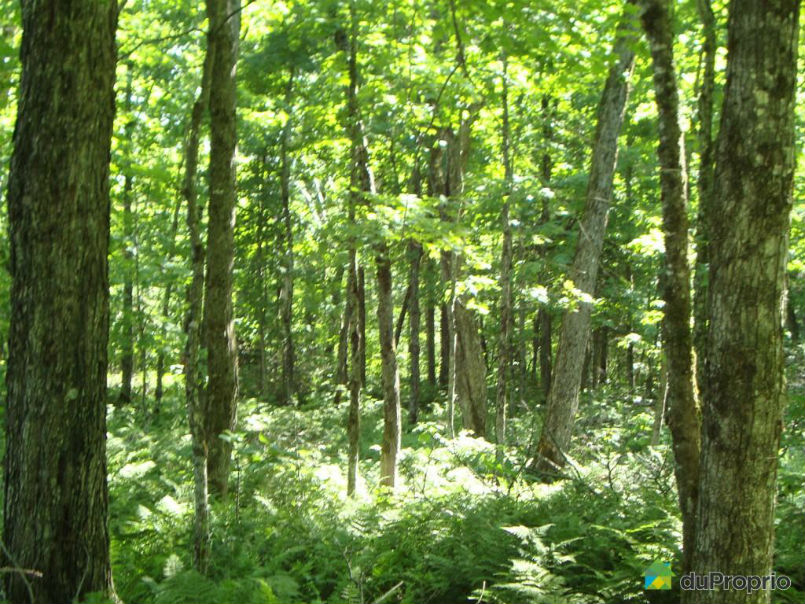
We called it “The Woods.” Well, I did. Sometimes, I referred to it as a “forest,” which it most certainly was not. Our backyard ended at a line of trees and dross beneath them; the lightly manicured, suburban lawn did not grow beyond that line, despite my teen-aged lawn mowing efforts to expand the lawn by clearing the dead leaves and branches away. That tight boundary made The Woods appear all the more elemental, foreign, forbidding, and, of course, inviting.

There was nothing truly elemental or extra natural about The Woods, though; it was not even a particularly non-developed land that surrounded our development. High tension power lines that fed electricity to our thousand-house neighborhood ran along an unpaved road about three football fields away from our back door; thus, the three-hundred-yard-deep stretch of trees that ran the entire backside of the neighborhood, from the Metro-North train tracks along the Hudson River on up and away from the river, merely existed to separate us from the taller-than-average power poles.
Read More
Snow Falling on Everything

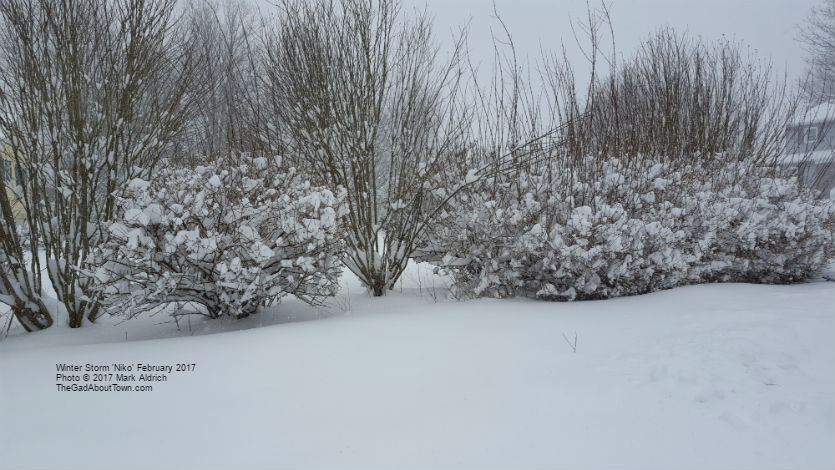
A few light taps upon the pane made him turn to the window. It had begun to snow again. He watched sleepily the flakes, silver and dark, falling obliquely against the lamplight. The time had come for him to set out on his journey westward. Yes, the newspapers were right: snow was general all over Ireland. It was falling on every part of the dark central plain, on the treeless hills, falling softly upon the Bog of Allen and, farther westward, softly falling into the dark mutinous Shannon waves. It was falling, too, upon every part of the lonely churchyard on the hill where Michael Furey lay buried. It lay thickly drifted on the crooked crosses and headstones, on the spears of the little gate, on the barren thorns. His soul swooned slowly as he heard the snow falling faintly through the universe and faintly falling, like the descent of their last end, upon all the living and the dead.—James Joyce, the conclusion of “The Dead,” Dubliners

Cemeteries are cram-packed full with people who had other plans that day. Reservations for dinner, a movie ticket in the pocket. A refrigerator with new groceries. A sink with dirty dishes.

We all know this deep down, but the occasional reminders can nonetheless surprise. “Always wear clean underwear,” a cliché cartoon version of a mother tells a cliché cartoon version of ourselves in a cliché cartoon version of a conversation that never happens in real life. But the end comes in a moment, and it is always dramatic, even when it is mundane.

(I suppose it is never mundane for the person who experiences it, but I have not yet been there, not even been near it, and no one who has had the end moment has made a verifiable report about it. Tsk-tsk. Where are their priorities?)
Read More

Remembering Pete Seeger

In 1996, in my job of assistant editor at a weekly newspaper, I awarded myself the title of music reviewer for a single issue and attended a concert given at a local high school by Pete Seeger, who died three years ago today at age 94. (Our newspaper’s actual music reviewer was only interested in attending and writing about rock concerts. This was a stroke of luck for me.) I wrote a review, even though I knew that a review is not what one writes about a Pete Seeger concert. An appreciation. A thank-you note. But not a mere review judging aesthetic merits.

It was a great concert, by the way.
Read More