
A Christmas Oratorio: ‘For the Time Being’

During World War II, the poet W.H. Auden wrote a book-length poem entitled For the Time Being. It is subtitled, “A Christmas Oratorio,” and it is a retelling of the Christmas story, but with a 20th century sensibility. His Herod, for instance, is a technology-loving king who loves that he lives in an Age of Reason and is ever-perplexed by faith and irked that he must hunt down and exterminate the baby Jesus.

An oratorio is a type of composition that was popular in the Baroque period and in churches and has not had many comebacks as a poetic or theatrical form because it never had a period of dominance. It never went away but it was never the first choice of writing mode for many writers. (Paul McCartney produced a quite famous one, A Liverpool Oratorio, two decades ago.) Auden was a poet of structures and forms, though, and he produced an attempt at almost every style and poetic structure in his body of work (about 400 poems and several full-length verse plays).
Read More
Mystical Things

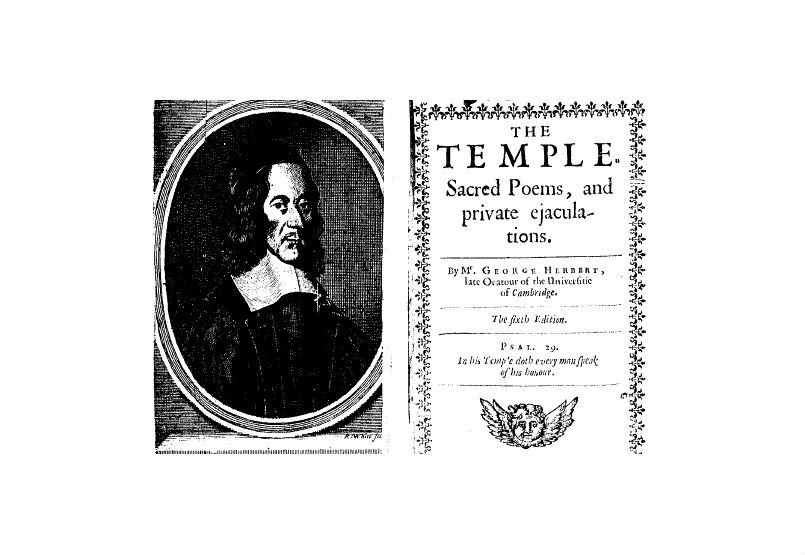
A few years ago I wrote about two artists who played with the question of whether what they are depicting is anything more or less than words on a page or paint on a surface. Both the poet George Herbert and the painter Arcimboldo make art of the question, What is art? Is it what it depicts, an idea about what it depicts, both at the same time (which makes it a third option), or something less than? Is art, by definition, always a misfire, in that a depiction of a thing is not the thing and never can be?

Arcimboldo painted portraits of character types rather than individuals; for instance, a librarian composed entirely of books or a gardener made of vegetables in a bowl. That latter painting depends on the viewer to decide to see the bowl filled with veggies or a human “face.”
Read More

‘Aubade’ by Philip Larkin

Philip Larkin was honored today with a memorial stone in Poets’ Corner in Westminster Abbey. He died thirty-one years ago today. Larkin’s memorial sits between those of Anthony Trollope and Ted Hughes. Chaucer’s tomb sits nearby. Edward Lear’s memorial stone is immediately above Larkin’s.

I wrote the following essay in June:

* * * *
“I don’t know that I ever expected much of life,” Philip Larkin wrote to his lifelong friend Kingsley Amis in October 1979, “but it terrifies me to think it’s nearly over.” He had another six years of life left, but the emptiness of the end—”the total emptiness for ever,/The sure extinction that we travel to”—was much on his mind.

The poem from which those lines originate, “Aubade,” was published in 1977 in the Times Literary Supplement (TLS). Larkin had started it in 1974, worked at it that year, and then left it until 1977, when he finished it. “Death is the most important thing about life,” he wrote his companion, Monica Jones, when they were both still young.
Read More