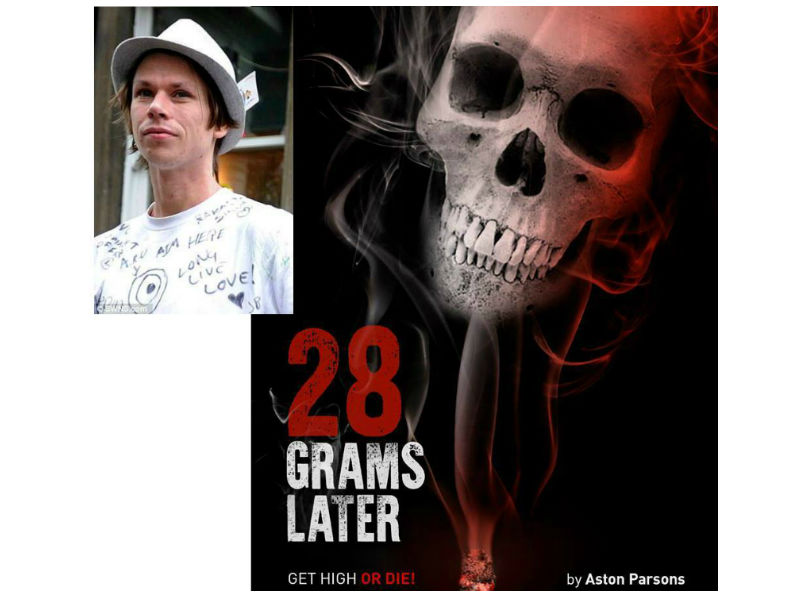
Zombies to Help Love

Aston Parsons’ 2015 novel 28 Grams Later is a zombie apocalypse horror-comedy in which the only defense against the zombie infection is … cannabis. It is tightly plotted, stays one step ahead of its readers, and has many laugh-out-loud comic moments.

Among its great insights are that even in the middle of an apocalypse, bureaucratic types will emerge to run the remains of the bureaucracy, military types will offer to shoot first, and stoners will quite probably save the world. Parsons keeps the novel’s attitude on the tongue-in-cheek side, which is, of course, an awkward compliment for a zombie novel.

Parsons has also pledged that all proceeds from sales of the novel from December 1 on will be donated to the Courage Foundation’s defense fund for Lauri Love. In November, Amber Rudd, the United Kingdom’s Home Secretary, signed the order to approve Lauri Love’s extradition to the United States to face charges of data theft.

More than 100 members of Parliament, across party lines, signed a letter in October on behalf of Love that is to be sent to President Obama to request that he withdraw the extradition requests. People around the world are fighting for Love’s freedom. Parsons’ book is one more way.

The title is available through all the E-Book retailers. Hardcover, the book is available for around £3.00. Through Amazon UK, the title is £0.49, and though Amazon in America, the title is 99 cents. Buy a copy, and then spread the word.

28 Grams Later is also available through iTunes.
Read More

Mystical Things

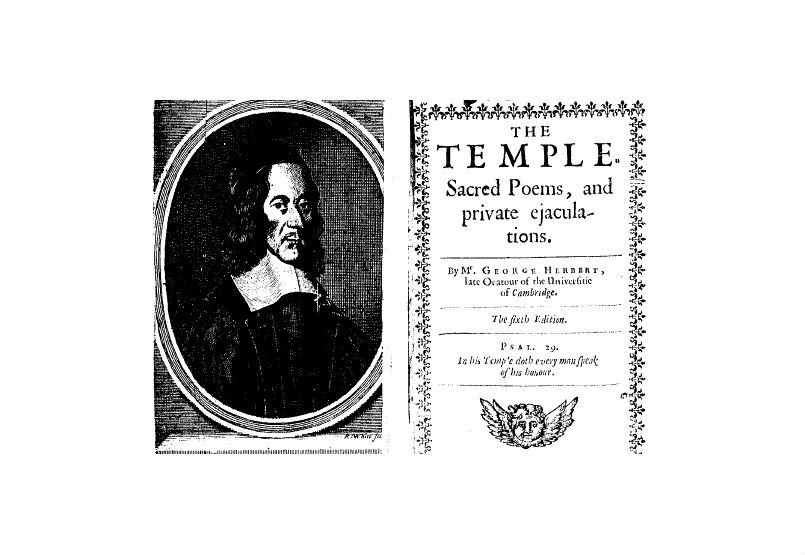
A few years ago I wrote about two artists who played with the question of whether what they are depicting is anything more or less than words on a page or paint on a surface. Both the poet George Herbert and the painter Arcimboldo make art of the question, What is art? Is it what it depicts, an idea about what it depicts, both at the same time (which makes it a third option), or something less than? Is art, by definition, always a misfire, in that a depiction of a thing is not the thing and never can be?

Arcimboldo painted portraits of character types rather than individuals; for instance, a librarian composed entirely of books or a gardener made of vegetables in a bowl. That latter painting depends on the viewer to decide to see the bowl filled with veggies or a human “face.”
Read More

‘Aubade’ by Philip Larkin

Philip Larkin was honored today with a memorial stone in Poets’ Corner in Westminster Abbey. He died thirty-one years ago today. Larkin’s memorial sits between those of Anthony Trollope and Ted Hughes. Chaucer’s tomb sits nearby. Edward Lear’s memorial stone is immediately above Larkin’s.

I wrote the following essay in June:

* * * *
“I don’t know that I ever expected much of life,” Philip Larkin wrote to his lifelong friend Kingsley Amis in October 1979, “but it terrifies me to think it’s nearly over.” He had another six years of life left, but the emptiness of the end—”the total emptiness for ever,/The sure extinction that we travel to”—was much on his mind.

The poem from which those lines originate, “Aubade,” was published in 1977 in the Times Literary Supplement (TLS). Larkin had started it in 1974, worked at it that year, and then left it until 1977, when he finished it. “Death is the most important thing about life,” he wrote his companion, Monica Jones, when they were both still young.
Read More