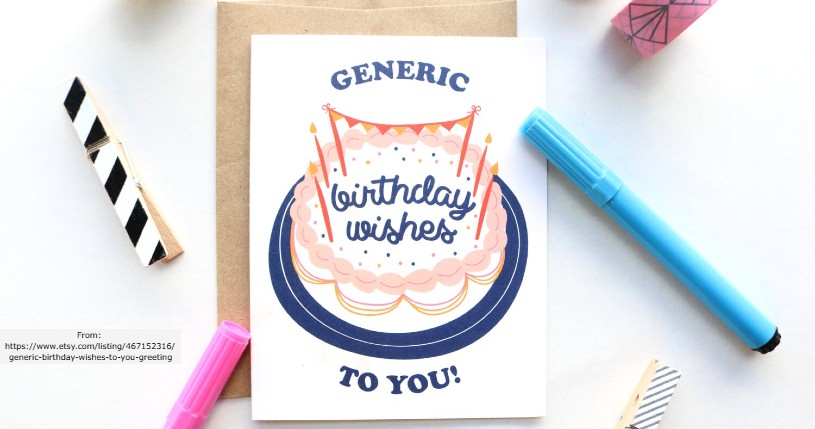
On the subject of my not-round-number birthday later this week, birthdays in general, and James Joyce.
* * * *
Long-time readers of these pages and longer-time knowers of me know that I do not believe in astrology, but that I like the fact that I am a Scorpio, even though I do not not believe in astrology. It’s like it is a team I belong to through no effort on my part, like my multiple lazy statuses as a member of the right-handed, brunette, male, Jewish, American, disabled, New Yorker, insomniac, hetero, New York Yankees fan teams.
A Scorpio, whatever that means. In fact, a dear friend composed my birth chart a couple years ago and informed me that I am a “double Scorpio,” which sounds neat and intense, and my ego-driven side (in other words, all of me) hopes that this makes me sound mysterious and sexy, but it just means that both the sun and moon were in the same sign at the moment of my debut on life’s stage at 6:37 p.m. on Monday, November 18, 1968. (I arrived in time for dinner.) To my non-astrology-believing ears “double Scorpio” just sounds like “double thing I double don’t believe in.” However, my ego (in other words, all of me) loves, just loves, to tell people I am a double Scorpio.
There is nothing mysterious or sexy about my ego.
I noticed when I was in college that whenever I met someone who was also born on a November 18 that I automatically thought that that person and I should be friends. It was like a thought passed through my heart: You were born on November 18, and I was born on November 18, so you and I both know something important: We both know what it’s like, man, we both know the unique burdens and gifts of life as a person born on November 18. No one else knows what it’s like.
Now, aren’t these personal beliefs that I just confessed to you another way to describe the thing we call astrology? (Astrologers would say no.) Yes and no, because I do not hold the same place in my heart for those born on November 17 or 19. (One of my close friends is a November 17ther, and also someone born in 1968, but I ignore his personal lack of November 18th specialness in a celebration that he is less than twenty-four hours older than me. I call him my older twin.) Those not born on November 18 lack simple November 18th-ness. Perhaps it is my double Scorpio nature to exclude people in that way.
Perhaps I should blame or credit what follows on my school district. As I wrote a few months ago, I graduated high school in 1986. With a November birthday, I was the baby of the class or close to it, which means that some of my classmates were born in January 1968, and so were almost a year older than me. This means nothing at age 57, but in elementary school, an almost-year difference can be noticeable and sometimes the meaner and older classmates might make you notice it.
The deep-down non-rational effect this created in me is an unconscious sense that everyone born earlier in the year than me is older than me. The year of your birth is of no importance here, as you experienced more of your first year than I did of mine. You may be twenty years younger than me, yet you are older than me. My younger sister, born March 24, but in 1971, was somehow older than me in this birthday-fixated perspective. Michelle has always seemed more mature than me, anyway, in that she’s led a much more sane life than the one I pursued.
The one rational thought I have about all of the above, from the glowing wonderfulness of the November 18 birthday to the sense that almost everyone on the planet is older than I am because most of your birthdays fall earlier in the year than mine does, is the deeply held belief that everyone else feels about your birthday as I feel about my birthday. How could you not? It’s your special day!
Through years of experience of life I’ve learned that I could not be more wrong. Almost everyone feels something about their birthday, and many feel an emotional connection to it, but I’ve learned that my feelings are a little insane. I have Leap Year birthday friends who seem to come close to these feelings, but even they do not. I’m a double Scorpio. I guess that explains it. ¯\_(ツ)_/¯
In his huge biography of James Joyce, Richard Ellmann notes in several places that Joyce found his own birthday, February 2, 1882, to be a fascinating topic. This may be the one thing I share with Joyce. I recognized exactly how he felt in a minor anecdote in the biography. Ellmann tells us that Joyce made certain that his novel Ulysses was published on his 40th birthday, in 1922, and he tells how his love of his birthday affected his relationship with another writer, James Stephens.
Ellmann quotes Joyce himself on the subject of James Stephens:
“The combination of his name from that of mine [James] and my hero in A.P.O.T.A.A.A.Y.M. [A Portrait of the Artist as a Young Man] is strange enough. [The name of the hero of that novel is Stephen.] I discovered yesterday, through enquiries made in Paris, that he was born in Dublin on the 2 February 1882.” (Ellmann, 592)
Ellmann notes that Joyce also was amazed that he and Stephens were both fathers of a boy and a girl. One of each. Either Stephens did not know or did not want to tell Joyce that they did indeed share a birthday but not a birth date, as Stephens was born February 2, 1880, two years before Joyce.
For Joyce the shared birthday and the other details were no small matters, as he began to consider Stephens a possible collaborator: he wanted Stephens to aid him with Finnegan’s Wake, a novel that had occupied Joyce’s world for years by this time, the late 1920s. He was, it is reported, willing to propose a co-authorship of “JJ & S (Jameses Joyce & Stephens),” which in Joyce’s world of puns also would have been an enjoyable pun on the name of the popular whiskey, Jameson’s. The coincidences of birth date and names were so convincing that it shook Joyce, and it took him seven months to work up to a discussion of his idea with Stephens. Ellmann quotes a letter by James Stephens:
“One evening my concierge told me as I came in that a tall, beautiful, blind gentleman had called and had left a note for me. It was from Joyce and it asked me to meet him the next day. After that we met several times a week for a long time. I discovered that he approved of me in the most astonishing fashion, but it took me a little while to find out why. …
“How Joyce made this discovery I don’t know, but he revealed to me that his name was James and mine was James, that my name was Stephens, and the name he had taken for himself in his best book was Stephen: that he and I were born in the same country, in the same city, in the same year, in the same month, on the same day, at the same hour, six o’clock in the morning of the second of February. He held, with a certain contained passion, that the second of February, his day and my day, was the day of the bear, the badger and the boar. On the second of February the squirrel lifts his nose out of his tail and surmises lovingly of nuts, the bee blinks and thinks again of Sleeping Beauty, his queen, the wasp rasps and rustles and thinks that he is Napoleon Bonaparte, the robin twitters and thinks of love and worms. I learned that on that day of days Joyce and I, Adam and Eve, Dublin and the Devil all shake a leg and come a-popping and a-hopping, yelling here we are again, we and the world and the moon are new, up the poets, up the rabbits and the spiders and the rats.
“Well, I was astonished. I was admired at last. Joyce admired me. I was beloved at last; Joyce loved me. Or did he? Or did he only love his birthday, and I was merely coincident to that? When I spoke about my verse, which was every waking minute of my time, Joyce listened heartily and said, ‘Ah.’ He approved of it as second of February verse, but I’m not certain that he really considered it to be better than the verse of Shakespeare and Racine and Dante. And yet he knew the verse of those three exhaustively!
“Now, in order to bring this birthday to an end, let’s do it in the proper way. If I were Joyce’s twin, which he held, then I had to celebrate this astonishing fact in my own way. So upon our next birthday I sent him a small poem. Joyce reported back to me that he was much obliged. He practically said ‘Ah’ to my poem and I could almost see him rubbing his chin at it.” (Ellmann, 593)

James Stephens, James Joyce, John Sullivan
Joyce did not so much cancel the idea of Stephens as co-author as allow it to evaporate (that quoted “Ah” above says so much), but the two remained friends. Joyce celebrated his and what he thought was Stephens’ fiftieth birthday, their “jubilee year,” by translating one of Stephens’ poems. The poem is titled “Stephen’s Green”:
The wind stood up and gave a shout
He whistled on his fingers and
Kicked the withered leaves about
And thumped the branches with his hand
And said he’d kill and kill an kill
And so he will and so he will.
Joyce took the time to personally translate the above minor poem into French, German, Latin, Norwegian, and Italian. As Stephens himself might have written, Joyce may have loved it as an example of fine “second of February verse,” and thus superior to all other kinds of verse, which prevented him from seeing it as it is: a half-written half-thought.
I love the idea of “fine second of February verse,” and how it might blind someone who possesses an attachment to one’s birthday from noticing that the fellow February 2nd writer’s verse isn’t great poetry.
It’s just too bad that James Joyce wasn’t born on November 18.
____________________________________________
Mark Aldrich is an award-winning humor columnist and a writer/performer with the Magnificent Glass Pelican radio comedy improv group, which just completed its thirty-fifth season:
Follow The Gad About Town on Facebook!

This work is licensed under a Creative Commons Attribution-NoDerivs 3.0 Unported License.

