Today in History: August 10

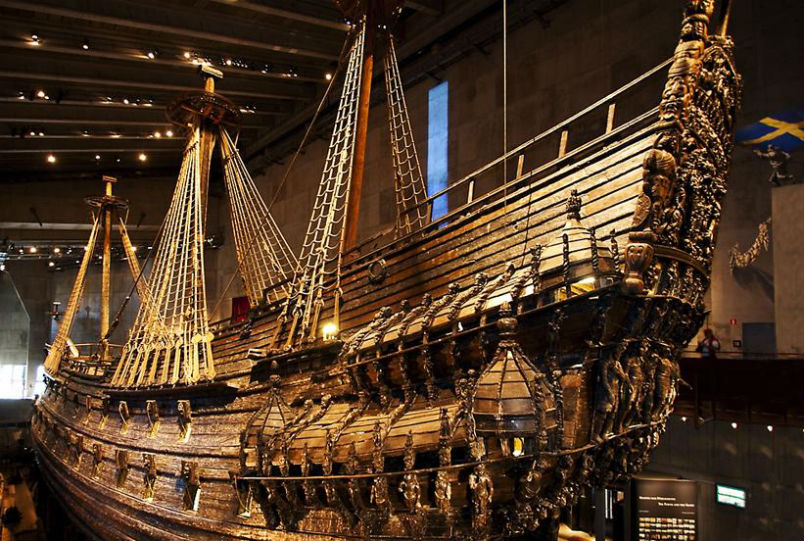
The Swedish warship Vasa (above) was immense: 226 feet long, 172 feet tall, festooned with decorative woodwork, and loaded with cannons. The king, Gustavus Adolphus, ordered that it carry 72 24-pound cannons, far more than any other warship. Ultimately, it was built to carry 64 cannons of various sizes, but on two gun decks. Even without loading the guns on board, two decks above the water line would make the ship top heavy. With the guns, the ship would certainly be top heavy. And if the ship actually needed to fire any of the weapons, the ship ran the risk of blowing itself onto its side with the recoil.

Vasa was launched on this date in 1628 with huge crowds along the waterfront in Stockholm to see it off. The moment that it unfurled its sails and was hit with any wind at all, the tall ship was knocked on its port side, water started rushing in through its open gun windows, and it sank, killing thirty sailors. Its maiden voyage lasted about one thousand feet.
Read More
Today in History: August 9

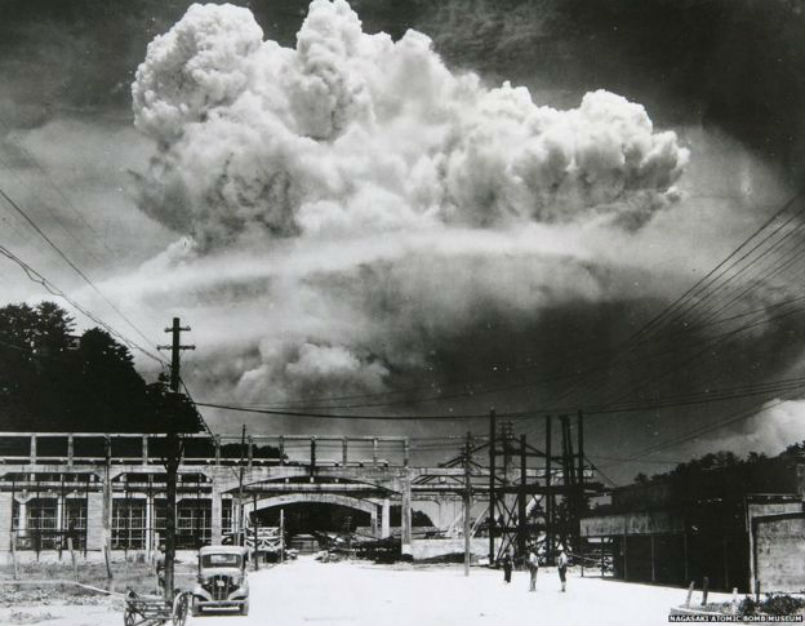
The United States Of America became the first nation to drop a second nuclear weapon on an enemy nation in wartime on this date in 1945. The city of Nagasaki, Japan, had a population of about 263,000 people at the time. About 50,000 were killed instantly after the bomb, nicknamed “Fat Man,” detonated. About 30% of the city was obliterated in seconds.

Nagasaki was the second-level target for the bombing run; the city of Kokura had been the primary, intended, target, but smoke from the previous day’s firebombing of the nearby city of Yamata denied the team visual sighting. Upon arriving at Nagasaki, the flight team discovered it was under a cloud cover, but the plane was running low on fuel, so radar contact was established. At the last second, clouds over Nagasaki parted, and visual sighting led to the bomb being dropped between Mitsubishi’s two major factories.
Read More

Today in History: August 8

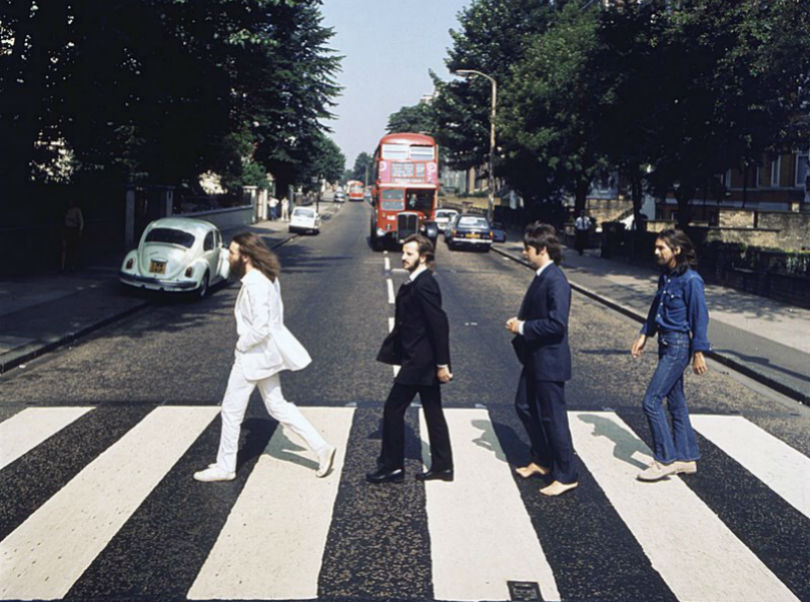
The four young men in the photo at top were in the process of recording an album that they intended to name for the street on which their recording studio was located—the studio in which they had spent their recording career as a group. One of them, Paul, sketched an idea for an album cover: the four band mates crossing the street at the zebra crosswalk in front of the recording studio.

On this date in 1969, the photo session was held. Traffic was stopped, including a double-decker bus, and the four strode back and forth. A total of six photos were taken by Ian MacMillan from atop a stepladder; the fifth photo of the six became the album cover for Abbey Road.
Read More