Today in History: September 24

The first edition of 60 Minutes was broadcast on CBS on this date in 1968.

About to begin its 49th season, with several spin-offs and more than 1000 episodes, the program holds many American broadcasting records: the longest continuously running show in prime time; the only show (of any kind) that has been in the top ten for as many seasons (it was in the top ten for 23 consecutive seasons); the only show that has been a top 25 show each season for the last 41 seasons. It is one of only four shows to have been the top-rated program for an entire season for as many as five seasons.

The creator of the show, Don Hewitt, had worked with Edward R. Murrow on both of Murrow’s legendary television news programs: See It Now, a hard-hitting news magazine with long-form articles, and Person to Person, an interview and celebrity profile show. Hewitt wanted to produce a show that would combine “high Murrow” with “low Murrow.” Hewitt remained the executive producer of the 60 Minutes until 2004.
Read More

Today in History: September 23

At noon on this date in 1938, at the site of what was to be the 1939 New York World’s Fair, a time capsule was buried with much fanfare. It is to be reopened in the year 6939, or 5000 years in the future.

People have buried time capsules for centuries, but the term “time capsule” itself was coined for this particular object, buried on this date 78 years ago, at this World’s Fair. About 35 objects of everyday importance and several microfilms (along with a handheld microfilm reader) of many documents were placed in an airtight container that was placed in a rust- and corrosion-proof metal container, especially created for this capsule to last 5000 years.
Read More

Today in History: September 22

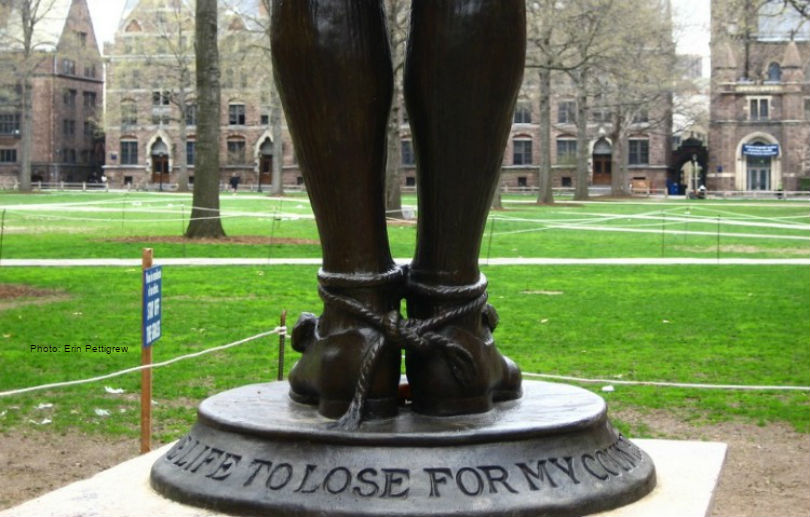
He was an unlikely spy. Perhaps the best spies are supposed to be “unlikely,” unsuspectable, but Nathan Hale probably was too honest to be a spy. Sent by the Continental Army to Lower Manhattan to track and report on British Army movements, he was caught within days of his arrival. Arrested on September 21, 1776, he was executed by hanging the next day.

Not one contemporary account has an exact description of the scene on the gallows, because the hanging, which did not follow a trial, was not a public event. All of the contemporary accounts, all written by the British, describe the calm composure of the 21-year-old spy as he faced death, however. What he said was close enough to, “I only regret that I have but one life to lose for my country,” that that may indeed have been what he said 240 years ago today. (Some millennials have offered this as America’s first-ever mic drop.)
Read More