Today in History: Dec. 10

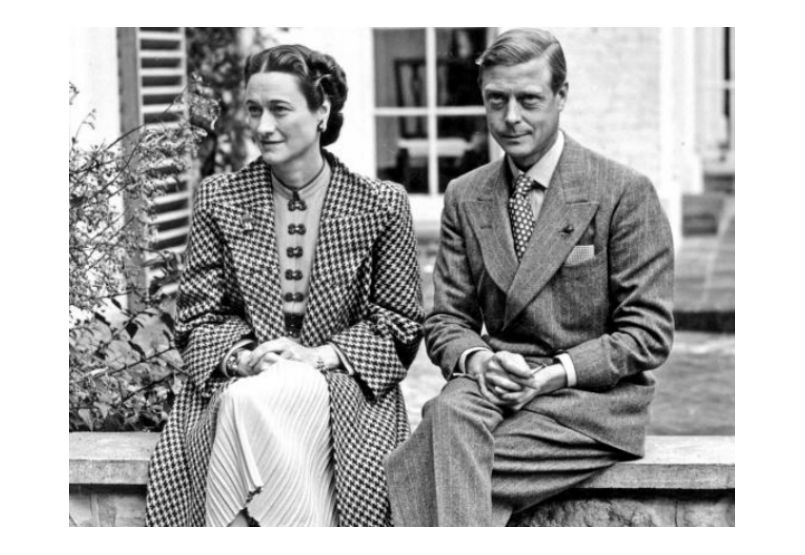
“After I am dead, the boy will ruin himself in 12 months.”—King George V, referring to his son, Edward

I, Edward the Eighth of Great Britain, Ireland, and the British Dominions beyond the Seas, King, Emperor of India, do hereby declare my irrevocable determination to renounce the throne for myself and for my descendants, and my desire that effect should be given to the instrument of abdication immediately.
 
In token whereof I have hereunto set my hand this tenth day of December, 1936, in the presence of the witnesses whose signatures are subscribed.
—King Edward VIII

In his worried joke, King George V overestimated the length of his son’s reign by a month. George died on January 20, 1936, Edward became Edward VIII, and then 80 years ago today he signed the formal Instrument of Abdication to end his brief reign.
Read More

Today in History: Dec. 9

Most centenarians become famous upon reaching their 100th birthday. Not many are already famous. The most renowned show business figures to achieve this milestone are probably Bob Hope and George Burns. Today, Kirk Douglas joins the ranks of the centenarians among us.

Douglas remains an active figure in Hollywood. Last year he published a positive statement about the film, Trumbo, starring Bryan Cranston. He said he had one problem with the film, which depicts Hollywood history during the era of the Blacklist and shows Douglas’ heroic actions making certain that the blacklisted writer Dalton Trumbo was given credit for writing Spatacus. His problem with Trumbo? “I don’t understand why I wasn’t cast as ‘Kirk Douglas.'”
Read More

Today in History: Dec. 8

U.S. Patent Number 1,835,031 was published on this date in 1931 by Lloyd Espenschied and Herman Affel of AT&T’s Bell Telephone Laboratories. It was for coaxial cable, something that is profoundly important in modern life, yet unheralded.

The patent was for innovations in the technology, which had been under development on both sides of the Atlantic for decades—ever since the first Trans-Atlantic cable had been set in place and put to work, technicians had been searching for better and faster cable for transmissions.

Espenschied’s patent for a “concentric conducting system” is also of note because, although written in 1931, it mentions its possible use in cable television: “The types of transmission line systems now in use will not satisfy the television requirements for long distance transmission which must be met eventually.”
Read More