‘A Renewal’: You’ll Know When You Know

To have love, one must give love; to give love, one must have it to give. That may be life’s deepest catch-22, Hobson’s choice, Morton’s fork—any of those logical situations whose suppositions exist only to support the logic that requires them. Love is illogical, or at least has its own logic; “How Will I Know?” pretty well sums it up. My mother (it is her birthday today) would have replied to Ms. Houston: “You’ll know when you know.”

The moment love is not pursued, there it is; advice to a young lover often follows that logic. “When you stop looking for it or needing it, you will find love.” (It only took about three decades of hearing that for it to sink in for me, which reminds me that it is Valentine’s Day soon.)
Read More
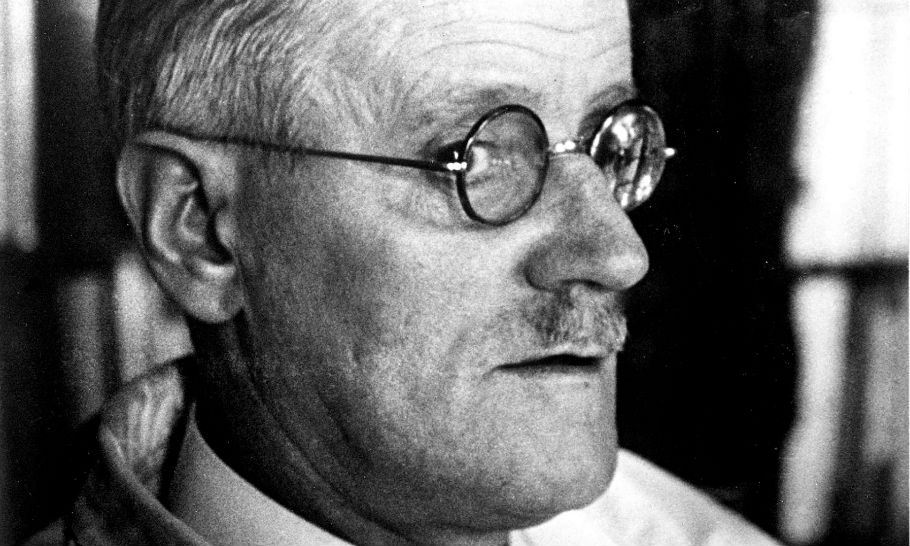
James Joyce and His Birthday

February 2, 2016, is the 134th birthday of James Joyce. In his huge biography, Richard Ellmann notes in several places Joyce’s fascination with his own birthday (he made certain that his novel “Ulysses” was published on his 40th, in 1922) and tells how this affected his relationship with another writer, James Stephens. Ellmann quotes Joyce:

“The combination of his name from that of mine [James] and my hero in A.P.O.T.A.A.A.Y.M. [“A Portrait of the Artist as a Young Man”] is strange enough. [The hero of that novel is Stephen.] I discovered yesterday, through enquiries made in Paris, that he was born in Dublin on the 2 February 1882.” (Ellmann, 592)

Ellmann notes that Joyce also found it amazing that he and Stephens were both fathers of a boy and a girl. Either Stephens did not know or did not want to tell Joyce that they did indeed share a birthday but not a birth date, as Stephens was born February 2, 1880.
Read More

A Pet Teacher

I taught freshman composition at two upstate New York colleges in the early 1990s. My last class met for its final session at the conclusion of the fall 1995 semester, two decades ago. From the start of that school term, I knew that this was going to be my last semester teaching or attempting to teach or referring to myself as a teacher; of course, two of those three classes that had my name on the syllabus that semester were two of the best groups of students I had yet worked with and almost made me regret my decision to retire at age 27. Almost.

The decision never was mine to make; I was not a good teacher, and I am grateful that I learned this on the sooner side of “sooner or later.” I am, maybe, an entertaining lecturer and an even better student; as a twenty-something freshman composition instructor, I must have been execrable. It’s too bad that I had barely made even the faintest start in my pose as a long-suffering anything by the time it was all over.
Read More