‘In Praise of Limestone’

[…] In so far as we have to look forward
To death as a fact, no doubt we are right: But if
Sins can be forgiven, if bodies rise from the dead,
These modifications of matter into
Innocent athletes and gesticulating fountains,
Made solely for pleasure, make a further point:
The blessed will not care what angle they are regarded from,
Having nothing to hide.
Either, but when I try to imagine a faultless love
Or the life to come, what I hear is the murmur
Of underground streams, what I see is a limestone landscape.
—W. H. Auden, “In Praise of Limestone”

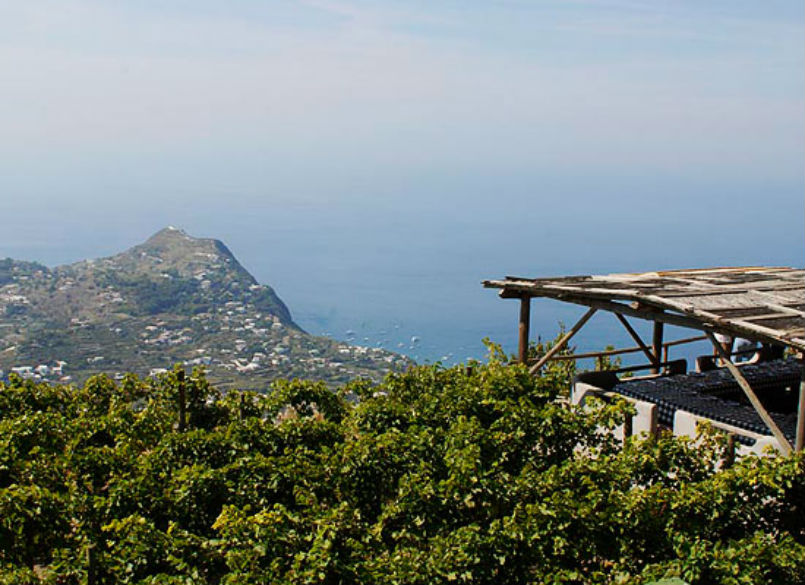
In his 66 years, W.H. Auden lived in many locations in Europe and America: he was born and raised in York, educated at Oxford, and lived long-term in Berlin, New York City, Michigan, Italy, Austria. In 1948, he started spending his summers on the island of Ischia, in the Tyrrhenian Sea. (Seen above.) That island’s landscape, covered as it is with rocky volcanic outcroppings, so different from any he had known, came to represent difference itself in his mind.
Read More

Auden’s ‘Thank You, Fog’

“My face looks like a wedding cake left out in the rain,” quipped W.H. Auden. Indeed, by the age of 60, Auden’s face looked like the most-read library book in the most popular library; it exhausted any adjectives thrown at it—it was its own adjective. His friend Hannah Arendt said he looked “as if life itself had delineated a kind of face-scape to make manifest the ‘heart’s invisible furies.'”
Read More

‘Hearing’ ‘Voices’

The poet and critic John Greening sums up the career of James Merrill, who conversed with the inhabitants of other planes of reality, in a 2010 essay, “Ouija”:

James Merrill made a point of breaking all the rules, of remaining recklessly formal when all about him were casting off their chains, of being incorrigibly discursive and elitist, shunning the rhythms of speech for something more refinedly musical, and unswerving in his determination to squeeze every last pun out of a line.—John Greening, “Ouija,” The Dark Horse, Summer 2010

Merrill was a rebel in his adherence to rules in a rule-breaking era. He wrote dazzling, perfect poems, and he employed almost every verse form available to him, as an actor might use accents. Greening quotes George Bradley: “Reading James Merrill is enough to make the rest of us suspect we’re not smart enough to write poetry.” Even at his smartest, he is engaging and not impenetrable. His pleasure in the sounds of words and the poetic effects he creates and his many puns are always evident. He compliments his readers in his implied assumption that we must know what he is writing about at least as well as he does.
Read More