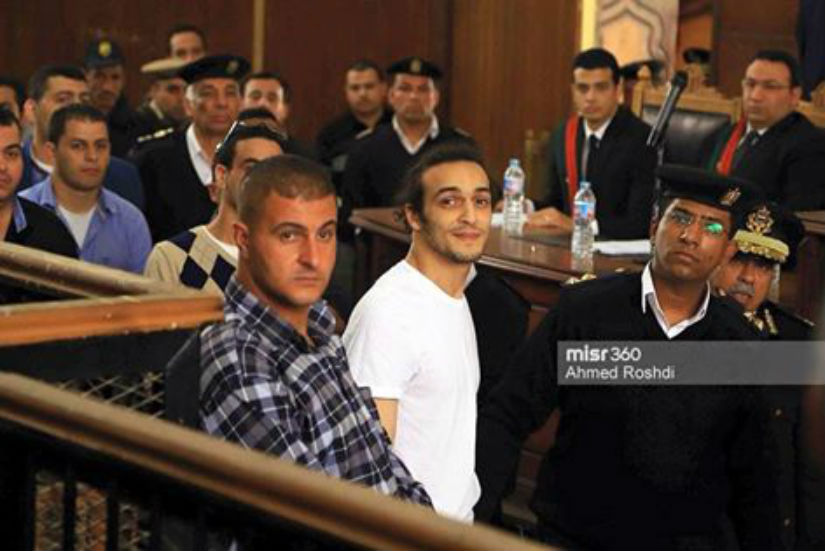
Another Delay for #Shawkan

UPDATE, March 26, 2016: For the third time, the trial for Mahmoud Abu Zeid, the photojournalist known as “Shawkan,” has been postponed by an Egyptian court, this time until April 23. The court cited the same reason it gave for the first postponement in December and the second one in February: that it does not have the space to accommodate the hearing. Because he was arrested in a widespread government crackdown, which was known as the “Rabaa Sit-in Dispersal,” Shawkan has been included with 737 other individuals. All face similar charges of offenses against public order and national security, violence, murder, attacking security forces and civilians, engaging in armed conflicts, and destroying public facilities.

In February, Shawkan was confined to a “disciplinary cell” for four days, in other words, solitary confinement. His social media accounts describe a tiny cell, six feet by five-and-a-half feet (take a moment and measure that out), a daily slice of bread, a bucket, no blanket. There is a disgusting irony in placing him in this small cell for any length of time, whether one hour or from December till April 23, when the reason for all three court hearing delays has been the lack of space.
Read More
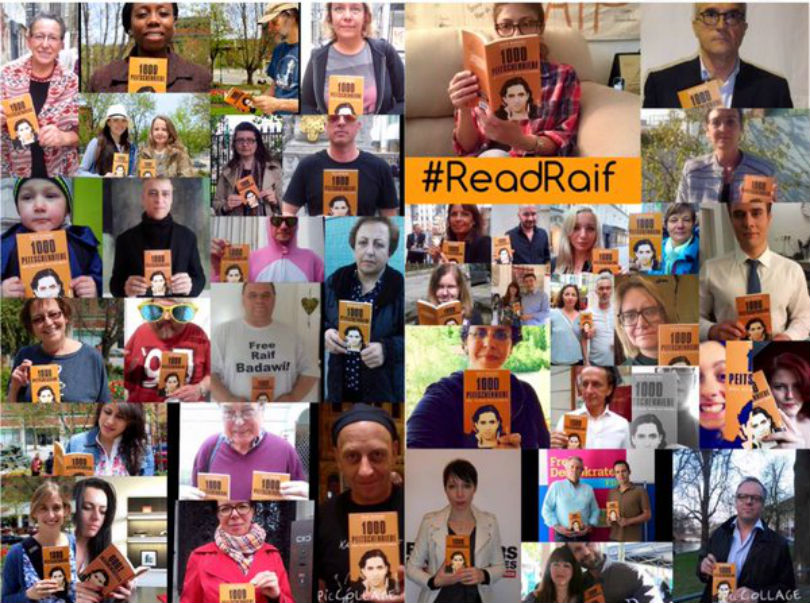
#ReadRaif: Now More than Ever

Freedom of speech is the air that any thinker breathes; it’s the fuel that ignites the fire of an intellectual’s thoughts.
 
Many human rights organizations believe that freedom of speech is a basic human right, and they call upon the Arab regimes to reform their policies when it comes to freedom of speech. As a human being, you have the right to express yourself. You have the right to journey wherever your mind wanders and to express the thoughts you come up with along the way. You have the right to believe, and to atone, the same way you have the right to love or to hate. You have the right to be a liberal or to be an Islamist.Raif Badawi, “1000 Lashes Because I Say What I Think

If you believe freedom of speech is a precious commodity, “the air” we need to breathe, the most dangerous and assertive act you can perform in the name of that freedom is to keep using it, to keep at it. To keep writing.
Read More

Dear Amnesty: Stop Crying Wolf

Is the human rights organization’s fundraising placing lives in danger? An article by Mark Aldrich and Raymond Johansen

* * * *
“They aren’t your money train. They are human beings.” Raymond Johansen, an activist and Anon who has been fighting for freedom for human rights prisoners around the world for years, has spent the last two weeks trying to protect three young prisoners in Saudi Arabia from Amnesty International’s clumsy embrace.

Two weeks ago, this headline appeared on Amnesty International’s website and its many Facebook and Twitter accounts: “Families Fear Their Sons Will Be Executed Within 24 Hours.” The three sons in question—Ali Mohammed al-Nimr, Dawood al-Marhoon, and Abdullah al-Zaher—are also featured on Reprieve’s “Urgent” death penalty cases page. Interviews with Ali al-Nimr’s family will be featured in a PBS Frontline documentary, “Saudi Arabia Uncovered,” that will be broadcast on March 29.

Indeed, the three officially remain on death row in Saudi Arabia, so their lives are in the hands of that nation’s judiciary. The world is watching. However, in October 2015, that nation assured Phillip Hammond, the British Foreign Minister, that Ali will not be executed, and Mr. Hammond did the unprecedented and announced this in bold and clear language: “I do not expect Mr al-Nimr to be executed.”

Might Saudi Arabia renege on this promise? It might. Had Amnesty International, Reprieve, or the families of the three youths learned something new two weeks ago? They had not. And yet that phrase, “Families fear their sons will be executed within 24 hours,” has propagated on Twitter and Facebook, usually with a link to an Amnesty action page (signature and donations welcome).
Read More