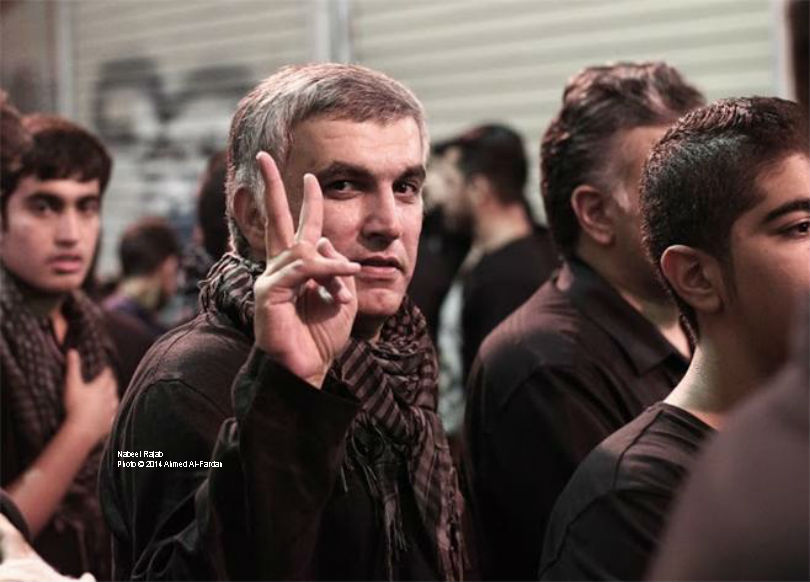
On Trial for Tweets: Nabeel Rajab

One of the inadvertent effects of Bahrain’s current campaign of aggressive repression against those it deems dissidents is the simplest one: Bahrain validates the dissidents, proves their testimonies of brutality, physical and psychological torture, and repression one-hundred percent correct.

Almost two weeks after Nabeel Rajab, the president of the Bahrain Center for Human Rights, was arrested, he finally learned today what he is charged with: two violations of Bahrain’s penal code, violations of articles 133 and 216, which carry a combined maximum sentence of 13 years in prison. The charges stem from Tweets that he published last year. Tweets. His first hearing will be July 12.

One of the other effects, of course, is this: Bahrain’s campaign of repression stokes dissent, and dissenters become easier to identify, arrest, attempt to silence. Right now, Bahrain is making life dangerous for thousands of people as it places a choke-hold on parts of its population: Shia, human rights activists, those people unlucky enough to not be born in the ruling Al Khalifa family.
Read More
An Appalling Arrest in Bahrain

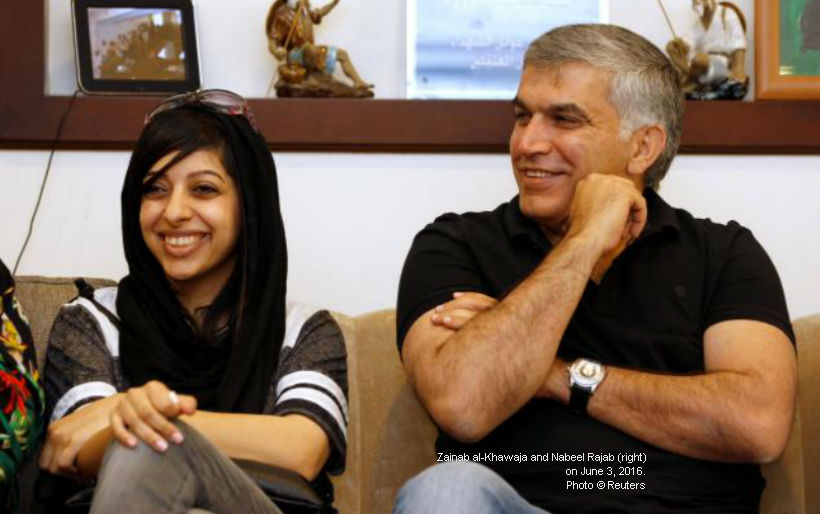
When Nabeel Rajab, the president of the Bahrain Center for Human Rights, was arrested earlier today, he asked the plainclothes police officers who had spent the previous half-hour searching his house and confiscating his cellphone and other electronic devices why they were arresting him.

“We don’t know,” he was told, according to an RT interview with Rajab’s wife Sumaya. “We don’t know, but we have been ordered to do so.” And they took him away. Thirty officers were involved in the raid and arrest, which is believed was led by Bahrain’s Cybercrime Unit.

The arrest comes on the same day that the United Nations Human Rights Council opened its 32nd session in Geneva, Switzerland. Yesterday, six Bahrain human rights activists were prevented from boarding flights from Bahrain to travel to the UNHRC sessions. Bahrain has long employed that tactic of repression: forbidding activists from leaving the country to tell the world what is happening behind closed borders.
Read More

‘I’m in prison because I was doing my job’

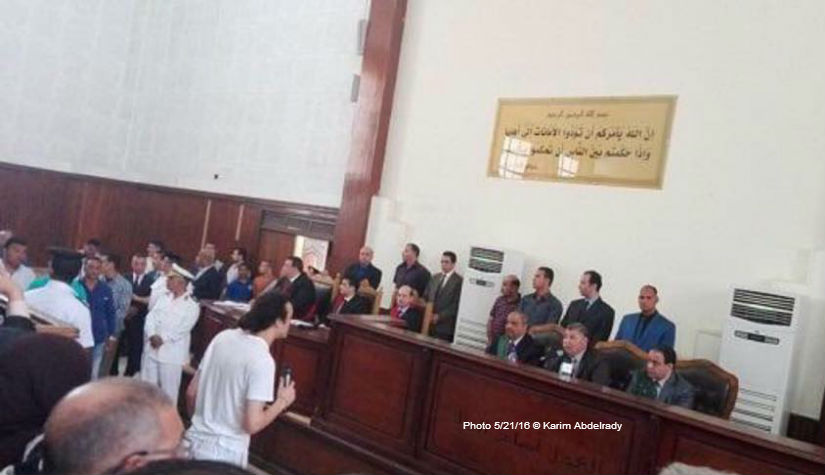
Mahmoud Abou Zeid, the Egyptian photographer known as Shawkan, had an opportunity to speak on his own behalf in court today. He is the individual in white holding a microphone and addressing the panel of judges in the above photo. Shawkan’s case was postponed, yet again, this time until May 31.

“I’m in prison because I was doing my job,” Shawkan told the court. Today was the first time that Shawkan was able to address the court. Shawkan was arrested more than 1000 days ago while covering a protest—the Rabaa sit-in—that was a part of Egypt’s portion of demonstrations during the vast Arab Spring movement. He was arrested in a round-up of hundreds of people, and as a result, he is one of more than 700 co-defendants awaiting the start of his trial.

President al-Sisi’s government (and its jurisprudential system) has made it clear that it considers that job, journalism, to be a criminal enterprise. Several dozen are in jail in that nation right now; to the best of my knowledge, Shawkan has been held the longest: 1011 days today.

In the video below the fold, Shawkan speaks with the judges. At one point, he gestures toward the television and news cameras as if to say, “I should be with them covering hearings like this.”
Read More