Today in History: May 24

I can’t say when it occurred to me to write my own songs. I couldn’t have come up with anything comparable or halfway close to the folk song lyrics I was singing to define the way I felt about the world. I guess it happens to you by degrees. You just don’t wake up one day and decide that you need to write songs, especially if you’re a singer who has plenty of them and you’re learning more every day. Opportunities may come along for you to convert something — something that exists into something that didn’t yet. That might be the beginning of it. Sometimes you just want to do things your way, want to see for yourself what lies behind the misty curtain. It’s not like you see songs approaching and invite them in.—Bob Dylan, Chronicles, Volume One

Bob Dylan is 75 today. He will be on tour through the U.S. this summer. “Not Dark Yet,” from 1997 (below the fold):
Read More

Today in History: May 23

In a letter dated May 23, 1785, Benjamin Franklin refers to “my double spectacles” and proffers a sketch. This letter, and other documents, provide much of the evidence for definitively naming Franklin the inventor of bifocals. A version of a drawing from this letter is above.

He describes the difficulties that every person who wears bifocals (hello: waves to camera) encounters on their way to deciding to wear bifocals: “The same convexity of glass, through which a man sees clearest and best at the distance proper for reading, is not the best for greater distances. I therefore had formerly two pair of spectacles, which I shifted occasionally, as in travelling I sometimes read, and often wanted to regard the prospects.”
Read More

Today in History: May 22

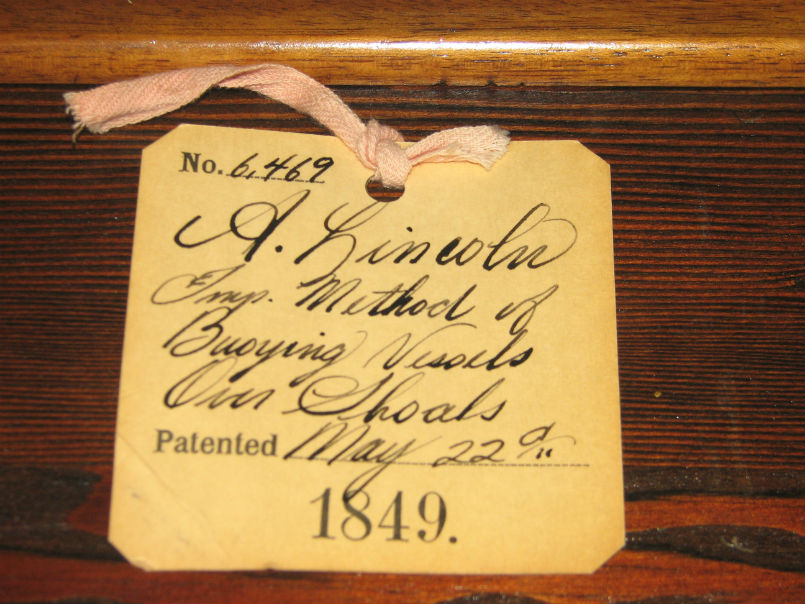
To this day, only one U.S. President has been awarded a patent for an invention: Abraham Lincoln. On May 22, 1849, Lincoln received Patent No. 6469 for a device to “buoy vessels over shoals,” an invention which was never manufactured.

His application reads: “Be it known that I, Abraham Lincoln, have invented a new and improved manner of combining adjustable buoyant air chambers with a steam boat or other vessel for the purpose of enabling their draught of water to be readily lessened to enable them to pass over bars, or through shallow water, without discharging their cargoes …”
Read More