Today in History: April 5
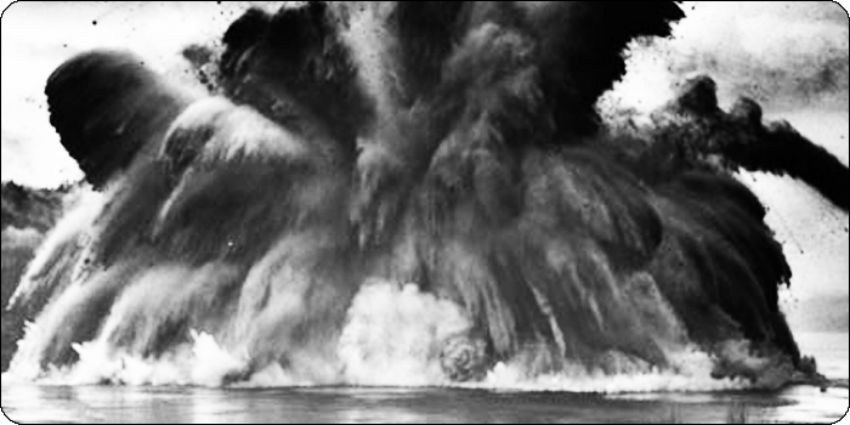
After exploring the area of the Pacific Northwest that we now know as British Colombia, George Vancouver wrote in the 1700s that the channel at Seymour Narrows was “one of the vilest stretches of water in the world.” On this date in 1958, it was cleared with 1,270 metric tons of Nitramex 2H explosive, which resulted in one of the biggest non-nuclear intentional explosions in history.
More than 250 feet deep, Seymour Channel held a mountain under its waves, dubbed Ripple Rock. The mountain’s twin peaks reached to within a few feet of the surface of the waters, which created a hazard that had claimed more than 100 boats and dozens of lives. Knowing that an invisible danger lay just below was a navigation nightmare. For decades, civil engineers studied the feasibility of destroying the mountain peaks with a controlled explosion.
The explosion launched 600,000 metric tons of rock 900 feet into the air. When the day came, the Canadian Broadcasting Corporation used the event to broadcast Canada’s first-ever coast-to-coast live moment (below the fold):
Read More

 The Gad About Town