The Long and the Short of It

I see an old photo of myself and I think I can return there. A previous year, another existence, is merely another place I have visited, lived in, breathed the air of. The 1990s are only as far away as a bus ticket whose price is a bit out of my reach; I think I can visit 1979 as easily as visit Phoenix if I would just save up for a couple months. I am going to see Vermont again, I am going to visit Iowa again; I have not seen the Pacific Ocean yet, but I know I will. Next year, maybe.
 
I know what the 1980s sounded like, what food tasted like then/there, just as I know what Cedar Rapids, Iowa, or Poughkeepsie, New York, sounds like. The ability to visit one (Poughkeepsie) but not the other (1983) offends me.—The Gad About Town, “So It Goes …

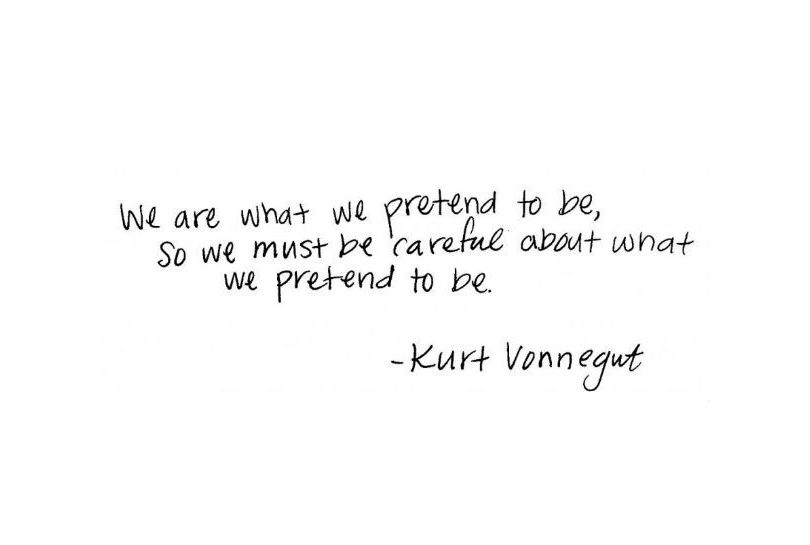
Now is all we have and Kurt Vonnegut knew this, knew it better than most. Reliving the firebombing of Dresden in February 1945 was necessary for him and he engaged that memory, both in print and in his psyche many times; coming to understand that February 1945 and November 1918 and March 2016 all co-exist in an Eternal Now is spiritual, somewhat. But my finding myself frustrated at the expense of a bus ticket to 1983 is Hell in its exquisite pointlessness, its empty longing.
Read More

Listen, Do You Want to Know a Secret?

The Atlantic Ocean. Each one of those tiny dots in the photo above is a person with a life, a voice, loved ones, losses. Sunburns.

We are standing, you and I, in front of the “Beach Hut” at Smith Point County Park on the South Shore of Long Island. It is 2014, one of the more recent years in history. For much of my adult life, I have sat here internally convinced that I do not like “the beach.” I do not remember when I convinced myself of this. I do not remember an unpleasant beach incident that convinced me that I possessed this piece of self-knowledge about my … self.
Read More

‘Hearing’ ‘Voices’

The poet and critic John Greening sums up the career of James Merrill, who conversed with the inhabitants of other planes of reality, in a 2010 essay, “Ouija”:

James Merrill made a point of breaking all the rules, of remaining recklessly formal when all about him were casting off their chains, of being incorrigibly discursive and elitist, shunning the rhythms of speech for something more refinedly musical, and unswerving in his determination to squeeze every last pun out of a line.—John Greening, “Ouija,” The Dark Horse, Summer 2010

Merrill was a rebel in his adherence to rules in a rule-breaking era. He wrote dazzling, perfect poems, and he employed almost every verse form available to him, as an actor might use accents. Greening quotes George Bradley: “Reading James Merrill is enough to make the rest of us suspect we’re not smart enough to write poetry.” Even at his smartest, he is engaging and not impenetrable. His pleasure in the sounds of words and the poetic effects he creates and his many puns are always evident. He compliments his readers in his implied assumption that we must know what he is writing about at least as well as he does.
Read More