Supercentury

“Bacon makes everything better.”—a sign in Susannah Mushatt Jones’s kitchen.

As of today, March 10, 2016, the 19th Century is still alive. Two individuals born in the century before last, Susannah Mushatt Jones of Brooklyn, New York, and Emma Morano of Verbania, Italy, are still with us. Each was born in 1899. Thus, the last breath of that century is nearly here. They are the two oldest people on the planet. The third oldest, a Jamaican woman named Violet Brown, turns 116 today, but she was born in 1900; she is the oldest person alive who was born in the 20th Century.

That said, either one of these two women could yet outlive me. (I started cleaning the back porch two days ago and I am still out of breath. I’m 47 going on a not very robust 88.) Further, although each woman is on the top 20 list of longest lived people of all time, they have several years to catch up to Jeanne Calment of Arles, France, who died in 1997 at the age of 122. No one with the paperwork to prove it has lived longer than Jeanne Calment did.

Miss Mushatt Jones is 116 years and 248 days old today. She was born on July 6, 1899, in Alabama, and one of her grandparents was a slave. When Jeralean Talley died in June, 2015, at the age of 116, Miss Jones became the oldest verified person on Earth. “I’m the oldest person in the world? No I’m not,” she is said to have exclaimed to her relatives.

Miss Morano was born on November 29, 1899, 116 years and 102 days ago.
Read More
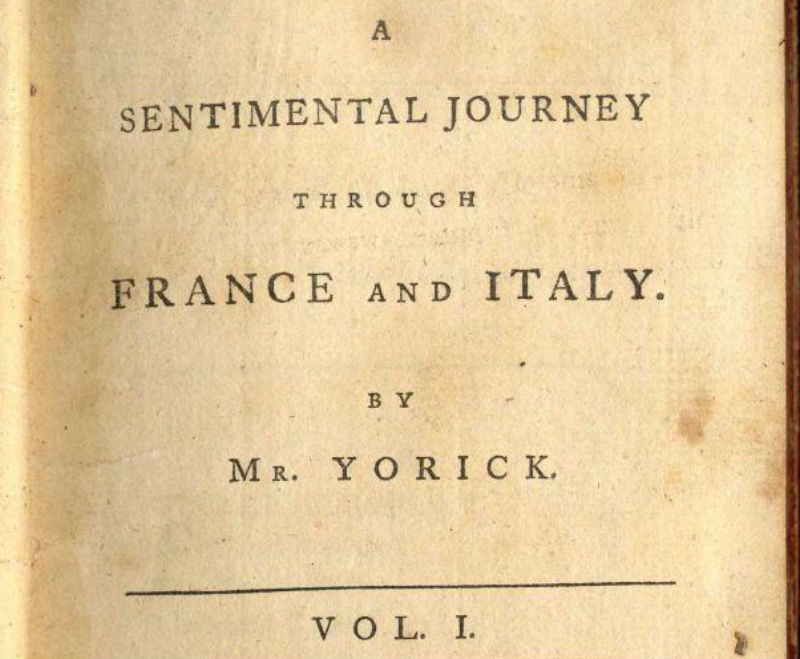
A Sentimental Journey Through …

Laurence Sterne was dying of consumption, the polite yet dramatic term that people used to employ for pulmonary diseases, especially tuberculosis. He had contracted it by 1740, when he was still in his 20s, and he fought for his every breath for his remaining three decades of life.

In 1765, he left England in search of better breathing, and he traveled abroad to France and Italy. He was a surprise best-selling author by this point, a clergyman who had decided on a whim to start telling the life story of a character but by not telling it in a straightforward manner, to comically digress his way through “The Life and Opinions of Tristram Shandy, Gentleman.” One of the earliest novels in English or any language, “Shandy” was an instant success when its first two volumes started appearing in 1759.

The genre we call “travel writing” was not as common in the 1760s as it is now, and most works in that genre at that time were quite unsentimental: verbal pictures of natural phenomena and wonders of the man-made world and warnings-slash-complaints about the foreignness of foreigners on their strange home turf. In his 1765 journey, Sterne encountered fellow novelist Tobias Smollett, and the stern, dry Smollett left such an impression on the always amused Sterne that in his book, “A Sentimental Journey Through France and Italy,” he based a character named “Smelfungus” on Smollett. Nice revenge.
Read More

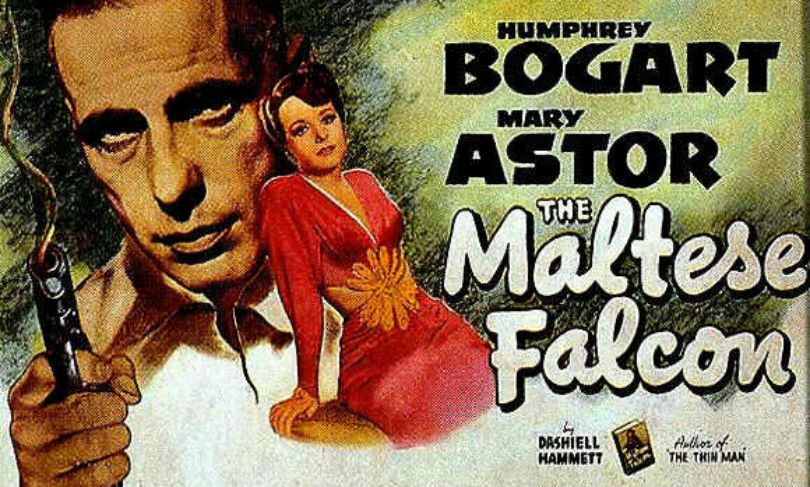
What Dreams Are Made Of

Alfred Hitchcock is credited with coining the term “MacGuffin,” but not the thing itself, which has been around since people started telling stories to each other. In spy movies and thrillers, a MacGuffin is the object that sets the plot of the movie in motion; it’s usually a something people desire that the hero and his nemeses pursue, and that pursuit provides the film’s plot. The specific nature and form of the MacGuffin is usually unimportant to the overall plot. In plot terms, but not theological ones, the apple in Genesis is a MacGuffin.

Neither of the two most famous examples of a MacGuffin in film history appear in a Hitchcock film however, even though he used the device quite frequently in his many movies (he directed more than 50 films from the 1920s through the ’70s).
Read More