‘In Praise of Limestone’

[…] In so far as we have to look forward
To death as a fact, no doubt we are right: But if
Sins can be forgiven, if bodies rise from the dead,
These modifications of matter into
Innocent athletes and gesticulating fountains,
Made solely for pleasure, make a further point:
The blessed will not care what angle they are regarded from,
Having nothing to hide.
Either, but when I try to imagine a faultless love
Or the life to come, what I hear is the murmur
Of underground streams, what I see is a limestone landscape.
—W. H. Auden, “In Praise of Limestone”

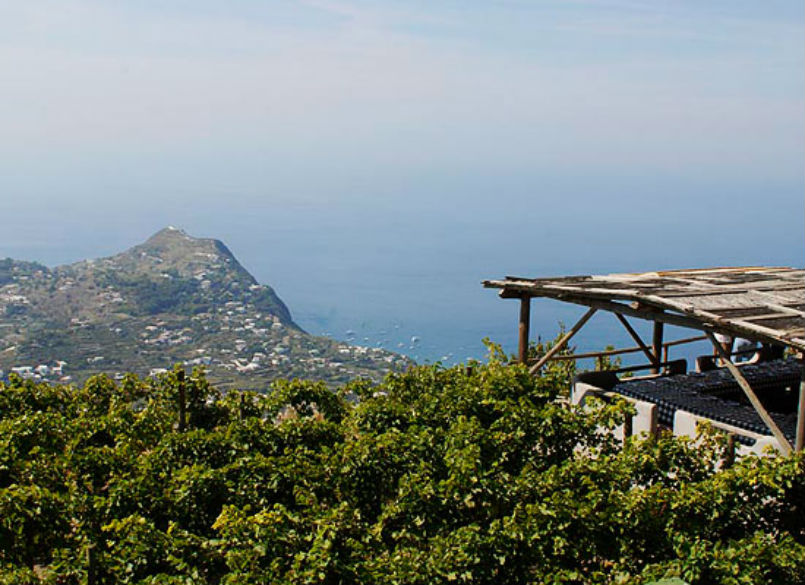
In his 66 years, W.H. Auden lived in many locations in Europe and America: he was born and raised in York, educated at Oxford, and lived long-term in Berlin, New York City, Michigan, Italy, Austria. In 1948, he started spending his summers on the island of Ischia, in the Tyrrhenian Sea. (Seen above.) That island’s landscape, covered as it is with rocky volcanic outcroppings, so different from any he had known, came to represent difference itself in his mind.
Read More

Craving Order

It is said that Albert Einstein once asked, “If a cluttered desk is a sign of a cluttered mind, what are we to think of an empty desk?” While not famous for his quips—although E=mc2 is the soul of wit in its brevity—this neatly captures the perspective of a person who kept his desk almost confrontationally cluttered.

The human mind is an organizer, the greatest one we happen to know, the one that all of our tools and machines are built in an attempt to replicate its principles and imagined actions. Nature itself does not organize. Every organizing structure we come up with is an imposition on nature and is thus radically random, at least as far as nature is concerned: No method of organizing is more “correct” than any other.
Read More

A Muse to a Talent to Amuse

From 1995 till 1997, I wrote a humor column titled “The Gad About Town,” for a great weekly newspaper in Sullivan County, New York. (It, the newspaper, still exists, and so do I apparently.)

“The Gad About Town” held the distinction of being the only column in the newspaper that did not generate even one response letter from our readers. Another editorial columnist, a sweet, genial, elderly man, wrote the most innocuous pieces each week, yet he received the most vituperative letters from readers who took exception with everything he wrote. I admired that this only amused him.
Read More