Make No Mitsaek

Mistakes suck. Errors do, too.

Adverbs will never go hungry for a lack of work in many writers’ drafts, including mine, but that part of speech demands erasure whenever one encounters it. Adverbs are the empty calories of the English language: They are tasty, and they appear to be helpful when we want to bend a verb to do our verbal bidding and guide our eager reader(s) to share our thought-patterns, when context and the verb itself are capable of handling the task just fine on their own. They are potato chips and cotton candy blended into a linguistic smoothie.

All of the personal errors in my history can be described with an adverb, colorfully. Merely an adverb minus a verb or other details, so no personal stuff, no self-incriminating or embarrassing information might reveal some things: complacently, awkwardly, abruptly, vigorously, languorously, braggingly, disgustingly, violently, wrongly. Timidly. Brazenly. Toss a “very” or three in there.
Read More

Bearing Witness

One afternoon, my friend and I were waiting for her car to be serviced, so we sat in the waiting room to discuss the things good friends discuss in waiting rooms when coffee is being given away.

An elderly woman, still wearing her winter coat indoors, was sitting alone across from us, barking inarticulate sounds to herself. Sometimes, when she would hear laughter, she would rock forward, and, with a smile on her face, direct some louder sounds in the direction of the others, as if she was participating in the joking and merriment. Then she would slump back and the stream of non-language would continue, sometimes in a sing-song, sometimes with a note of fear and anger. Was she alone here? Had she wandered in off the street? That was not possible, as the street was Route 9.
Read More

Hindsight is 50/50

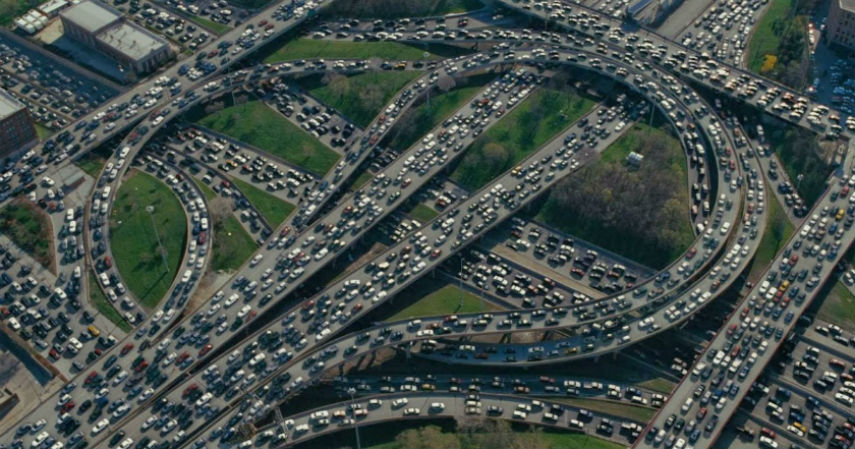
One of my favorite expressions, one that I used to employ frequently but no longer do, is, “This is X number of minutes I am never getting back.” I would say this after experiencing something incredibly boring and frustrating, like waiting on line only to discover that I was waiting on the wrong line the entire time, or when I was in a traffic jam in which I learned that the hold-up was people gawking at an accident which by itself would not have created the traffic jam.

The worst, the most empty and useless, four-word sequence in the English language is, “You should have done … .” It is hindsight—something no one likes to be accused of using—masquerading as foresight, something everyone likes to be credited with possessing. “You should have driven this route instead of the one with the traffic accident-gawking crowd that no one knew was going to show up.” It is really a way of saying, “I knew better.” Those particular three words are more honest and would be welcomed if they were said more often, but more honest punches might be thrown more frequently as a result.
Read More