A Shade of Failure: A Literary Rivalry

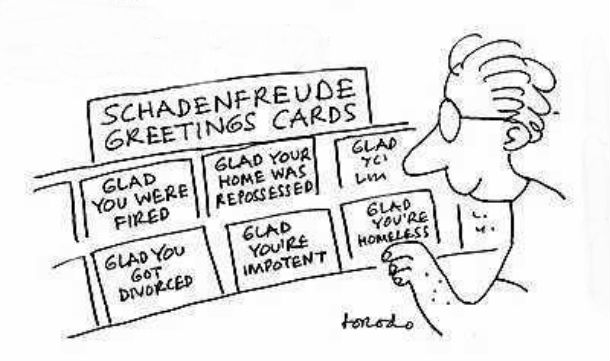
The term schadenfreude literally means damage-joy. When one enjoys hearing that a rival is encountering trouble, one is experiencing a sense of schadenfreude. Most of us have experienced this feeling at some point in our lives, but most of us also have been jerks at some point in our lives, and the two sometimes come at the same time.

There is no real-world term for its opposite, so some people have begun to use a made-up word, freudenschade, to describe the distress one feels when a friend or rival is doing well or has had a success. (One friend recently told me about feeling jealous when they heard that I was publishing this blog right here. “Why does he get to do that?” the friend said that they thought about my writing. Now, this friend also has time to spend on a similar project, but was not. Is not. “Jealous” was the word used.)

gore-vidal

Gore Vidal

Gore Vidal hated a lot of people, and even appeared to take pleasure at his rivals’ distress at his success. He had feelings of schadenfreude over other writers’ freudenschade. (That is as hard to type as it is to say.) Truman Capote was one of his top three hated individuals. Vidal’s mother was number one and Robert Kennedy was probably second, because Kennedy hated him first, seemingly without cause (JFK appeared to enjoy Vidal’s company more than his brother’s), and without end. But Capote …

capote

Truman Capote

Truman Capote was American literature’s lost boy, at least for his generation. He was not the first nor will he be the last, but not many lost souls stick around for as long as he did. His entire published output in life is small, six books, none long, one of which is a novella, “Breakfast at Tiffany’s,” and another is “In Cold Blood,” which is based on a true story. “In Cold Blood” was published in 1966 and was not followed by anything until 1980 when he published a collection of fragments. He died in 1984, aged 59, and his literary executors discovered that the novel he had been promising for years, for which he had been accepting and returning advances with a clock-like regularity, was nothing more than some more sketches and fragments and journal entries and verbal doodles, which they published anyway. It did his reputation more damage than he ever did.

Drugs and alcohol and a need for immediate feedback, which writing long pieces and books does not often provide, produced the sorry sight of a man, unpublished for the last two decades of his life, appearing on TV talk shows in different states of inebriation. He had earned a deserved reputation as a promising young writer in his early 20s, which brought him acclaim and invitations to parties and TV talk show panels. The discovery that he preferred live applause given for a well-told story and loved drinking more than writing was his undoing. Incapable of sitting with himself, a condition many addicts may recognize in themselves, he would sit next to Johnny Carson and slur his way through anecdotes that never sounded truthful and, even better, never were true. The fun would follow in the form of lawsuits.

Vidal and Capote were about the same age (Capote was born in 1924 and Vidal in 1925), had their first novels published at a great young age (Vidal 21, Capote 24), and had a rivalry thrust upon them by the media. Both enjoyed celebrity, but Vidal appeared to enjoy sitting with himself and producing work as much or even more. He seemed to view media appearances and celebrity as a reward for doing the work.

Both knew failure and setbacks. There is a famous quote attributed to Capote, “Failure is the condiment that gives success its flavor.” Being a boy-wonder who fought to remain in the public’s consciousness as still a boy, still a wonder, even into his 50s, Capote’s “success” was of a certain kind, as a person with a famous reputation who felt success(ful) only when a live audience would applaud him as a “writer,” even though he was not writing at all, not in front of them, not when he went home after. Who knows what flavor that condiment brought him?

Vidal was born to a prominent but not wealthy family. He remained unimpressed by fame or prestige, even while being a name-dropper extraordinaire. Capote made up stories to make himself appear intimate with the famous; Vidal crafted ways to distance himself from the important, usually by revealing truths, by name, in his work. Capote was born and raised in poverty. In one of his less kind quotes about his almost rival, Vidal declared, “Truman Capote has tried, with some success, to get into a world that I have tried, with some success, to get out of.”

Some near-kindness for Capote’s ghost, his shade, came out of Vidal long after Capote’s death. In his memoir “Palimpsest,” Vidal re-quotes himself (why take a pass on the opportunity?) and says that he said the above line (about getting in and out of the world of prestige), “unctuously.” He goes on,

Truman was surprisingly innocent. He mistook the rich who liked publicity for the ruling class, and he made himself far too much at home among them, only to find that he was to them no more than an amusing pet who could be dispensed with, as he was when he published lurid gossip abut them. Although of little interest or value in themselves, these self-invented figures are nothing if not tough, and quite as heartless as the real thing, as [he learned].

It is a moment of sympathy, almost of empathy, and it is quickly forgotten in Vidal’s book; in the few sentences in which Capote’s name appears elsewhere, the words “lie” or “liar” are always nearby. If failure is a condiment, schadenfreude is salt, plain and delicious.

The WordPress Daily Prompt for November 4 asks, “If ‘failure is the condiment that gives success its flavor’ (Truman Capote), how spicy do you like your success stories?”

* * * *
Please subscribe to The Gad About Town on Facebook: http://www.facebook.com/thegadabouttown
The War of 1812

November 3, 1814, fell on a Thursday. In a coincidence that can be seen only when one is wasting time, it turns out that November 3, 2214, will be a Thursday, as well. Today is the bicentennial of things that happened on this date, and two centuries from now, something taking place or yet to happen today might be bicentennial-ized. (As of this typing, there are several hours left for major history to be made. [Eastern time.])

What was important on this date two centuries ago? The U.S. Congress awarded eight Congressional Gold Medals, making November 3, 1814, one of the larger single-day award hand-outs in our history. Going back to the Revolutionary War, there have been fewer than 200 Congressional Gold Medals awarded, total; some were awarded to entire groups like the Native American Code Talkers and some of the medals were awarded posthmously, but fewer than 400 people in the history of the United States are Congressional Gold Medal recipients. Something important must have been worth commemorating that autumn day.

The eight medal winners were Captain Johnston Blakely, Major General Jacob Brown, Major General Winfield Scott, Brigadier General Eleazar Ripley, Brigadier General James Miller, Major General Peter Porter, Major General Edmund Gaines, and Major General Alexander Macomb. Here is the entire, updated list of Congressional Gold Medal winners from the U.S. House of Representatives: Gold Medal Recipients.

In 1814, the United States was at war with Great Britain, in our mostly forgotten conflict, the War of 1812. Every time one sings “The Star Spangled Banner” one is commemorating the War of 1812, but other than that, U.S. history classes skip over it on their way from the Revolutionary War to the Civil War. The War of 1812 was unique, however; it was a war in which a U.S. mainland city was captured, as British forces occupied Washington, DC, in August 1814. They looted the Capitol Building, destroyed every book held by the Library of Congress, and burned the White House, leaving an empty shell of a building. The occupation lasted one day, as a sudden August thunderstorm forced the British back to their storm-damaged ships.

The war is a confusing one for cursory study, as its many causes are still under debate, its fronts covered every region in the young United States, Canada, and the Caribbean; and, all the worse for ease of understanding, in Canada it is seen as a Canadian victory, in Europe it is viewed as one portion of the larger Napoleonic Wars, and in the U.S. it is seen as a victory but one in which our national capitol was occupied.

Congress in November 1814 was meeting in a replacement building that was quickly built for it, so every recent victory and city liberation in the still ongoing war was viewed as a something to be celebrated in grand style. The Siege of Fort Erie, the Battle of Chippawa, the Battle of Plattsburgh, and the recent heroic exploits of Captain Johnston Blakely were deemed worthy of our nation’s top honor. These were the skirmishes and doings the Congress honored with medals; each was a recent action that contributed to the overall war effort but none was decisive; Blakely had died at sea less than a month before.

blakely

Captain Johnston Blakely

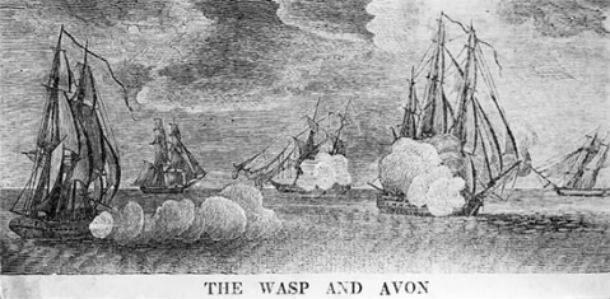
Blakely’s 1814 had been a successful one, in which his ship, the USS Wasp, had fought many times near Europe and in the English Channel. All told, the Wasp encountered 15 rival ships in two separate cruises, sinking three ships and capturing or scuttling the remainder. Fifteen for fifteen. There is a mystery about the Wasp that remains to this day, however: What happened to it. Its final encounter was with the HMS Atalanta on August 21, 1814, which the crew of the Wasp captured and considered valuable enough to keep afloat, appoint a captain and crew, and send across the Atlantic to the States. It arrived here on November 4. The Wasp was only seen one more time after this and on some unknown date, it, its crew, and its captain probably sank during a storm (September and October are hurricane season) as it was crossing the Atlantic. Blakely was about 33 years old.

These were the efforts and achievements that two centuries ago we commemorated as eternal and unforgettable. And we do not remember them. Winfield Scott remained famous for decades after 1814, won a second Congressional Gold Medal, and was the Whig Party’s nominee for President in 1852. In Navy history, three ships have been named the USS Blakely in honor of the lost Captain Blakely. The last one was active from the mid-1970s to 1990, a period of little action at all.

On November 3, 1814, our nation honored eight by listing them on a roll of the eternals, and two hundred years later we think of them not at all. Whatever we think we might teach those who will follow, two hundred years from now, whoever we deem noteworthy (“#AlexfromTarget, anyone?”), it, he, or she will likely not be.

____________________________________________
The WordPress Daily Prompt for November 3 asks, “The year is 2214, and your computer’s dusty hard drive has just resurfaced at an antique store. Write a note to the curious buyer explaining what he or she will find there.”

* * * *
Please subscribe to The Gad About Town on Facebook: http://www.facebook.com/thegadabouttown

Time and Dr. Johnson

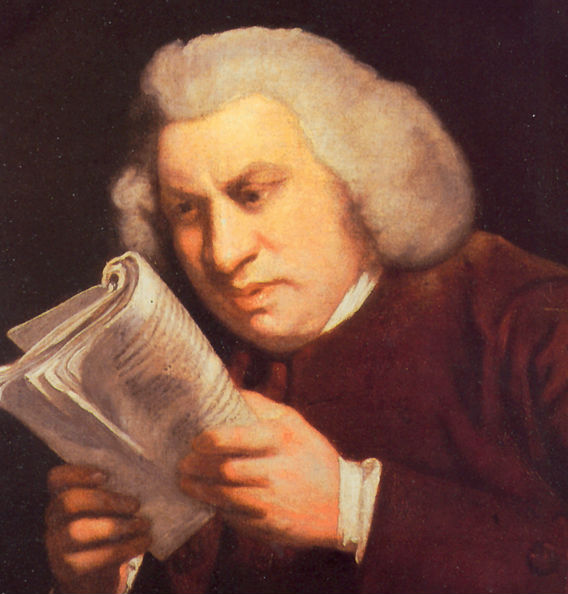
Samuel Johnson wrote, “He that hopes to look back hereafter with satisfaction upon past years must learn to know the present value of single minutes, and endeavor to let no particle of time fall useless to the ground.”—Rambler 108, March 30, 1751

Dr. Johnson was 41 in March of 1751 and several years into his work on his most lasting project, his Dictionary. Unlike most of the dictionaries developed for any language, and all dictionaries in English, Johnson’s “A Dictionary of the English Language” was written by one man. An entire dictionary, with more than 40,000 word entries and over 100,000 literary quotations to back up and explain Johnson’s definitions and create an etymology (the study of the origin of words). It took Johnson nine years to complete it; 75 years later, Noah Webster published his own dictionary, which had 70,000 entries, took 25 years to complete, and cites Johnson throughout. The first completed edition of the Oxford English Dictionary took 75 years and dozens of scholars to compile its first edition, published in 1928.

Johnson’s Dictionary is not the best one written for or in the English language—the dictionary that sits forgotten on your shelf is probably named Webster and not Johnson, and the website that you use instead of a book is also not named “Johnson.com” or something like that. Johnson’s definitions are often complete sentences and are sometimes essays on the topic inspired by the word under consideration. His treatment of the word “time,” for instance, offers fourteen different meanings for the word: “1. The measure of duration. 2. Space of time. 3. Interval. 4. Season; proper time. 5. A considerable space of duration; continuance; process of time. 6. Age; particular part of time. 7. Past time. 8. Early time. 9. Time considered as affording opportunity. 10. Particular quality of the present. 11. Particular time. 12. Hour of childbirth. 13. Repetition of any thing, or mention with reference to repetition. 14. Musical measure.” (“Time,” Johnson’s Dictionary)

Johnson offers a quote from English literature, usually the King James Bible, Shakespeare, Milton, Swift, or Dryden, as a pertinent example for each particular definition. Sometimes he offers as many as seven quotes. For his fourteen definitions of “Time,” he uses forty-six quotes.

Samuel_Johnson

Samuel Johnson by Joshua Reynolds

This project would be difficult enough to produce in our era of desktop publishing (is there an app for dictionary creation?); Johnson put together his Dictionary in his house, with workmen appearing every so often to assemble a printing press and run off some pages. He paid them out of his own pocket. His personal library, large but not comprehensive, was supplemented by books borrowed from friends. The books were so covered with his markings that they were not worth being returned, the friends remembered.

It took him nine years to complete the Dictionary, yet he had promised it in three. For the rest of his career, Johnson was ridiculed as a slow worker; he proposed to work up an edition of Shakespeare’s plays (the first ever single source, authoritative edition that would be created) in 1756 and started attracting subscribers, but by 1762 another writer took a public jibe at him: “He for subscribers baits his hook/and takes your cash, but where’s the book?” His Shakespeare was published in 1765.

While working on his Dictionary, he published a self-written, twice-weekly periodical, The Rambler, to earn a living. (In other words, he wrote a blog while working on his big project.) Then, while working on his edition of Shakespeare, he published a weekly blog, um, magazine, called The Idler.

Samuel Johnson visited the topic of time over a dozen times in those two journals, and perhaps for understandable reasons: For someone so productive and yet considered a slow worker (The Idler was so named as a joke about his avoiding the long slow work on his Shakespeare), it is likely that few writers had considered time in so many facets. Any waking hour not spent earning a living was indeed “a particle of time (dropped) useless to the ground.”

Johnson had many health issues, ranging from regular bouts with a bleak depression, which he was the first to name the “black dog”; nearsightedness that glasses did not aid (or vanity made him avoid them); a disfiguring skin condition; and Tourette syndrome, a condition that did not have a name until the late 1800s and was not considered a medical condition in Johnson’s lifetime. The tics made him seem an odd character, and he felt he had to win people over with his wit. (Asked once why he made noises, he said it was a bad habit.) His many tics and violent gesticulations are described in every contemporary account about him written by his friends, so the posthumous diagnosis seems a trustworthy one.

A year and a half before his death, he described time and its slowness in old age thus:

The black dog I hope always to resist, and in time to drive, though I am deprived of almost all those that used to help me. … When I rise my breakfast is solitary, the black dog waits to share it, from breakfast to dinner he continues barking, […] After dinner, what remains but to count the clock, and hope for that sleep which I can scarce expect. Night comes at last, and some hours of restlessness and confusion bring me again to a day of solitude. What shall exclude the black dog from an habitation like this?

____________________________________________
The WordPress Daily Prompt for February 25 asks, “If you could slow down an action that usually zooms by, or speed up an event that normally drags on, which would you choose, and why?”

The WordPress Daily Prompt for November 1 asks, “If you could slow down an action that usually zooms by, or speed up an event that normally drags on, which would you choose, and why?”

* * * *
Please subscribe to The Gad About Town on Facebook: http://www.facebook.com/thegadabouttown