For Shawkan, the Nightmare Continues

A journalist’s job is to be in the wrong place at the wrong time.

* * * *
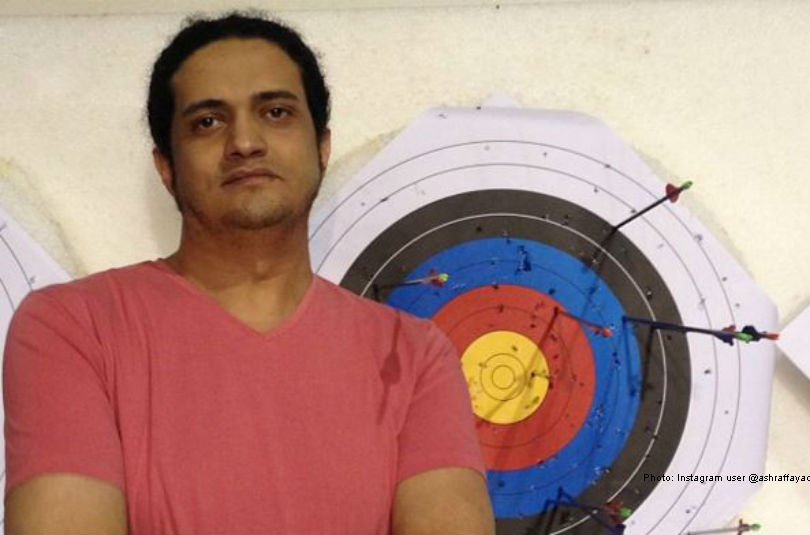
In a courtroom near Cairo, Egypt, earlier today (December 10), the case of photojournalist Mahmoud Abu Zeid (“Shawkan”) was adjourned once again, this time until Tuesday, December 27.

Today is International Human Rights Day, a date celebrated by the United Nations and human rights organizations for decades. Around the world today, people have been posting photos of themselves “behind bars” in support of Shawkan. The photo at top is one collection of dozens I that greeted me on my Twitter feed today. Amnesty International has a “Write for Rights” public petition on Shawkan’s behalf, as well: Write for Rights for Shawkan.

Shawkan’s story has so far been one of the denial of basic human rights by a nation allied with Western governments, but it also has been a story of many citizens stepping up and making certain that Shawkan’s story is heard. Both stories are worth knowing.
Read More

Today in History: Dec. 10

“After I am dead, the boy will ruin himself in 12 months.”—King George V, referring to his son, Edward

I, Edward the Eighth of Great Britain, Ireland, and the British Dominions beyond the Seas, King, Emperor of India, do hereby declare my irrevocable determination to renounce the throne for myself and for my descendants, and my desire that effect should be given to the instrument of abdication immediately.
 
In token whereof I have hereunto set my hand this tenth day of December, 1936, in the presence of the witnesses whose signatures are subscribed.
—King Edward VIII

In his worried joke, King George V overestimated the length of his son’s reign by a month. George died on January 20, 1936, Edward became Edward VIII, and then 80 years ago today he signed the formal Instrument of Abdication to end his brief reign.
Read More

Missing: Empathy

[He] sees the fate of conspiracy in apocalyptic terms—he traffics in the birth and death of whole worlds, whole political orders, whole systems of human values. He is always manning the barricades of civilization. He constantly lives at a turning point. Like religious millennialists he expresses the anxiety of those who are living through the last days and he is sometimes disposed to set a date for the apocalypse. … As a member of the avant-garde who is capable of perceiving the conspiracy before it is fully obvious to an as yet unaroused public, [he] is a militant leader. He does not see social conflict as something to be mediated and compromised, in the manner of the working politician. Since what is at stake is always a conflict between absolute good and absolute evil, what is necessary is not compromise but the will to fight things out to a finish.—Richard Hofstadter, Harper’s Magazine

The above passage was not written recently. It does not describe anyone in the news right now. It was written in 1964 and published the month of the Presidential election that year in Harper’s. Its title is “The Paranoid Style in American Politics.”

Hofstadter was an historian who found himself concerned with the angry political rhetoric that was emerging that year and he re-discovered that there was little new to it, that in fact a “style” of rhetoric could be identified that regularly emerged and re-emerged in our history.

The “paranoid style” is back in America. Perhaps it never left.
Read More