Zombies to Help Love
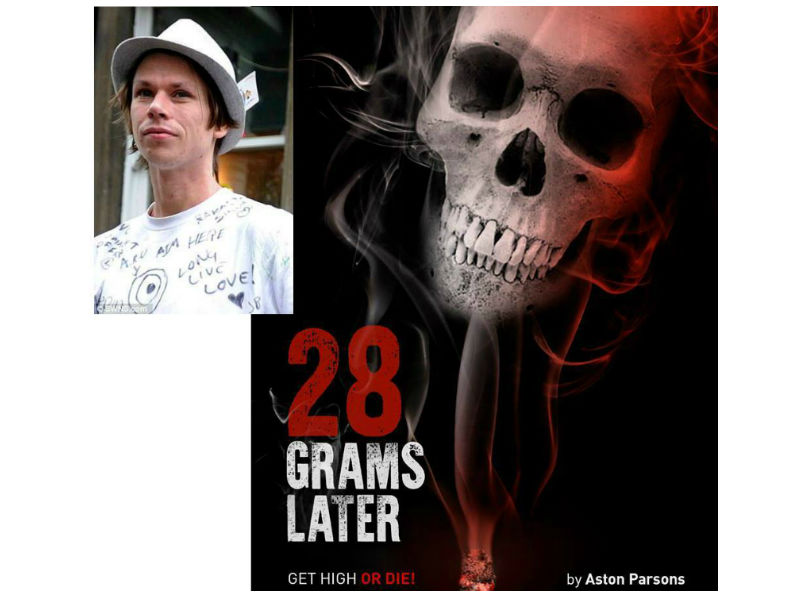
Aston Parsons’ 2015 novel 28 Grams Later is a zombie apocalypse horror-comedy in which the only defense against the zombie infection is … cannabis. It is tightly plotted, stays one step ahead of its readers, and has many laugh-out-loud comic moments.
Among its great insights are that even in the middle of an apocalypse, bureaucratic types will emerge to run the remains of the bureaucracy, military types will offer to shoot first, and stoners will quite probably save the world. Parsons keeps the novel’s attitude on the tongue-in-cheek side, which is, of course, an awkward compliment for a zombie novel.
Parsons has also pledged that all proceeds from sales of the novel from December 1 on will be donated to the Courage Foundation’s defense fund for Lauri Love. In November, Amber Rudd, the United Kingdom’s Home Secretary, signed the order to approve Lauri Love’s extradition to the United States to face charges of data theft.
More than 100 members of Parliament, across party lines, signed a letter in October on behalf of Love that is to be sent to President Obama to request that he withdraw the extradition requests. People around the world are fighting for Love’s freedom. Parsons’ book is one more way.
The title is available through all the E-Book retailers. Hardcover, the book is available for around £3.00. Through Amazon UK, the title is £0.49, and though Amazon in America, the title is 99 cents. Buy a copy, and then spread the word.
28 Grams Later is also available through iTunes.