Climbing the Charts: Tania Stavreva

Perhaps my accidental double-purchase helped, but probably not. More about that encounter between an artist and listener in a moment …

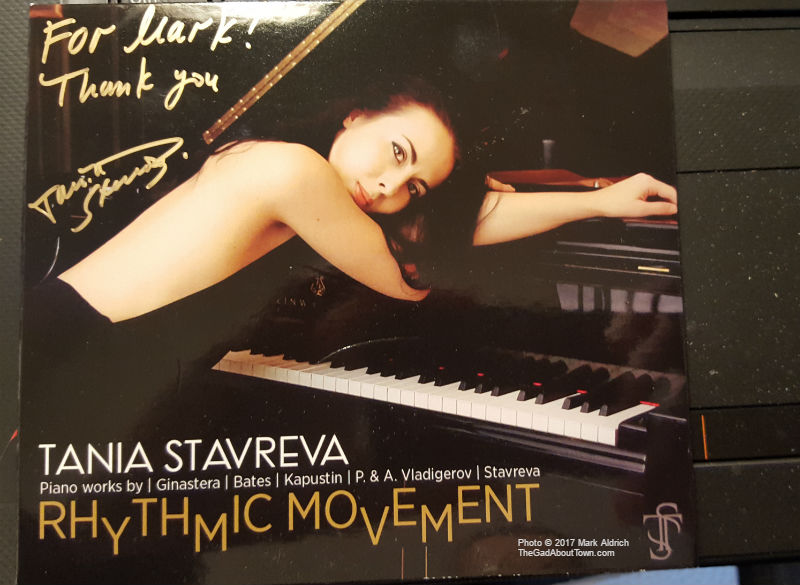
A new entry appeared on Billboard magazine’s charts this week: pianist Tania Stavreva’s self-produced, independent, debut CD, Rhythmic Movement, which introduced itself at number 8 two days ago. It remains in the top 25 today.

Among her album’s competitors are new CDs from Andrea Bocelli, Björk, Murray Perahia, Renee Fleming, the Vienna Philharmonic, Elvis Presley (!), and Heart (!). The reviews of Ms. Stavreva’s album are in, they are stellar (and this website has been quoted); the record-buying public has followed, and listeners are discovering an important new talent.
Read More

January 20 in History

“The test of our progress is not whether we add more to the abundance of those who have much; it is whether we provide enough for those who have too little.”―Franklin D. Roosevelt, Second Inaugural Address, delivered on this date in 1937

The first Presidential Inauguration held on January 20 was Franklin Roosevelt’s second inaugural (seen at top), 80 years ago today.

The 20th Amendment, ratified in 1933, pushed back the date for the start of a new presidential term from March 4 to January 20 in recognition that the length of time needed to notify winners and losers and transport a new president-elect to Washington, DC, was much shorter than it had been. Roosevelt was inaugurated twice more on two subsequent January 20s.

There have been twenty swearings-in of U.S. Presidents on January 20; today’s will be the twenty-first.
Read More

When Will We Know?

Many of those who live in countries ruled by dictatorships―fascist, communist, inherited monarchy―are unaffected by the fact of the dictatorship. They are those who are members―by birth or achievement―of groups the government favors. The government gets to decide who it favors, and if one is a member of a favored group, life may feel like it is free, as long as one ignores that one’s neighbors are not free or, worse, are vanishing.

If one is a member of a preferred population, life under fascism will carry on and look much like a normal life. After all, many people in Nazi Germany fell in love and out of love and bought groceries and learned how to drive. They wrote poetry and crammed for exams and got hired and fired. Many people in Nazi Germany, though, they did not.
Read More