January 27 in History

“Neither a lofty degree of intelligence nor imagination nor both together go to the making of genius. Love, love, love, that is the soul of genius.”—Mozart

Wolfgang Amadeus Mozart was born on this date in 1756 in Salzburg, Austria. He composed more than six hundred works in his brief life.

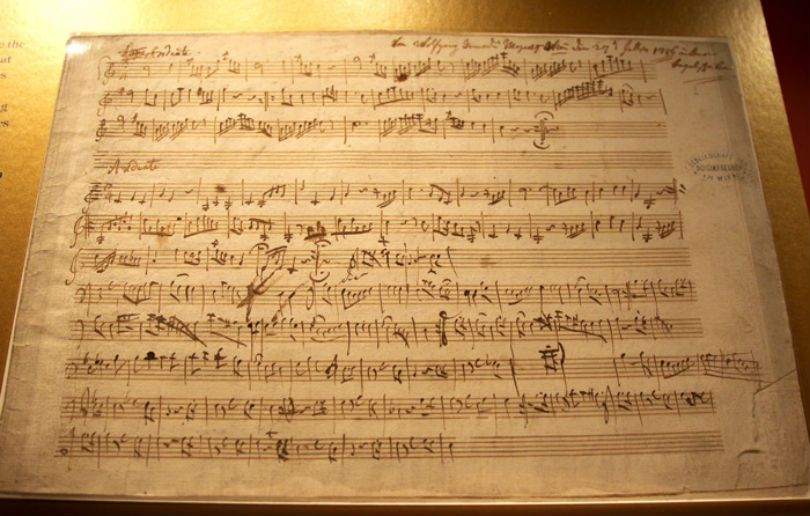
At the top is a photograph from Carnegie Hall‘s website of Mozart’s manuscript score for his “Three duos for two wind instruments” (K. 487/1, 3, 6). At the top is his signature and a note: “I composed this while bowling.”
Read More

Remembering Pete Seeger

In 1996, in my job of assistant editor at a weekly newspaper, I awarded myself the title of music reviewer for a single issue and attended a concert given at a local high school by Pete Seeger, who died three years ago today at age 94. (Our newspaper’s actual music reviewer was only interested in attending and writing about rock concerts. This was a stroke of luck for me.) I wrote a review, even though I knew that a review is not what one writes about a Pete Seeger concert. An appreciation. A thank-you note. But not a mere review judging aesthetic merits.

It was a great concert, by the way.
Read More

January 26 in History

Today is Australia Day, the day that great nation celebrates as its foundation day.

On this date in 1788, the First Fleet, eleven ships from Great Britain with more than 1000 convicts on board, arrived in Sydney Harbor and raised the British flag. The First Fleet was sent to establish a prison colony far, far from home.

When the United States won independence, one of the side effects was the American right to refuse British convicts. In 1787, ships with the recently convicted were dispatched to Australia, and on this date in 1788, the First Fleet arrived. Over time, many of the convicts were pardoned.
Read More