Red Sox Nation in My Living Room

I am a life-long New York Yankees fan, and I am okay with this. (The first step is admitting powerlessness and that life has become unmanageable.) The eternal American desire to root for an underdog or even a lovable loser–the Cubs, the Brooklyn Dodgers, the Red Sox until 2004–did not pass me by, even as a fan of the Yankees; this is because when I was growing up in the 1970s, the Yankees gave fans two of the team’s extended stretches of losing: in the early 1970s, when the team was owned by CBS, and then again in the late 1980s and early ’90s, when the team’s owner repeatedly fired managers, signed second-rate free agents to two-year contracts only to see them under-perform in both seasons, or traded young talent for older “talent.” 

My team, which I admit had also shown me some success before I was a teenager–three World Series in a row in the ’70s–was not a “lovable loser,” it was a laughingstock by the early ’90s, and I took a perverse pride in this. “Now I know,” I said to no one ever, “What it is like to root for heartbreak.” Of course, seeing multiple World Series trophies held aloft by various pinstriped “heroes” before and after that dark Stump Merrill-Bucky Dent-Dallas Green era puts my rooting for a laughingstock of a team in perspective: the trophies that starting arriving after 1996 were readily, happily seen as a deserved reward for living through those few tough years. But when Don Mattingly is one’s favorite player and he is the one major Yankee in history to have to buy a ticket to see a World Series game, well, let’s just say I was defensively proud of having stood by those sickeningly bad teams. I like knowing what it is like to root for a heartbreaking team (or thinking that I do) and having sympathy for the “lovable loser” teams; it turns out I like rooting for a juggernaut team even more, though.
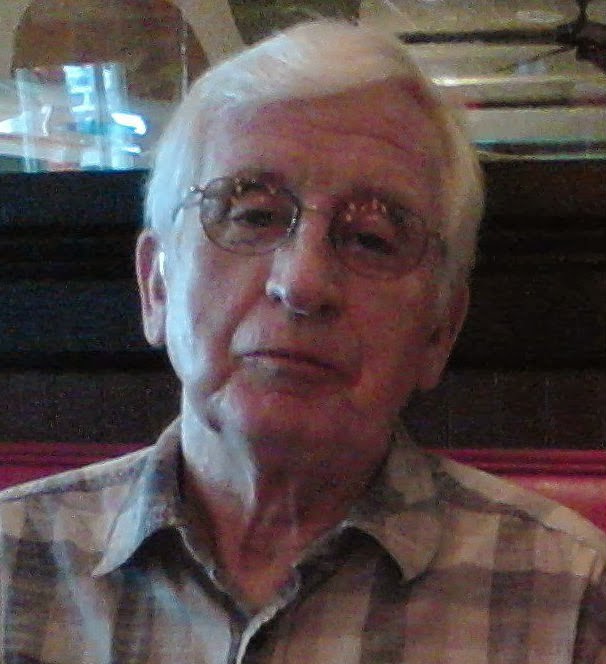

My dad in a recent photo.

My father is a New Englander, a Vermonter who now lives on Cape Cod, where New England gazes longingly towards old England. He comes by his rooting for the Boston Red Sox (argh and double-argh!) as honestly as he can, and I do not love him the less for it, nor do I think he ever resented me, his only son, for being a Yankee fan. (Maybe all that family role-play therapy that we never really participated in was worth it, after all.)

He is one of those Red Sox fans for whom 2004 was created: born in 1935, he probably listened to the 1946 team’s World Series loss on the radio, and saw the 1967 and 1975 losses on television. All of them legendary, seven-game World Series, but all losses followed by decade-long postseason droughts.

In 1986, I was almost 18, a college freshman living at home, and another legendary Red Sox World Series was unfolding, this time against the other New York team, the Mets. My sole memory of Game 6 and Mookie Wilson’s slow game-ending dribbler through Bill Buckner’s legs is that I was standing behind my dad, who was sitting in his favorite armchair. When the play unfolded, I saw my dad’s shoulders react. A stoic man by nature, my dad simply silently shuddered, like an evil thought had passed through his mind and he had urgently worked to dismiss it; I am glad to this day that I did not see his face. He stood and said something about one more game in a way that exhibited no confidence and then went to bed.

Eighteen years later, in the fall of 2004, my life had taken a dip in fortune and I was once again living at home with my parents, now residing on Cape Cod. The Red Sox had already done the unthinkable and unforgivable in the postseason and defeated my team in the Championship Series. But when the Red Sox won it all that memorable season, I can say that I was proud to be the son who was with his dad when his beloved lovable loser team finally broke through and he was able to enjoy a championship for the first time in his life.

He has now enjoyed two more to my team’s one more, earned in 2009, and I think this is quite enough.

The article I link to here, from The Atlantic (http://www.theatlantic.com/), considers the existential irony that recent Red Sox history presents the world: that young Red Sox fans have known a very successful team, winner or three World Series in a decade, while fans of my father’s generation still carry the spiritual wound (at first, I wrote that as a minor joke, but I realize it’s only half tongue-in-cheek) … still carry the wary style of love learned from rooting for a lovable loser team for 86 years.

A Tale of Two Red Sox Nations

About the Name

From 1995 till 1997, I wrote a humor column, “The Gad About Town,” for The River Reporter, a great weekly newspaper in Sullivan County, New York. (I still read it online.) It held the distinction of being the only column in the newspaper that did not generate even one letter from readers. Another editorial columnist, a genial elderly man, wrote the most innocuous weekly pieces and received the most vituperative letters disagreeing with everything he wrote. I admired that this only amused him.

I did create one controversy: once, our music columnist used his own space one week to disagree with me and take me to task about something I had written. Since he could have written a letter to the editor complaining about me and also submitted his usual column, but chose to sacrifice his space to rebut me, I became skeptical about his music suggestions.

The “Gad About Town” column held one other distinction: It won an award, the only award for which I have ever even been nominated. To this day I toss out the phrase “award-winning writer” every chance I get. (Not true.)

On deciding to create the blog that you hold in your virtual hands–and thank you for visiting and reading it–I also decided to name it after that old column, as no one has taken up the name at either my former employer or anywhere else. Or so I thought. A little research revealed that someone now owns the domain name “gadabouttown . com,” and as per the name, its owner writes a fine journal about the many things that interest him today there. (That is of course what a gad about town is and does: a gadabout shares observations, sometimes talking, sometimes writing, sometimes even listening.) This is the reason my blog is entitled, “The Gad About Town,” emphasis on “The,” and poses no competition to that writer’s work.

One of the new “Gad’s” earliest entries concerns his selection of the name “Gad About Town.” My first column in 1995, I recall, was itself about choosing the name “Gad About Town,” which I selected from a long list of none because my first deadline was approaching and something was needed above my 800 words written about not having a name for the column that was about to be published. (I even offered a clip-out and mail-back-in name-this-column contest, which earned zero entries and thus solidified my not-first non-choice of “Gad.” I have just now decided to remember that in my second column I declared that everyone who didn’t enter was a winning non-winner.) (I had no prizes to offer, anyway.) (Is this microphone on?)

Thus, my “Gad” column provided me with a great opportunity to learn to write with little feedback. Up until then, everything I wrote was for a professor’s eyes or an audience’s ears. (Later, when given the task of writing the story of my life, a friend understood why I was having difficulty: “You only wrote when someone was handing you a twenty-dollar bill.”)

“To learn to write with little feedback.” That sounds like a witticism, but really it was valuable to learn to not assume an audience or to write everything as if it is a letter to a loved one. What will follow in the future here is more of that letter.

The New Wave

[In 1997, the following column, “The New Wave,” won the New York Press Association’s “Best Column: Humorous Subjects” award in its “Best Newspaper” contest. I was the assistant editor and sports editor for a small-circulation weekly in Sullivan County, New York, “The River Reporter,” which means that I acquired a lot of experience for very little pay. It was mostly worth it.

It is one of the very first columns I wrote, which is something that I hated for years after—”It was only ‘beginner’s luck,'” I complained. (For years, I lived my life as someone who could think of an award or reward as a denial or a subtraction. And then ruefully rue my rueing.) I was 27 at the time, and I think I also assumed more awards were coming my way. They weren’t. The date of June 1996 is a bit of a guess from me as to its publication date. It might have been earlier that year. My family found a copy of the clip recently, so I have included it here, back-dated and with some 2014 interjections, because I can not help myself.]

The line at the local bakery for this morning’s hearty breakfast goodness was a long one. Some people arrived after me and were recognized by others ahead of me. These friends were all about the same age, 20 or so, and they politely took turns saying “Hey.” Eight “heys” rat-a-tatted out before they settled into their “what are you up tos.”

One friend waved to another behind me. The wave was one that has become popular in the last year or so [this was written in 1996] in this age group. Instead of the usual “Hi! How are you doing!” side-to-side shake of the hand next to the head, which has satisfied people in all their hand-waving needs since we first noticed there were people to wave at, it was cool, reserved. The traditional wave is too frantic, just another thing mom and dad do to embarrass us.

He raised his hand to half the height of the traditional wave, crooked his index finger above the rest, jammed his thumb into the crook of this finger, and passed the knot of fingers side to side four or five times. It was more of a grip than a wave. The expression on his face did not change.

To picture this new wave, imagine a baby swinging a rattle more vigorously than needed merely to make a noise, but not hard enough to hit itself in the head. Now imagine the baby without the rattle, but not crying because you took the rattle away. This is the wave. Now picture someone else, say your 20-year-old, doing it. He is sullen, but not so sullen that he cannot wave hello.

There are times when I think this is a valid wave. There are times when friendliness feels conventional, like something people do because they are supposed to. Why bother waving if you do not feel like it?

Conversation revealed that these friends had not seen each other in months. Their joy at seeing one another again after a semester away at college was not palpable. The wave, the greetings, and the conversation were all expressed with the emotional intensity of a lawyer representing a slightly unfriendly witness before a Congressional subcommittee.

People cannot commit even to saying hello to friends with emotion. Emotion is so … old. Their only solid commitment us to its nonexpression.

Teenagers’ telephone conversations are traditionally perfunctory: [2014 interrupts: “Why ‘traditionally’? Maybe ‘similarly’?”]

“Hey.”
“Hey.”
“You home?’
“Yeah.”
“You want to do something?”
“Yeah. You?”
“You want to come over?”
“Yeah.”
“Bye.”
“Bye”

But this mode of conversation is extending way past adolescence into adulthood, middle age [2014 again: Ha!], and old age, which is new.

Walk around your town. Notice the other residents doing their shopping and browsing. As you and someone you do not know very well or even at all come upon each other, you may both smile, but it will not involve any teeth. The smiles will instead be grim little grins. You may both even say “Hi” as you pass, but you will wait for the other to speak first, and his faintly whispered “Hi” minus the “i” sound will be returned with your own clipped “Hi” greeting. One of you may even manage a “How are you?” but so inaudibly as to render the question silly.

I have been greeted by, and have returned this greeting to, people I know very well. Family members, even. We both appear to be in such a hurry, even though we are not, and we both know we are not. We cannot commit any any emotion to the exchange, because we do not want to look silly. One never knows when interpersonal disaster will strike, apparently.

It seems if we are too warm with each other, we think the other person will walk away muttering to himself, “Drunk.”

A suggestion: The next time you see someone give the new wave, drop him to the ground, pin him, flatten his waving hand against the pavement, and make him greet you. Make him express how truly happy he is to see you. The world should be more friendly, damn it.

Copyright 1996 The River Reporter