Today in History: April 30

“Our life is a faint tracing on the surface of mystery, like the idle, curved tunnels of leaf miners on the face of a leaf. We must somehow take a wider view, look at the whole landscape, really see it, and describe what’s going on here. Then we can at least wail the right question into the swaddling band of darkness, or, if it comes to that, choir the proper praise.”—Annie Dillard, “Pilgrim at Tinker Creek”

Annie Dillard is 71 today.

* * * *
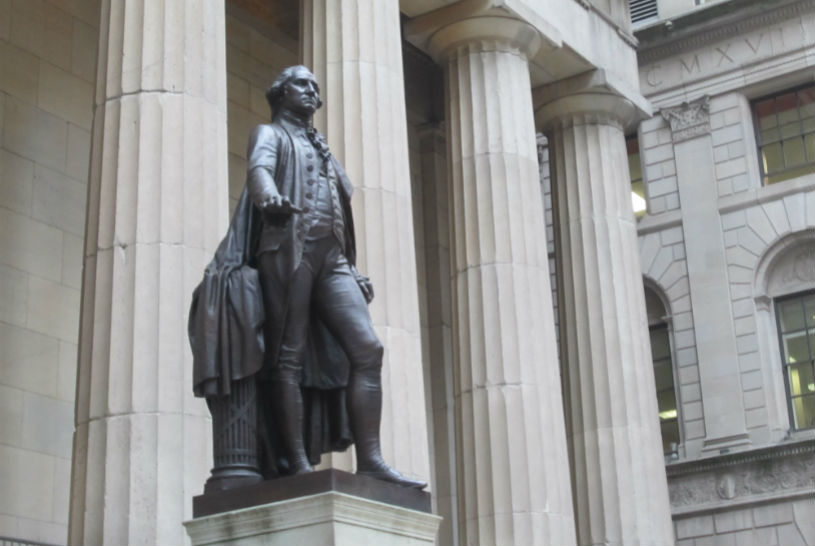
George Washington was inaugurated the first President of the United States on this date in 1789 at Federal Hall in Lower Manhattan, as depicted in the statue outside Federal Hall seen at top. He told the members of the House and Senate in his brief (1419 words) inaugural address that he would follow their lead in determining what the duties of the executive office ought to be (“… it will remain with your judgment to decide how far an exercise of the occasional power delegated by the fifth article of the Constitution is rendered expedient …”) and stated that he would not accept a salary, as he had not while serving the country in his earlier positions.
Read More

One of Life’s Curveballs

On June 12, 1970, Dock Ellis, a pitcher for the Pittsburgh Pirates who would go on to some success and much controversy, threw a no-hitter against the San Diego Padres. No-hitters are headline news but not usually career- or even season-defining.

If you are a baseball fan, you may know why Dock Ellis’ no-hitter is remembered, 45 years later. If you are not, please keep reading, as this is not a post that is about baseball.
Read More

Today in History: April 29

Operation Frequent Wind commenced on this date in 1975.

It was the operation to evacuate American civilians and some Vietnamese from Saigon as that city fell to the North Vietnamese Army. It marked the end of U.S. involvement in Vietnam.

At the conclusion of two days of scrambling, some 7000 people were evacuated from Saigon by helicopter; over 50,000 were removed by fixed-wing aircraft. Almost 700 helicopter missions were flown; with no nation known as “South Vietnam” to return to, the South Vietnamese copters, some carrying U.S. insignia, were flown one-way—to U.S. ships in the South China Sea—where they were then pushed off the ships into the water to make room for more helicopters to land (photo at top). Some U.S. helicopters were ditched into the sea as well.
Read More