A Flying Circus

The only circus I have attended made its debut on the BBC on October 5, 1969. I was less than a year old that day and more than seven or eight years away from encountering it for the first time, on American television, PBS to be exact.

PBS, America’s Public Broadcasting Service, is a non-commercial broadcaster, and its hundreds of member stations must each do what they can to fill the broadcast day. This is less true for New York City’s PBS station, the famous Channel 13, or Los Angeles’s PBS station, as these two have many subscribers and can afford to create their own programs.

When the BBC started to make its programs available for sale in the 1970s, episodes of Monty Python’s Flying Circus started to appear on American television sets. On PBS stations, because the BBC was selling the rights for not very much money at all, as I understand it. As a viewer of Channel 13 when I was a pre-teen, because it aired many (inexpensive to produce) children’s television shows, I wound up seeing Monty Python’s Flying Circus at perhaps too young an age. Seven or eight. Perhaps my parents thought something along the lines of “It’s on Channel 13, and it says it is a ‘circus,’ so it must be a kid’s show.” To this day, I sometimes watch episodes of Monty Python with that thought—it’s a kids’ show—in mind.
Read More
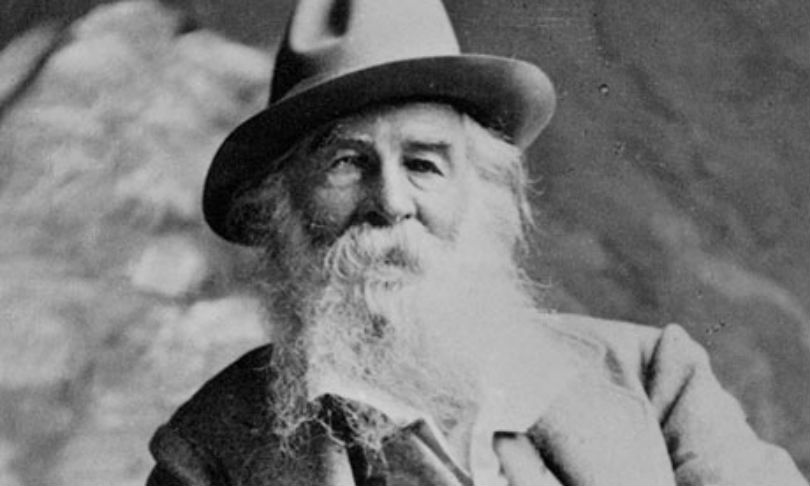

Today in History: May 31

By the end of his life in 1892, Walt Whitman had published eight revised editions (eight or so; there is some scholarly debate whether some editions constitute a full edition) of his major volume of poems, Leaves of Grass, culminating in a ninth edition, what he himself called with dark humor his “deathbed edition.” Walt Whitman was born on this date in 1819.

“L. of G. at last complete—after 33 y’rs of hackling at it, all times & moods of my life, fair weather & foul, all parts of the land, and peace & war, young & old,” he wrote a friend. He was only 72 when he died, but with his white beard and self-presentation as a man who seemed to have existed for the entire country’s history, he seemed older.
Read More

Empty Branches on the Family Tree

To the best of my knowledge, there are no murderers in the part of the family tree that leads directly to me. I have done my best to maintain this streak of successfully not murdering anyone, but if I am ever accused, I will not be the first person named Mark Aldrich to be charged with murder.

Some history: Almost every person with the last name Aldrich in the United States is descended from George Aldrich of Derbyshire, England, a tailor who was born in 1605 and emigrated to America in 1631, a decade after the Pilgrims. He is my (deep breath) great-great-great-great-great-great-great-great-great grandfather and probably the only one of those whose name I will know. George and his wife Katherine Seald Aldrich settled in Dorchester, Massachusetts, had 10 children (one, a daughter who died in infancy, bore a classic Puritan name, “Experience Aldrich”) moved to Braintree, and then moved to Mendon, Massachusetts, where his name is inscribed on a monument naming the town’s first settlers. I have not visited this.
Read More