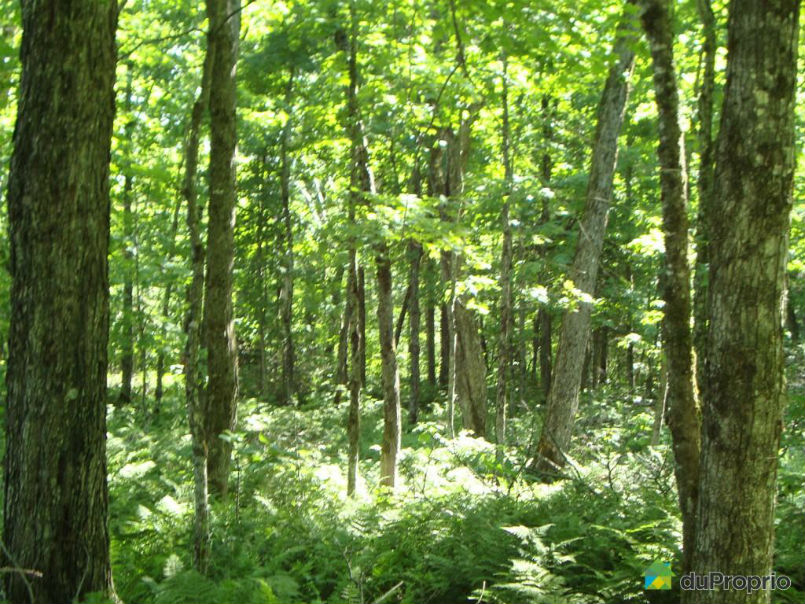
The Woods

A heavy rain drowns each raindrop; a light rain, like the kind I saw in the woods out behind my house when I was a child, a light rain striking the leaves and branches of trees, further slowing their impact, that rain produces the strongest petrichor of all, the one that renders me into an seven-year-old noticing the world for the first time.
 
The lightest of rain after the driest of spells leads to the most argillaceous petrichor, which is the kind that humans smell as relief, the thought that things will start growing again.—”Petrichor,” Jan. 26, 2015

We called it “The Woods.” Well, I did. Sometimes, I referred to it as a “forest,” which it most certainly was not. Our backyard ended at a line of trees and dross beneath them; the lightly manicured, suburban lawn did not grow beyond that line, despite my teen-aged lawn mowing efforts to expand the lawn by clearing the dead leaves and branches away. That tight boundary made The Woods appear all the more elemental and foreign.
Read More

Dylan, Ali, an Apple

“Float like a butterfly, sting like a bee—his hands can’t hit what his eyes can’t see.”—Muhammad Ali, of course

Today is our first day without Muhammad Ali. If the world seems to be off its axis today, I would point to that sad fact.

The photo at top is from the great photographer Ken Regan, who took it backstage at Madison Square Garden on December 8, 1975. Bob Dylan had brought his Rolling Thunder Revue to New York City and Ali joined the parade of well-wishers.

Regan wrote, “Ali had brought Bob a giant boxing glove that was about as big as Bob; just the right, spontaneous, quirky touch that captured the spirit of the Rolling Thunder Revue.” You can see the pair of gloves and a silk robe on the bench between them. Ali is finishing off an apple and Dylan appears almost kid-like in glee. Even Bob Dylan seemed to regard Muhammad Ali as “really famous.”
Read More

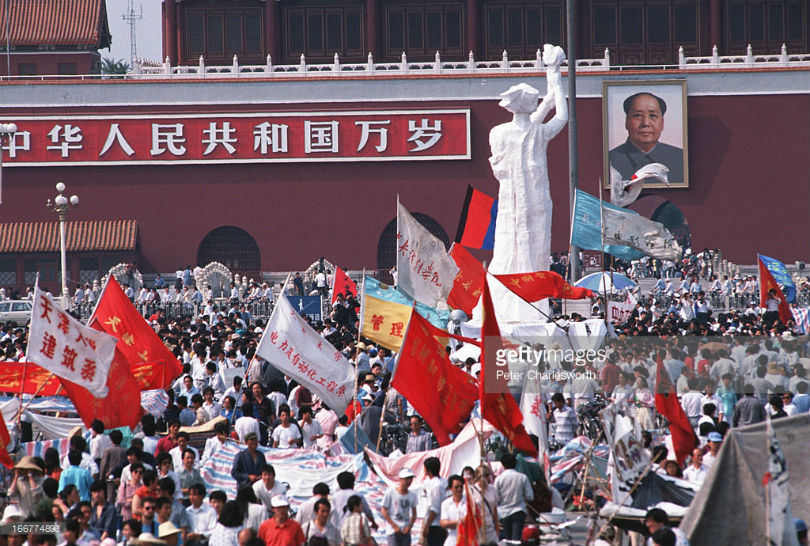
Today in History: June 4

A six-week-long demonstration on behalf of democracy in Beijing’s Tiananmen Square, in which more than a million people peacefully assembled and made their voices heard, was quashed with tanks and armed troops and gunfire on this date in 1989. Trucks, tanks, and soldiers and police on foot surged into the protest while firing their weapons at will. Even onlookers in nearby buildings were hit.

Very little verified information ever made it out in the aftermath. The Chinese government does not acknowledge the massacre and in official publications the event is euphemistically called the “June 4 Incident.”

The identity of one man who was wearing a white long-sleeved shirt and swinging a bag of what appeared to be his week’s groceries in one hand while he held up the line of tanks for a precious few minutes the day after the massacre remains unknown and ever-unknowable. The lack of information is indicated by the estimated number of injured and dead: it is believed that the number of dead lies somewhere between 241 (the government’s announced claim, although it further claimed that no one died in the square itself) and several thousand were killed by the Chinese government and upwards of 10,000 were injured.

CNN’s coverage that day (below the jump):
Read More