Winter in Spring

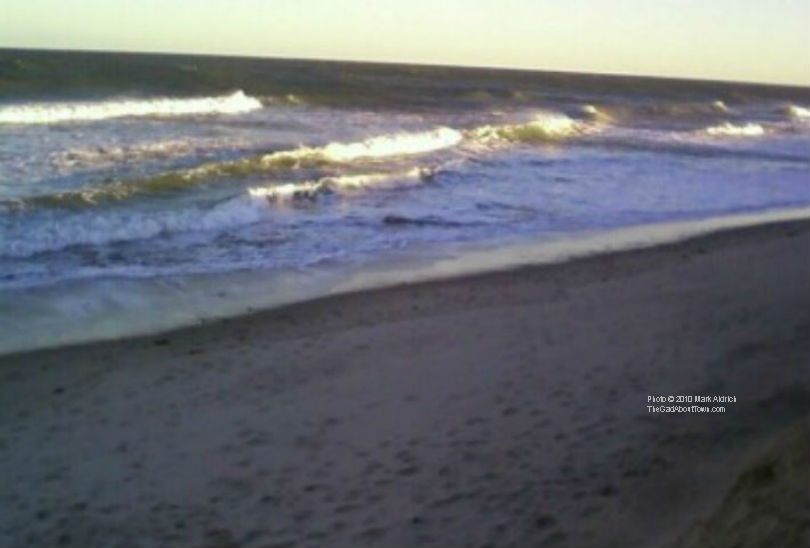
The photo above was taken at Nauset Beach on Cape Cod on a December afternoon in 2010; the white glaze covering the footprints is ice and snow, and the Atlantic has ice in it—some of the white caps were frozen, and the waves merely swelled them, shifted them. (It was taken with a not-smart cell phone held in chittering fingers, both of which contribute to its blurry artsy-ness, or perhaps just its blurriness.)

Henry Beston wrote perhaps the best physical description of Cape Cod in the opening lines to his classic book “The Outermost House“:
Read More

Today in History: June 15

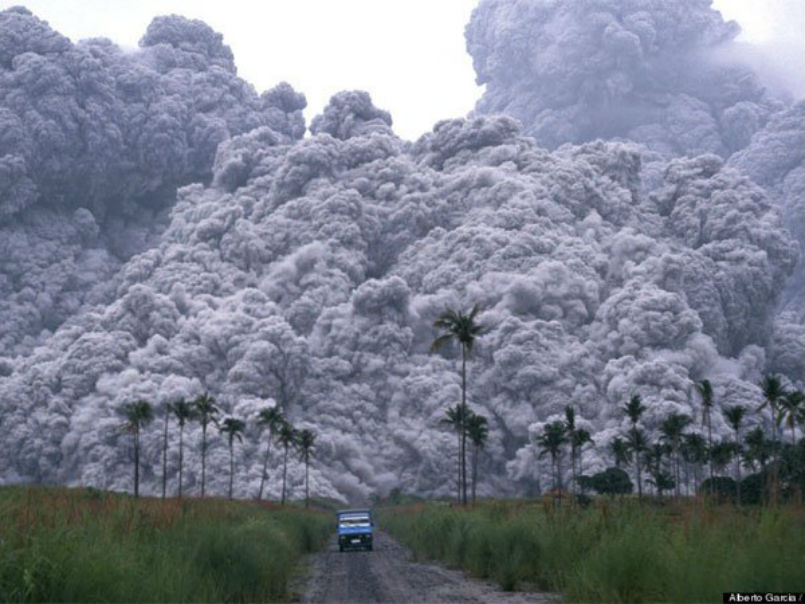
A 2000-foot deep lake now sits atop Mount Pinatubo on the island of Luzon in the Philippines. It is picturesque, a popular hiking destination, but 25 years ago today, it did not exist. On this date in 1991, the summit of the volcano was still in place, but after a year of earthquakes and huge explosions that sometimes sent ash clouds as tall as 15 miles into the atmosphere, the climactic explosion came.

Technically, it was an Ultra-Plinian type eruption. Seismographs nearby, at Clark Air Force Base, were rendered inoperable: they were knocked offline completely by what they were supposed to measure. The explosion was the second-largest volcanic eruption in the Twentieth Century and it was 10 times larger than the eruption of Mount St. Helens a decade earlier. The top 1000-plus feet of the mountain was removed by the blast, and the ash and other materials (such as sulphur dioxide) that were launched 20 miles into the atmosphere for several continuous hours affected global climate for the next two years: a global cooling hurt agriculture around the world.

The photo at top, by Alberto Garcia, was taken from more than 20 miles away from the eruption. The cloud almost overtook the speeding trucks. Garcia now resides in Canada.

Even with a year of warnings, several hundred people lost their lives as a result of the eruption. Many were lost because, by coincidence, a typhoon struck Luzon the same day as the eruption and this brought more ash down more quickly than it would have fallen on its own over some regions, and rooftops collapsed under the weight of the mud falling from the sky.
Read More

White Knuckles

I encountered a phrase a few years ago that I think should be used more commonly. Where I saw it, though, I do not remember. It appeared to be a typo, but if it was written like this on purpose, it looked like an artful accident. The writer described a learning experience as a “learning curb.” A great word pair.

I wish I could claim credit for this one, but I can not. I wish I could credit this writer—but does he or she know that there were was this epic phrase in their post? As I said, it looked like an accident, a typo. In the context it looked like they thought they had typed “learning curve.”

Many of my learning experiences did not have gently sloping learning curves or even steep learning curves; indeed, many were “learning curbs,” on which I banged my forward progress to a sudden stop or flipped my (metaphorical) vehicle.
Read More