Today in History: June 21

Today is the first full day of summer. The summer solstice came last evening at 6:34 p.m. EDT.

* * * *
It took two ratifying conventions for New Hampshire to accept the United States Constitution, one in February and one in June, but on this date in 1788, by a vote of 57–47, New Hampshire ratified the Constitution. With New Hampshire, nine of the 13 states had ratified the document as the law of the new land, which set in motion the process of forming the new nation’s federal government.

* * * *
John Lee Hooker died 15 years ago today.
Read More

School’s out for Summer

I taught freshman composition at two upstate New York colleges in the early 1990s for five years. My last class met for its final session at the conclusion of the fall 1995 semester, just over two decades ago now.

From the start of my last-ever school term, 20 autumns ago, I knew that this was going to be my final semester teaching or attempting to teach or even putting the word “teacher” on the line marked “profession”; thus, of course, two of the three sections that I worked with that semester were two of the best, brightest, most entertaining groups of students I had yet worked with, and they almost made me regret my decision to retire at age 27. Almost.
Read More

Today in History: June 20

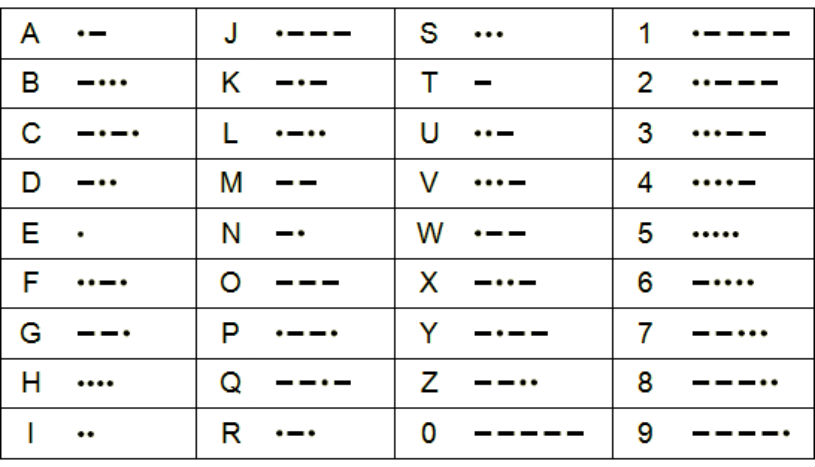
U.S. Patent Number 1647 was granted on this date in 1840 to Samuel Morse for his “Improvement in the mode of communicating information by signals by the application of electro-magnetism.” It was for the signals, the “dots and dashes”—the “Morse Code,” as it was referred to later—that was used in communicating via the telegraph.

The idea of the telegraph, as well as the idea that such a communications invention was needed, was pervasive on both sides of the Atlantic: no one inventor can truly be credited with the invention. Several inventors, Morse included, worked independently of each other in designing and constructing the machines and laying out longer and longer lengths of wire to test them.
Read More