Today in History: Nov. 16

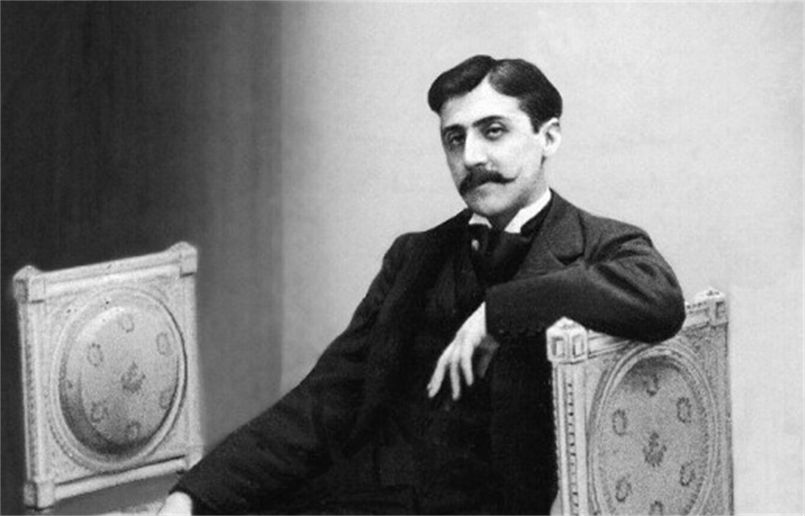
For a long time I used to go to bed early. Sometimes, when I had put out my candle, my eyes would close so quickly that I had not even time to say “I’m going to sleep.” And half an hour later the thought that it was time to go to sleep would awaken me; I would try to put away the book which, I imagined, was still in my hands, and to blow out the light; I had been thinking all the time, while I was asleep, of what I had just been reading, but my thoughts had run into a channel of their own, until I myself seemed actually to have become the subject of my book …—Marcel Proust, the opening of Swann’s Way, transl. by C. K. Scott Moncrieff

On this date in 1913, French publisher Grasset published Swann’s Way (Du côté de chez Swann), the first volume of Marcel Proust’s novel À la recherche du temps perdu, or In Search of Lost Time. (For decades, readers in English knew it as Remembrance of Things Past.)

Proust struggled to find a publisher for his work. Three prominent houses rejected it; Grasset only published it under an agreement with Proust that he would pay the cost of publishing it.

Proust’s work is not the longest novel, but it may be the longest very popular novel or the most popular very long one. It took a decade and a half to publish the entire work: seven volumes, 4000+ pages, 2000+ characters.
Read More
Today in History: Nov. 15

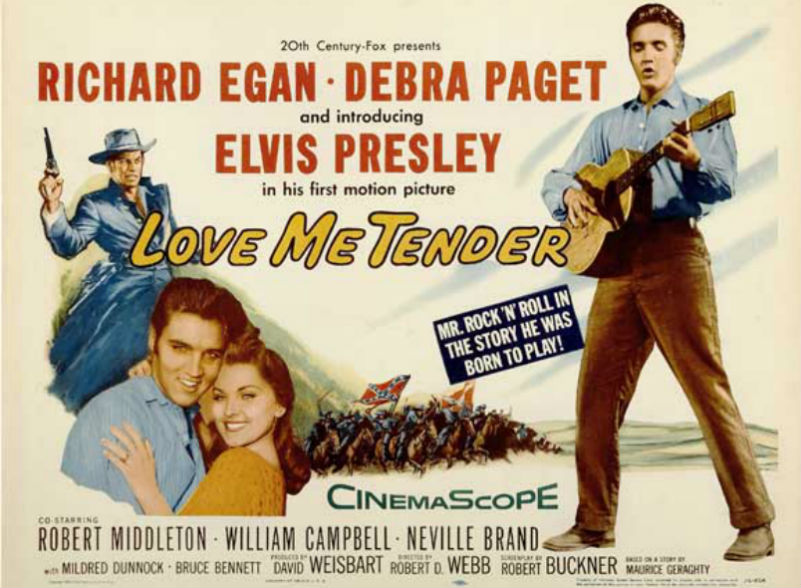
Love Me Tender, Elvis Presley’s first film, debuted in movie theaters 60 years ago today. Presley, a new star, was billed third among the actors, after Richard Egan and Debra Paget.

It is the only film in which (spoiler alert) a character played by Elvis Presley dies. Fans were upset by this; most important, Presley’s mother cried at the scene, which is understandable. The studio added a reprise of the title song, sung by a “ghost Elvis” over the end credits, to help the fans. Because of his mother’s upset, Presley included a stipulation in future movie contracts that his characters not die on screen.

Presley’s recording of the song, “Love Me Tender” was already on the charts when 20th Century Fox was finishing the film; as a result the studio added four songs to the film soundtrack. Presley’s remaining films all included songs whether or not circumstances in the plot demanded them.

Film historians report that Presley arrived on the set overly prepared: he had memorized his lines, everyone else’s lines, and all the stage directions. The film (after the jump):
Read More

Today in History: Nov. 14

Herman Melville’s novel, Moby-Dick, or, The Whale, was published by Harper & Brothers on this date in 1851 in the United States. A total of 3215 copies (in both America and England) were purchased between this date and Melville’s death 40 years later, which earned Melville a total of $1260 dollars in that time. Sales have picked up since.
Read More