The Stylish Stylist
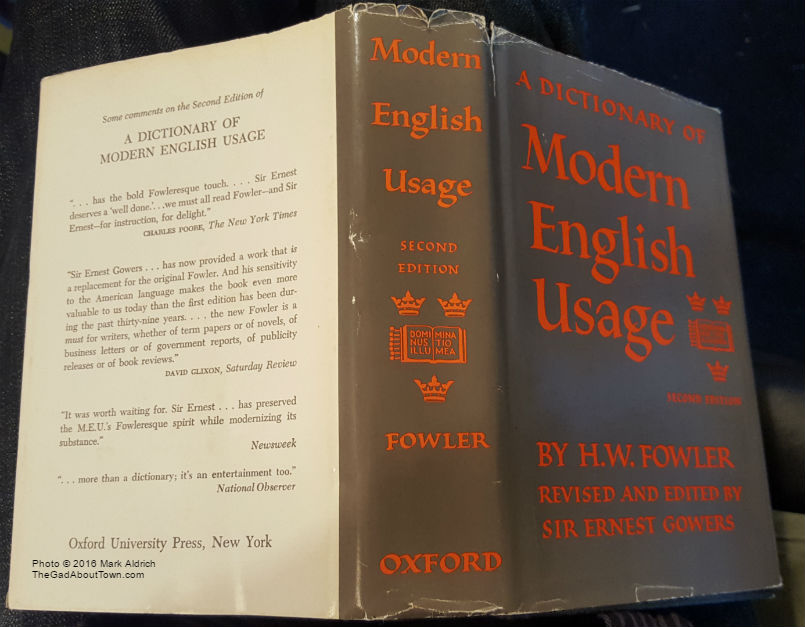
In 1926, Henry Watson Fowler published A Dictionary of Modern English Usage, a book that has remained in print ever since. (The first edition and the second edition use Fowler’s sentences; the third edition, which was published in 1996, is a substantial rewriting of the classic and uses the Fowler name as a form of brand.) Fowler’s book is not a dictionary of definitions, like Johnson’s or Webster’s, it is a usage dictionary, an instructional manual for better using this beautiful tool we have devised called the English language.
Its entries give instructions on pronunciation, offer the pros and cons of employing a variety of idiomatic expressions, and argue again and again for simplicity in expression. Many style guides have followed—the MLA, the AP, the Chicago Manual—and each one is more useful in answering day-to-day questions about one’s writing than Fowler’s guide is, but none is as entertaining as his. His fight was a fight against cliché, obfuscation, and empty rhetoric. He fought for style, for clarity.
He fought against pointless rules. One might think from the description of his work that he is the reason for the commonplace rule against ending a sentence with a preposition. The opposite is true. In a two-page essay on the topic (two pages!), titled, “Preposition at end,” he writes:
Read More
 The Gad About Town