January 22 in History

Our Town, Thornton Wilder’s three-act drama of life in small-town America—and in the theater in which we are all seated—was performed for the first time on this date in 1938 at McCarter Theatre in Princeton, New Jersey. It won the Pulitzer Prize for Drama later that same year.
Read More

January 21 in History

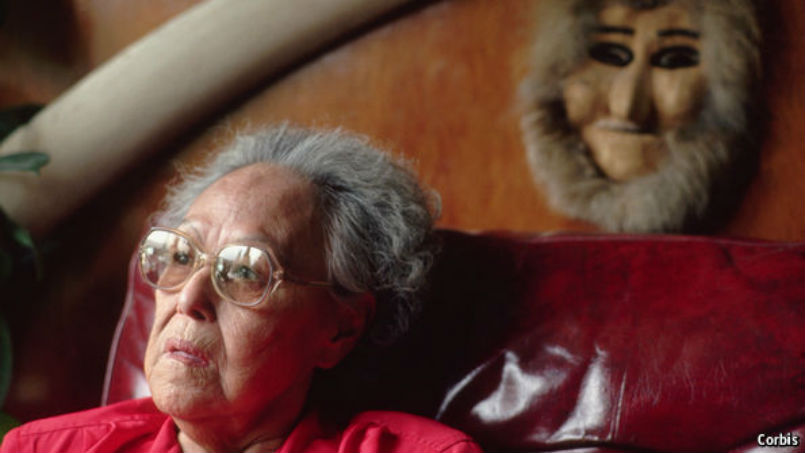
When Marie Smith Jones died on this date in 2008, the living history of a people and a language died, too. She was 89 and she was the last of the Eyak people, an indigenous group that lived along the Copper River in south-central Alaska.

Smith Jones (above) was also the last native speaker of Eyak, which was once the dominant language from Alaska down along the western coast of Canada, and the death of a language brought global attention to the fact that languages are disappearing at an increasingly rapid rate. Since the start of the century, about one language per year goes extinct with the death of its final native speaker. (There are about 7000 living languages spoken around the world right now, and ethnologists estimate that more than 90% will be extinct by 2050.)
Read More

January 20 in History

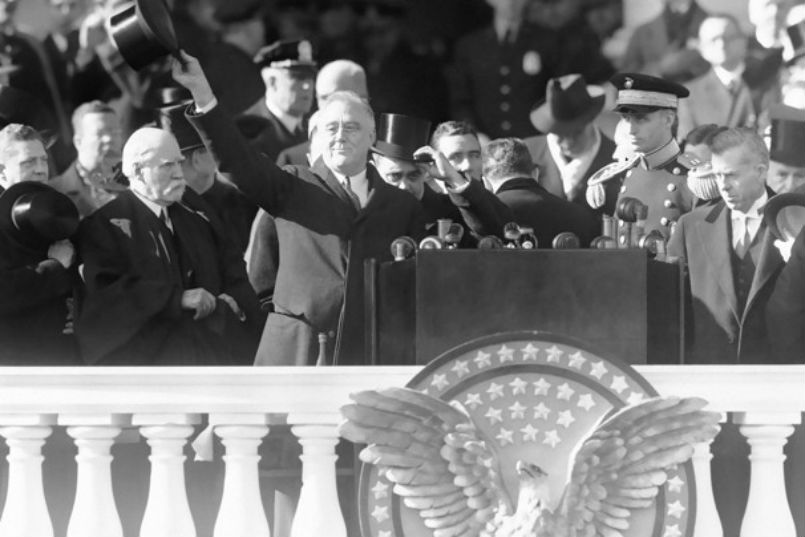
“The test of our progress is not whether we add more to the abundance of those who have much; it is whether we provide enough for those who have too little.”―Franklin D. Roosevelt, Second Inaugural Address, delivered on this date in 1937

The first Presidential Inauguration held on January 20 was Franklin Roosevelt’s second inaugural (seen at top), 80 years ago today.

The 20th Amendment, ratified in 1933, pushed back the date for the start of a new presidential term from March 4 to January 20 in recognition that the length of time needed to notify winners and losers and transport a new president-elect to Washington, DC, was much shorter than it had been. Roosevelt was inaugurated twice more on two subsequent January 20s.

There have been twenty swearings-in of U.S. Presidents on January 20; today’s will be the twenty-first.
Read More