Today in History: September 15

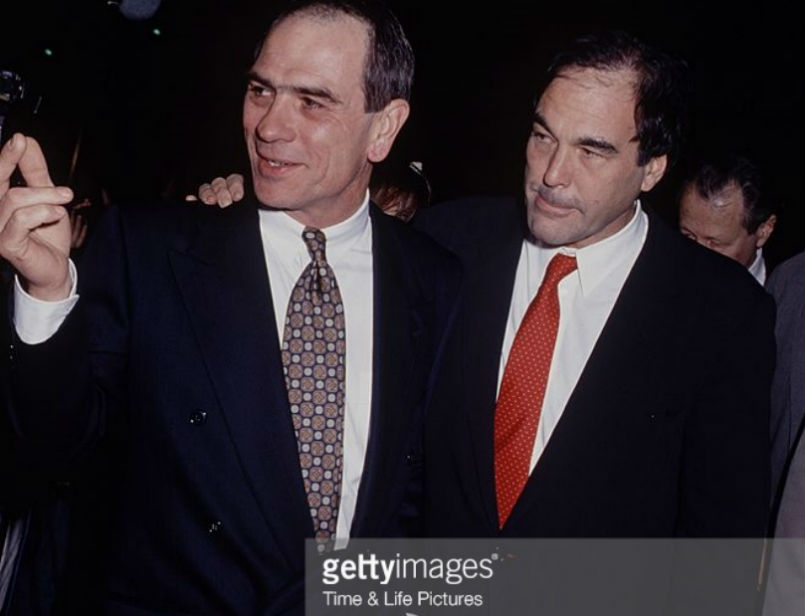
Oliver Stone has directed Tommy Lee Jones three times: in JFK, Heaven & Earth, and Natural Born Killers. There is no reason to bring this up other than they are two of American cinema’s best, and each man is 70 today. (The two are seen together at top, many years ago.)

Both Stone and Jones are having busy starts to his 80th decade: Stone’s newest film, Snowden, opens in theaters tomorrow, and Jones is in an action film in theaters right now, Mechanic: Resurrection. (Jason Statham likes using punctuation marks in his titles almost as much as I seem to.)

Tommy Lee Jones is also quite busy shooting rather hilarious ads for Suntory “Boss” coffee in Japan (video collection after the jump):
Read More

Today in History: September 14

Charles Jennens delivered the script for a new work to his friend, George Frideric Handel, in July 1741. Handel started composing music for it on August 22 that year, which is known because Handel kept thorough records. Handel always worked quickly, and his composition of the music for the oratorio, which he titled Messiah, only took him a total of 24 days. He finished composing on September 12 and then, he noted, he cleaned it up and finished it 275 years ago today, September 14, 1741.

The original manuscript, with Handel’s scratch-outs and corrections and with empty bars that offer no musical notes at all, as if Handel had briefly entertained thoughts of adding music if he could, sits in the British Library. That great institution has made the manuscript available for virtual perusal, which I recommend visiting. One can see a page on which Handel must have tipped over his ink bottle and other pages in which he draws the staves to the end of the page so he can complete his musical thought on the same page.

The “Hallelujah Chorus” sung by the Royal Choral Society (after the jump):
Read More

Today in History: September 13

“And where is that band who so vauntingly swore
That the havoc of war and the battle’s confusion,
A home and a country, should leave us no more?
Their blood has washed out their foul footsteps’ pollution.
No refuge could save the hireling and slave
From the terror of flight, or the gloom of the grave:
And the star-spangled banner in triumph doth wave,
O’er the land of the free and the home of the brave.”
—part of Francis Scott Key’s “Defence of Fort M’Henry”

Francis Scott Key watched the Battle of Fort McHenry through the night of September 13, 1814. He watched “the rockets’ red glare, the bombs bursting in air,” the light from which “Gave proof through the night that our flag was still there.”

He composed the four-stanza poem commemorating the successful American defense of the fort on this date 202 years ago; it was published in newspapers within days and set to song soon after that, when it became known as “The Star-Spangled Banner.” The music was added later.
Read More