Today in History: Oct. 26

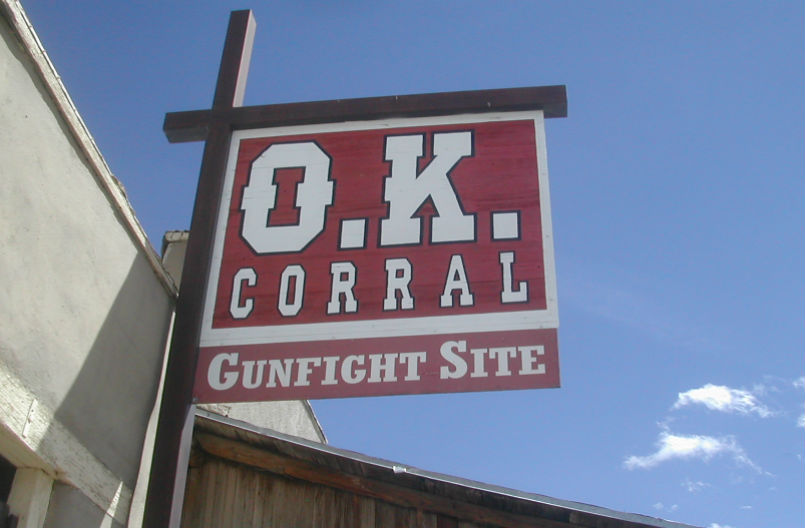
The Gunfight at the O.K. Corral (more correctly, the gunfight several doors down from the O.K. Corral) took place 135 years ago on this date in Tombstone, Arizona Territory.

The local marshal, Virgil Earp, and his two brothers, Morgan and Wyatt Earp—who were both a part of the police force—along with a temporary officer, Doc Holliday, faced a gang that had become the bane of the Earp family’s existence in Tombstone. The members of the gang called their group the Cowboys. The Cowboys involved in the shootout were Tom and Frank McLaury, Billy and Ike Clanton, and Billy Claiborne.
Read More

Today in History: Oct. 25

From this day to the ending of the world,
But we in it shall be remembered—
We few, we happy few, we band of brothers;
For he today that sheds his blood with me
Shall be my brother; be he ne’er so vile,
This day shall gentle his condition:
And gentlemen in England, now a-bed,
Shall think themselves accurs’d they were not here;
And hold their manhoods cheap whiles any speaks
That fought with us upon St. Crispin’s day.
—William Shakespeare, Henry V

The Battle of Agincourt took place on this date in 1415 in northern France. King Henry V of England and his badly outnumbered English forces defeated the far-larger French army, with the result that Henry became heir to the French throne.

Modern historians estimate that the French outnumbered the English by a 4:3 ratio; some argue that the ratio was closer to 6:1. The English pioneered the use of the longbow in battle, a tool that proved decisive; Henry himself fought in hand-to-hand combat.
Read More

Today in History: Oct. 24

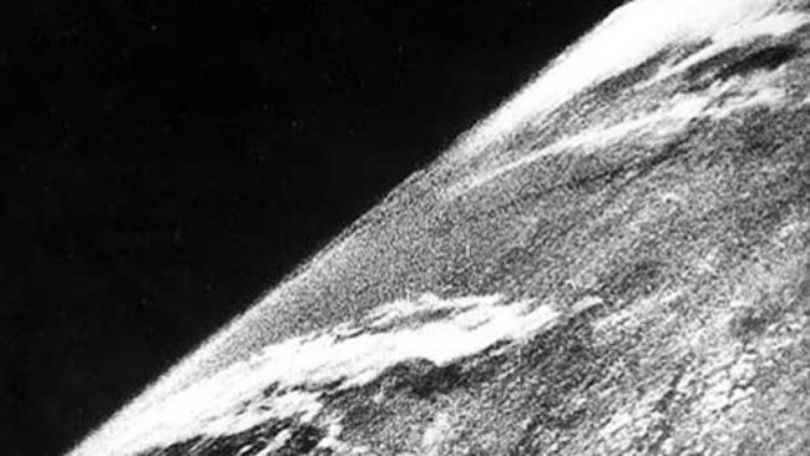
The photo above was taken 65 miles above White Sands, New Mexico, 70 years ago today. It is the first photo of Earth taken from space.

After the Second World War, the United States took possession of the German missile program and had enough equipment to build about 80 V-2 missiles. V-2 No. 13 was launched with a 35-millimeter film camera on board and a timer set to take a picture every second and a half. It fell back to Earth after a brief straight-up-and-down flight and the film (protected in a steel canister) was safe.

Clyde Holliday, an engineer who designed the camera, wrote about the experiment in National Geographic in 1950: “Results of these tests now are pointing to a time when cameras may be mounted on guided missiles for scouting enemy territory in war, mapping inaccessible regions of the earth in peacetime, and even photographing cloud formations, storm fronts, and overcast areas over an entire continent in a few hours.”
Read More