Today in History: Dec. 8

U.S. Patent Number 1,835,031 was published on this date in 1931 by Lloyd Espenschied and Herman Affel of AT&T’s Bell Telephone Laboratories. It was for coaxial cable, something that is profoundly important in modern life, yet unheralded.

The patent was for innovations in the technology, which had been under development on both sides of the Atlantic for decades—ever since the first Trans-Atlantic cable had been set in place and put to work, technicians had been searching for better and faster cable for transmissions.

Espenschied’s patent for a “concentric conducting system” is also of note because, although written in 1931, it mentions its possible use in cable television: “The types of transmission line systems now in use will not satisfy the television requirements for long distance transmission which must be met eventually.”
Read More
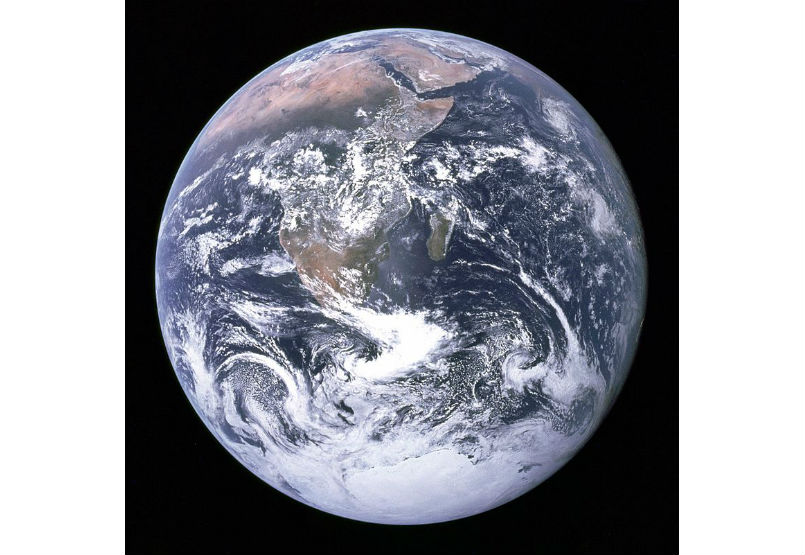
Today in History: December 7

Photo number AS17-148-22727 (above) was taken by the crew of Apollo 17—Eugene Cernan, Ronald Evans and Harrison Schmitt—at 5:39 a.m. EST on this date in 1972. Soon after NASA released it for publication, it acquired a nickname: “The Blue Marble,” and it is one of the most frequently reproduced photos in history.

Apollo 17 had been launched about five hours earlier from the Kennedy Space Center and was in a parking orbit about 28,000 miles from Earth. About an hour later, the craft left that orbit and continued to the Moon. Apollo 17 remains the last manned mission to the Moon, the last manned mission to travel beyond a low Earth orbit.
Read More

Today in History: Dec. 6

On the morning of December 6, 1917, the world’s fourth-largest man-made non-nuclear explosion obliterated the city of Halifax, Nova Scotia, in Canada. It is estimated that the blast, the result of an accident, released energy the equivalent of 2.9 kilotons of TNT. (“Little Boy,” the bomb dropped over Hiroshima, released about 19 kilotons.) In the photo above, the explosion reaches more than two miles up. It is the photo taken closest to the moment after the explosion.

The explosion, combined with a tsunami it created in Halifax Harbor, was the most devastating man-made blast until the nuclear age. Almost 2000 people were killed and many thousands more were injured.
Read More