Today in History: Dec. 26

The Union of Soviet Socialist Republics, the USSR, ceased to exist at midnight on this date in 1991. The constituent republics became independent nations. The Soviet Union existed for almost 69 years when it dissolved, an event that did not seem possible even a few months earlier. The moment ended the decades-long Cold War not with an exclamation point but a question mark.

The Cold War: Us versus them. On both sides, it was served with our breakfast cereal, our school lunches, and the nightly news watched during dinner. The Cold War was a fact, a background noise, a tinnitus-like hum heard 24/7, sometimes from far away and sometimes next door. Its removal seemed to make us aware that it had always been there, how loud it was, and that it had been driving us all insane.

As it ended (video after the jump):
Read More

Today in History: Dec. 25

Today is Christmas Day.

In a book that is known to have been compiled in the year 354 A.D., these words appear in an entry for the year 336: “25 Dec.: natus Christus in Betleem Judeae.” (Translated: December 25, Christ born in Bethlehem, Judea.) Thus, since some time in the 4th Century, Christians have celebrated the mass of Christ’s birth on December 25.

By the 6th Century, the December 25 date for the birth of Christ was common knowledge, so common that the monk who is credited with inventing the concept of the B.C./A.D. calendar, Dionysus Exiguus, wrote that “December 25 in the year 1” was the date of Christ’s birth.
Read More

Today in History: Dec. 24

Stille Nacht, heilige Nacht,
Alles schläft; einsam wacht
Nur das traute hochheilige Paar.
Holder Knabe im lockigen Haar,
Schlaf in himmlischer Ruh!
—Joseph Mohr, “Stille Nacht”

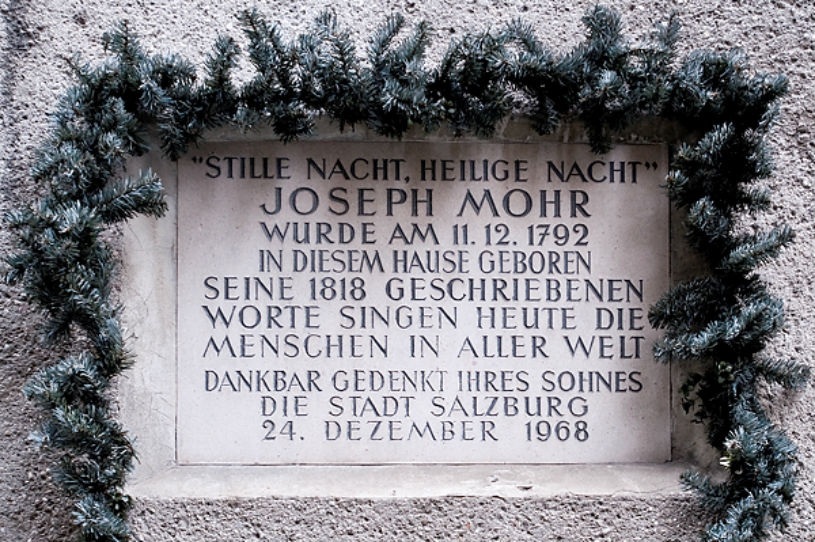
Father Joseph Mohr, a parish priest in Oberndorf, Austria, composed a poem he called “Stille Nacht,” and brought it to a local organist, Franz Xaver Gruber, to see if he could write a tune for it. Gruber did. On this date in 1818, Mohr and Gruber debuted their song, Gruber on guitar, during a Christmas Eve Mass.

John Freeman Young translated it into English decades later, and published “Silent Night” in 1859.
Read More