Henry Beston’s Cape Cod in Winter

The photo above was taken at Nauset Beach on Cape Cod on a December afternoon in 2010; the white glaze covering the footprints is ice and snow, and the Atlantic has ice in it—some of the white caps were frozen, and the waves merely swelled them, shifted them.

Henry Beston wrote perhaps the best physical description of Cape Cod in the opening lines to his classic book “The Outermost House“: “East and ahead of the coast of North America, some thirty miles and more from the inner shores of Massachusetts, there stands in the open Atlantic the last fragment of an ancient and vanished land. For twenty miles this last and outer earth faces the ever hostile ocean in the form of a great eroded cliff of earth and clay, the undulations and levels of whose rim now stand a hundred, now a hundred and fifty feet above the tides. Worn by the breakers and the rains, and disintegrated by the wind, it still stands bold.” He depicts a heroic shoreline, a land that declares its own terms of surrender against a hostile, battering sea. Given that from the air Cape Cod resembles a single raised fist jutting into the sea, a heroic, Byronesque, cliff face is only appropriate.
Read More
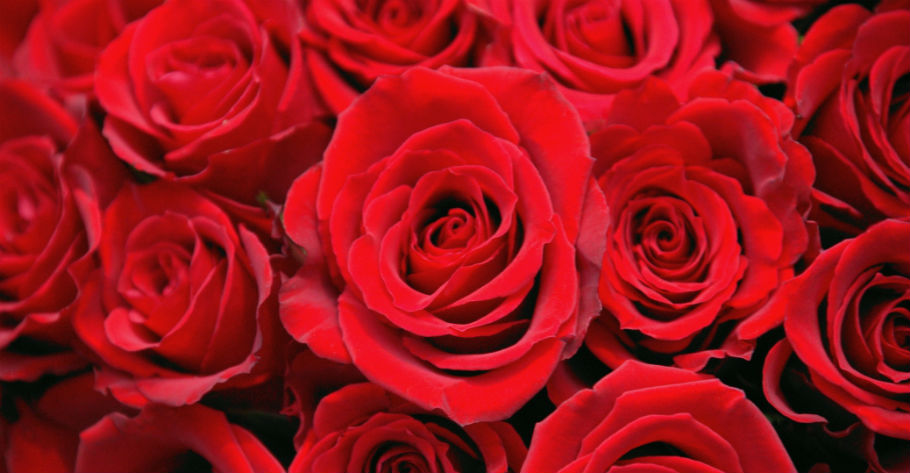
A Valentine’s Tale

I bear a scar from the first Valentine’s Day that I had a reason to celebrate as Valentine’s Day, as a part of a couple. Until my current relationship, my romantic history was a long walk alone in an empty field, punctuated by moments in which I interrupted someone else’s walk, attempted to try a relationship, and discovered that I try people’s patience instead. (All the women I have dated are brilliant and accomplished, and I was lucky to get to know them; I was stuck at age 15 for an astonishingly long time, however.)

My love right now, my soul mate, Jen, is quite brilliant and accomplished, and for the first time in my life, almost three years now, I am an equal partner and have opened myself up to having an equal partner. Not too bad for a 46-year-old 15-year-old.
Read More

Through a Screen Door

A heavy rain drowns each raindrop; a light rain, like the kind I saw in the woods out behind my house when I was a child, a light rain striking the leaves and branches of trees, further slowing their impact, that rain produces the strongest petrichor of all, the one that renders me into an seven-year-old noticing the world for the first time.
 
The lightest of rain after the driest of spells leads to the most argillaceous petrichor, which is the kind that humans smell as relief, the thought that things will start growing again.—”Petrichor,” Jan. 26, 2015

We called it “The Woods.” Well, I did. Sometimes, I referred to it as a “forest,” which it most certainly was not. Our backyard ended at a line of trees and dross beneath them; the lightly manicured, suburban lawn did not grow beyond that line, despite my teen-aged lawn mowing efforts to expand the lawn by clearing the dead leaves and branches away. That tight boundary made The Woods appear all the more elemental and foreign.
Read More