A Christmas Tree Story

I am sitting in my girlfriend’s office looking at her office Christmas tree. It is white, snow white, like a snowman in a a Rankin/Bass stop-motion cartoon. (Paul Frees would provide the voice.) We will be trimming it in a few moments.

office xmas

A white Christmas.

I think that tree trimming was my least favorite trimming when I was young. I still lack the eye necessary for decorating a tree correctly; in fact, I believe that almost every tree I have attempted to decorate has been quietly fixed upon my leaving.

(Two things transpired within moments of me writing the above: 1. My girlfriend credited me with expanding her notions of tree decoration—she said, “You’re the first person I’ve seen who does not put all the decorations on the ends of the branches,” which is true, I sometimes place them on the middle or even closer to the trunk; and 2. We found that I had overloaded one section with the same color ornament and we needed to correct it.)

One winter, a friend enlisted me in a project to cut down a real live Christmas tree from a Christmas tree farm so her son could experience a Christmas like the one she and I had never ever had. (The sum total of my experience with freshly cut Christmas trees was buying one in a parking lot from a seller who was asked by the police to pick up his trees and move it along seconds after we made an offer. We did not receive an “Everything Must Go Because I Am Being Busted” discount.)

Neither my friend, her seven-year-old son, nor I knew what cutting a live, six-foot-tall or smaller tree would take, so we brought the only saw that she knew she had. (I believe it was one that her uncle had rejected forty-five years earlier for one that was actually sharp; now, forty-five years later, it also had some rust.) We then drove to a tree farm in Dutchess County, New York. I have chopped wood plenty of times, and I have helped take dead trees down; neither of these experiences served me on this day.

The first task in cutting down a fresh Christmas tree for oneself is finding something to occupy the seven-year-old son of your friend—allowing the child to select the winning tree to preserve your friendship with his mom is advisable. Next up is failure in the negotiations with the seven-year-old to pick a tree that is not on a steep, snowy slope. (Happy people with skis were walking almost as far up as our tree was located. Almost. I was wearing sneakers.)

Many will ask the question, “Should I cut two notches to make a V or cut straight across?” I know I did, just not out loud or in the presence of someone who could tell me the answer. With my tiny, rusty saw and no one holding the other side of the saw, I started notching one side of a V. The blade sliced some bark off and did not penetrate the green wood underneath. The snow had already penetrated my shoes, though. The trunk was no thicker than two inches wide, if that—hey, I’m no tree-ologist!—but it was quickly apparent that I was going to need help.

With that in mind, I drove away my companion and her son with my grumpy “attitude.”

After an hour alone, my inner debate over cutting straight through versus cutting a V had produced several partial starts—some up, some down—all the way around the trunk of the tree. Instead of a V, I had notched something like a lowercase w but less useful, partway to the center of the tree. My friend returned and we commenced cutting straight across, because it was “taking me too long,” when we discovered together that there is nothing quite as unsatisfying as the sound of a tree not coming down no matter how far one has cut through it until it is ready to come down. Nothing unites like mutual frustration.

It eventually came down. I accompanied it down the slope … okay, I rode it down the hill like Slim Pickens at the end of “Dr. Strangelove.” I had not reminded my friend or her seven-year-old son to bring rope to tie it to the roof of her car, so we drove home with it sticking out one of the backseat windows. In my lap.

* * * *
My family had one plastic tree for twenty or more Christmases. It was a well-constructed one, actually, a bare metal trunk with a two or three hoops to hook in each individual branch around the tree. It actually had an instruction manual. Our Christmas tree and boxes of ornaments occupied several boxes in the basement; the annual production of “putting up the tree” was my introduction to grown-ups not being able to remember from one year to the next the locations of things they put away in the same box in the same place every year. And now I am that grown-up.

I am sure that my mother and father found it necessary to re-position my ornaments; I swear that something happens to me when I approach a tree, ornament in hand. I have hooked ornaments into shirt buttonholes when I swear I was aiming for the tree. Just as I wanted to cut my one live tree down in one graceful and strong sawing motion, I always want this ornament here and now to be the first, last, and only one needed to make this year’s tree the complete and perfect Christmas statement. I want someone to exclaim, “This is the most Christmas ever!” Christmas brings out the perfectionist in all his mistake-prone grumpiness in me.

Thus, the only part of decorating that I relax and enjoy is either throwing tinsel everywhere or putting the angel on top. (That is an unsung rite of passage, growing tall enough to top the tree with a star or angel.) We had an angel, a cardboard seraph with glued-on glitter and thin, stringy blonde hair. Its halo was glued-on, as well. But it was our angel, and when nicer, more expensive-looking, ones found their way into our house, they were always relegated to lower branches. My family’s underdog mentality extended to angels.

That mentality may have been the best, most lasting, gift from my family.

* * * *
(An earlier version of this was first published last December on my previous website. My girlfriend and I will be decorating the tree again this weekend.)

____________________________________________
The WordPress Daily Prompt for December 11 asks, “As it’s been a while since our last free-write … set a timer for ten minutes. Write without pause (and no edits!) until you’re out of time. Then, publish what you have (it’s your call whether or not to give the post a once-over).”

* * * *
Please subscribe to The Gad About Town on Facebook: http://www.facebook.com/thegadabouttown

The Mother of Thanksgiving

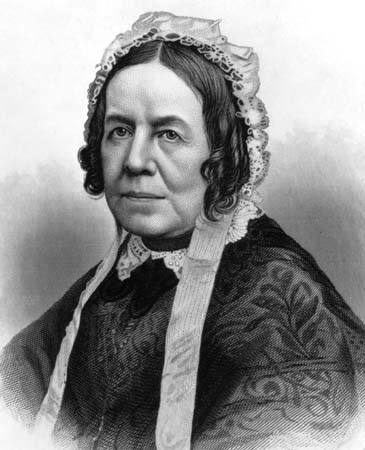
In most of her portraits, Sarah Josepha Buell Hale, the reason we celebrate Thanksgiving, looks stern. Gentle, but stern. She was an editor, but befitting a woman of her era, she employed the term, “editress.” From age 33 until her death at age 90, she wore black, to designate her as a widow in mourning from the day her husband died until the day she was to join him.

hale

Sarah Hale

Hale was the editor (“editress”) of Godey’s Lady’s Book, a pre-Civil War monthly magazine that sometimes topped 100,000 in circulation. She held the job for forty years, retiring in 1877 when she was almost 90. Her legacy as editor is a mixed one: she wrote and published articles in favor of advanced education and employment opportunities for women but her publication (and she) did not support women voting.

Gentle, but stern; she was anti-slavery and pro-North and pro-Union (she was a New Englander) but anti-war. Her point of view was that women writers wrote for women and for children.

Sarah Hale, 1831

Sarah Hale, 1831

Indeed, earlier in her career she wrote poetry for children, and one of her poems is a work so famous that it is surprising to learn that a human being wrote it: “Mary Had a Little Lamb.” Around that time, her portrait was painted by James Lambdin (no relation to Mary’s pet), an artist who painted two U.S. Presidents who were also among the first photographed. The verisimilitude of his portraits is borne out by the photos, so his portrait of young Sarah Hale, already in mourning black, must be true to life as well. Gentle, but serious.

When the idea of a campaign for a national Thanksgiving holiday came to her, she became relentless about it and marshaled all her resources. She was already a successful fundraiser and had organized supporters to see the Bunker Hill Monument completed. She was one of the founders of Vassar College. As with those causes and campaigns, Hale knew that persistence would win, eventually.

Thanksgiving days and harvest days are common around the world, but it was always a grab-bag and a movable feast in America. The Spanish settlers in St. Augustine, Florida, are believed to have held a celebration feast with the local Native Americans in September 1565. Up the coast, the first Pilgrim Thanksgiving in 1621, or later, was probably in September, also.

There is no way to separate fact from legend about the Pilgrim Thanksgiving, the one said to have been celebrated by Pilgrims and Native Americans in 1621 at Plymouth Plantation, but it is known that by 1630 Massachusetts Bay Colony was celebrating its own Thanksgiving. (The Pilgrims and the Puritans who were building Massachusetts Bay Colony were not friends, even though both groups were made of Calvinists who did not find the Anglican Church strict enough.)

(The Pilgrim William Bradford’s famous journal, “Of Plymouth Plantation,” which covers the years from around 1630 to 1650, recounts that first Thanksgiving and is a source of imagery for our collective cultural memory of that day, but it vanished during the Revolutionary War and was not found or generally known about until 1897. It is essentially a twentieth century document re-affirming what we were telling ourselves about ourselves.)

During the Revolutionary War, the Continental Congress proclaimed several Thanksgiving Days, usually after a military victory, and various colonies created their own traditions. In some years, the first few presidents (but not Jefferson) issued national proclamations of a Thanksgiving day, but in some years they did not. Various states created their own traditions. Many of the states in the American South did not.

For two decades, Sarah Josepha Hale wrote letters advocating a national Thanksgiving Day. It is her work in this matter that gives us our annual tradition. Her letters reached five presidents: Taylor, Fillmore, Pierce, Buchanan, and Lincoln. (The letter to Lincoln is shown at top.) Finally Lincoln’s administration saw the brilliance of having a national day of thanksgiving: The Civil War was going to end sooner or later and the nation, north and south or only the north alone, was going to need unifying sentiments, a healing reminder of gratitude, even a new national holiday that was not of the north or the south in its mythology but newly created for the more strongly united United States of America.

The first modern Thanksgiving was proclaimed for that year, 1863, and it has been a national holiday since. Hale was 74 years old.

Lincoln’s proclamation, dated October 3, 1863, reads:

The year that is drawing towards its close, has been filled with the blessings of fruitful fields and healthful skies. To these bounties, which are so constantly enjoyed that we are prone to forget the source from which they come, others have been added, which are of so extraordinary a nature, that they cannot fail to penetrate and soften even the heart which is habitually insensible to the ever watchful providence of Almighty God. In the midst of a civil war of unequalled magnitude and severity, which has sometimes seemed to foreign States to invite and to provoke their aggression, peace has been preserved with all nations, order has been maintained, the laws have been respected and obeyed, and harmony has prevailed everywhere except in the theatre of military conflict; while that theatre has been greatly contracted by the advancing armies and navies of the Union. Needful diversions of wealth and of strength from the fields of peaceful industry to the national defence, have not arrested the plough, the shuttle, or the ship; the axe had enlarged the borders of our settlements, and the mines, as well of iron and coal as of the precious metals, have yielded even more abundantly than heretofore. Population has steadily increased, notwithstanding the waste that has been made in the camp, the siege and the battle-field; and the country, rejoicing in the consciousness of augmented strength and vigor, is permitted to expect continuance of years, with large increase of freedom.

No human counsel hath devised nor hath any mortal hand worked out these great things. They are the gracious gifts of the Most High God, who, while dealing with us in anger for our sins, hath nevertheless remembered mercy.

It has seemed to me fit and proper that they should be solemnly, reverently and gratefully acknowledged as with one heart and voice by the whole American people. I do therefore invite my fellow citizens in every part of the United States, and also those who are at sea and those who are sojourning in foreign lands, to set apart and observe the last Thursday of November next, as a day of Thanksgiving and Praise to our beneficent Father who dwelleth in the Heavens. And I recommend to them that while offering up the ascriptions justly due to Him for such singular deliverances and blessings, they do also, with humble penitence for our national perverseness and disobedience, commend to his tender care all those who have become widows, orphans, mourners or sufferers in the lamentable civil strife in which we are unavoidably engaged, and fervently implore the interposition of the Almighty Hand to heal the wounds of the nation and to restore it as soon as may be consistent with the Divine purposes to the full enjoyment of peace, harmony, tranquility and Union.

In testimony whereof, I have hereunto set my hand, and caused the seal of the United States to be affixed.

Done at the city of Washington, this third day of October, in the year of our Lord one thousand eight hundred and sixty-three, and of the independence of the United States the eighty-eighth.

Stern, but gentle.

____________________________________________
The WordPress Daily Prompt for November 27 asks, “Is there a person you should’ve thanked, but never had the chance? Is there someone who helped you along the way without even realizing it? Here’s your chance to express your belated gratitude.”

* * * *
Please subscribe to The Gad About Town on Facebook: http://www.facebook.com/thegadabouttown

Off the Table

Cooking is not something that I—what’s the word?—ah, yes: “Do.”

I am 46, so I have eaten a thing or two most of my born days, and I have even prepared a meal or a couple in order to live this long. One does not live to be 46 without some food here and there. And I was not left to forage in the woods beside our house when I was growing up; my mom is an excellent and health-conscious cook. Thanks to her early adoption of a low- and sometimes no-salt kitchen, my heart will probably continue beating long after the rest of me has permanently let all my subscriptions lapse.

This is not to say that I do not remember eating or cooking; oh, I do. My cooking is not memorable, though, in either direction: tasty treat or sublime sludge. I almost envy the good writers who are bad cooks (not as much as I envy the non-writers who are good cooks) because at least something interesting comes from their culinary assaults on taste and decency.

My worst work in the kitchen is memorable in how completely unmemorable it is. The problem is so is my best work.

I do not even have many or any interesting kitchen mishap tales: I am a physically cautious person—I was cautious before my walking difficulties rendered me a unique danger with knives, pots of boiling water, or even a tray of sporks—so I do not have zany anecdotes about near-terrible, “Mom, the first thing you need to know is everyone’s safe,” kitchen survival stories. I have burned my hands exactly twice: once in a seventh grade Home Ec class when I forgot to put an oven mitt on my hand before removing a cooking tray of snickerdoodles from the oven, and the second time, eight seconds later, when I moved that same tray so it would not fall from the spot on which I had dropped it.

(Many years later, a friend asked me if I remembered so-and-so, my seventh grade Home Ec teacher. By name, no, I did not, but we established that her friend and my junior high teacher were the same person. My name had come up and the teacher had asked my friend if my hand was okay. Apparently my lack of a reaction—I said, blandly, “That’s hot,” instead of yell—had stuck with her. There are no scars, but I remember that healing from even the weakest of minor burns hurts like nothing I want to entertain experiencing again.)

I have not had a snickerdoodle in the thirty-plus years since. It isn’t their fault, those cute-named little flour-and-sugar bombs. But they know.

So what I will bring to the Thanksgiving table tomorrow afternoon at my girlfriend’s family’s house is a deep appreciation for the work and love that went into preparing it all, and a big appetite: I haven’t eaten yet today.

____________________________________________
The WordPress Daily Prompt for November 26 asks, “What’s the most elaborate, complicated meal you’ve ever cooked? Was it a triumph for the ages, or a colossal fiasco? Give us the behind-the-scenes story (pictures are welcome, of course).”

* * * *
Please subscribe to The Gad About Town on Facebook: http://www.facebook.com/thegadabouttown