
Empty Branches on the Family Tree

To the best of my knowledge, there are no murderers in the part of the family tree that leads directly to me. I have done my best to maintain this streak of successfully not murdering anyone, but if I am ever accused, I will not be the first person named Mark Aldrich to be charged with murder.

Some history: Almost every person with the last name Aldrich in the United States is descended from George Aldrich of Derbyshire, England, a tailor who was born in 1605 and emigrated to America in 1631, a decade after the Pilgrims. He is my (deep breath) great-great-great-great-great-great-great-great-great grandfather and probably the only one of those whose name I will know. George and his wife Katherine Seald Aldrich settled in Dorchester, Massachusetts, had 10 children (one, a daughter who died in infancy, bore a classic Puritan name, “Experience Aldrich”) moved to Braintree, and then moved to Mendon, Massachusetts, where his name is inscribed on a monument naming the town’s first settlers. I have not visited this.
Read More

Today in History: Memorial Day

In America, today is Memorial Day. It is a day of remembrance for those Americans who died in war. There is a long history behind this day, which was first named “Decoration Day,” as those in mourning for dead relatives would decorate the graves of the dead soldiers. It dates from shortly after the Civil War. Memorial Day is a commemoration, not celebration, as this is not a day for celebrating.

The commemoration that this day represents is an acknowledgment that soldiers are sent to fight and many die. War is a saddening, maddening fact of life, whether or not it ought to be.

* * * *
On this date in 1911, the first edition of The Indianapolis 500 was run. Ray Harroun won (photo at top), in a controversial fashion, as he was the only driver to not have a passenger with him. (What?!?—needle scratches across record.)
Read More

Today in History: May 29

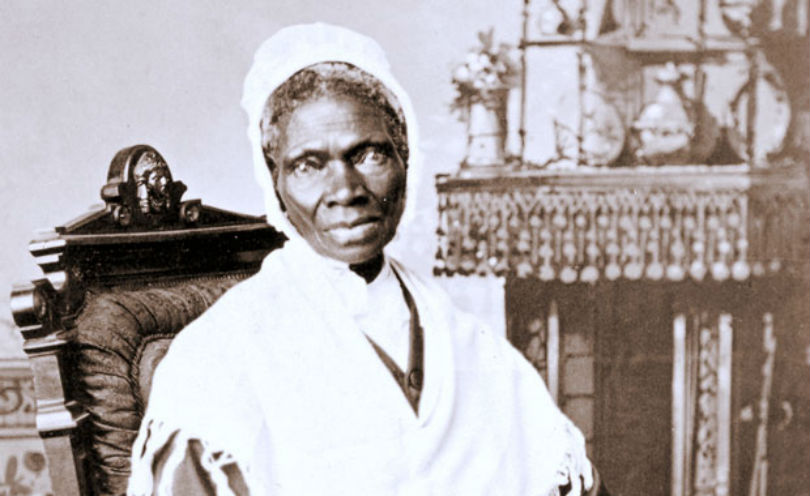
No one recorded exactly what Sojourner Truth said to the Ohio Women’s Rights Convention in Akron, Ohio, on this date in 1851. The speech was memorable, even if it was mis-remembered. It is known as the “Ain’t I a Woman” speech, though a newspaper report from a month after, written by a journalist who was present, does not include that phrase.

Years later, a version appeared that captured Truth’s words but in a “plain-spoken” Southern dialect, which, many historians point out would not have been Truth’s accent: she was from upstate New York and Dutch was her first language.
Read More