Today in History: June 22
Operation Barbarossa, Nazi Germany’s attempted invasion of the Soviet Union, was launched 75 years ago today with an air and ground attack at several locations on what became the Eastern Front. More than three million Axis soldiers faced off against a similar number of Soviet soldiers.
Ultimately, it did not work. The USSR withstood and eventually repelled the invasion, but Nazi Germany’s invasion set a record which still stands: it was the largest invasion force ever mounted, the single largest military operation ever mounted, with four million total soldiers on one side alone, along the longest front line: 1800 miles. When it was all over, the invasion led to the fight over the Eastern Front, a years-long fight which saw more death and destruction than was seen in the entire rest of World War II: 26 million individuals lost their lives in the fight for the Eastern Front.
Adolph Hitler thought the Soviet Union would fall in three months. He was wrong.
* * * *
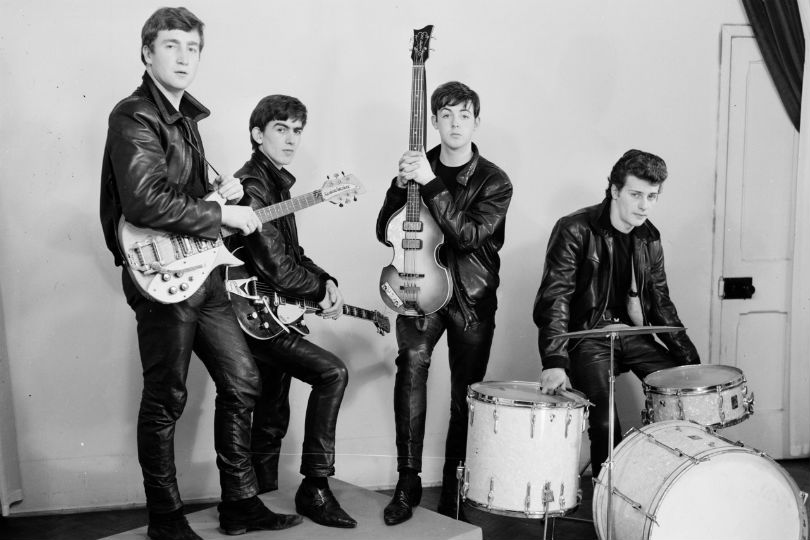
The Beatles (above, with Pete Best) participated in the group’s first-ever studio recording session 55 years ago today in Hamburg, Germany. Among the songs recorded were “My Bonnie” and “Cry for a Shadow,” an instrumental that remains the only song credited to the songwriting pair of George Harrison and John Lennon. “Cry for a Shadow” (after the jump):
Read More
 The Gad About Town