The typewriter is one of those devices whose need had been obvious for decades, even a century before a practical one was produced. In 1714, one Henry Mill of England was awarded patent number 395 on January 7, 1714, for a device whose description sounds like nothing less than a typewriter, even though that word had not yet been coined. The 1714 English patent reads:
He hath by his great study and paines & expence invented and brought to perfection an artificial machine or method for impressing or transcribing of letters, one after another, as in writing, whereby all writing whatsoever may be engrossed in paper or parchment so neat and exact as not to be distinguished from print; that the said machine or method may be of great use in settlements and publick records, the impression being deeper and more lasting than any other writing, and not to be erased or counterfeited without manifest discovery.
(Patents did not need to be very scientific in their language in 1714.) No device was produced, and no wonder: none was described. Mill’s idea, which described a possible solution to the perceived need, is what was patented, and it is now considered to be the first mention of the idea of a typewriter.
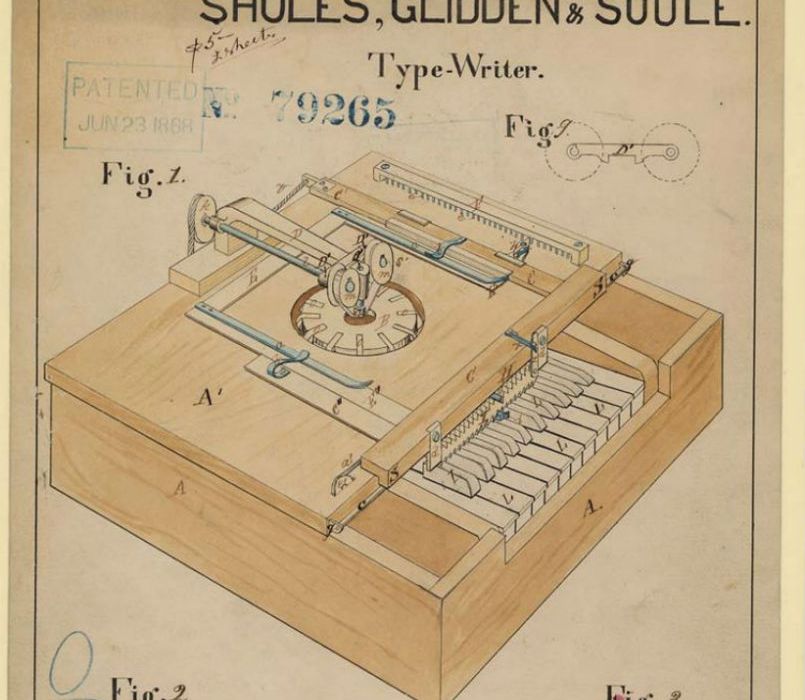
A century and a half later, in Milwaukee, Wisconsin, necessity and invention met up. On June 23, 1868, U.S. Patent Number 79265 was granted to three men for their “Improvement in type-writing machines.” A design for an actual working machine resulted.
Read More
41.399432
-74.271821
Thank you for sharing this via one of these wonderful services:


 The Gad About Town