January 27 in History

“Neither a lofty degree of intelligence nor imagination nor both together go to the making of genius. Love, love, love, that is the soul of genius.”—Mozart

Wolfgang Amadeus Mozart was born on this date in 1756 in Salzburg, Austria. He composed more than six hundred works in his brief life.

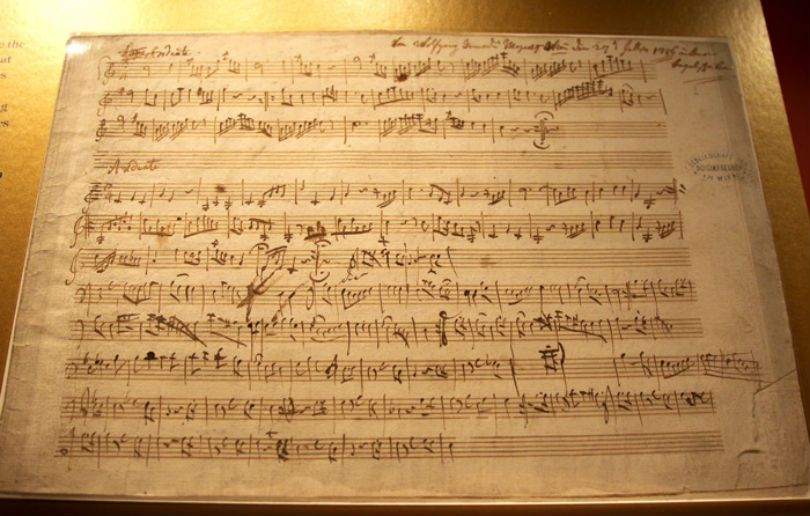
At the top is a photograph from Carnegie Hall‘s website of Mozart’s manuscript score for his “Three duos for two wind instruments” (K. 487/1, 3, 6). At the top is his signature and a note: “I composed this while bowling.”
Read More

January 26 in History

Today is Australia Day, the day that great nation celebrates as its foundation day.

On this date in 1788, the First Fleet, eleven ships from Great Britain with more than 1000 convicts on board, arrived in Sydney Harbor and raised the British flag. The First Fleet was sent to establish a prison colony far, far from home.

When the United States won independence, one of the side effects was the American right to refuse British convicts. In 1787, ships with the recently convicted were dispatched to Australia, and on this date in 1788, the First Fleet arrived. Over time, many of the convicts were pardoned.
Read More

January 25 in History

Robert Burns was born on this date in 1759 in Alloway, Ayrshire, Scotland. The poet only lived 37 years, but his works live on, recited by people who do not know the quotes are from the pen of the national poet of Scotland: “Auld Lang Syne,” “A Red, Red Rose” (“O my Luve’s like a red, red rose/That’s newly sprung in June;/O my Luve’s like the melodie/That’s sweetly play’d in tune”), “Tam o’Shanter.”

In 1801, a few years after his death, his friends came together to celebrate his life. The celebration of his life was held on his birthday, January 25, and every year since 1803, “Burns Suppers” or “Burns’ Nights” have grown in popularity. They are celebrated around the world.

Dinner is always a haggis, a savory meat pudding similar to (but superior to, I have been assured by those who know) scrapple or andouillette. After it is brought in, an attendee recites Burns’ “Address to a Haggis,” seen here after the jump:
Read More